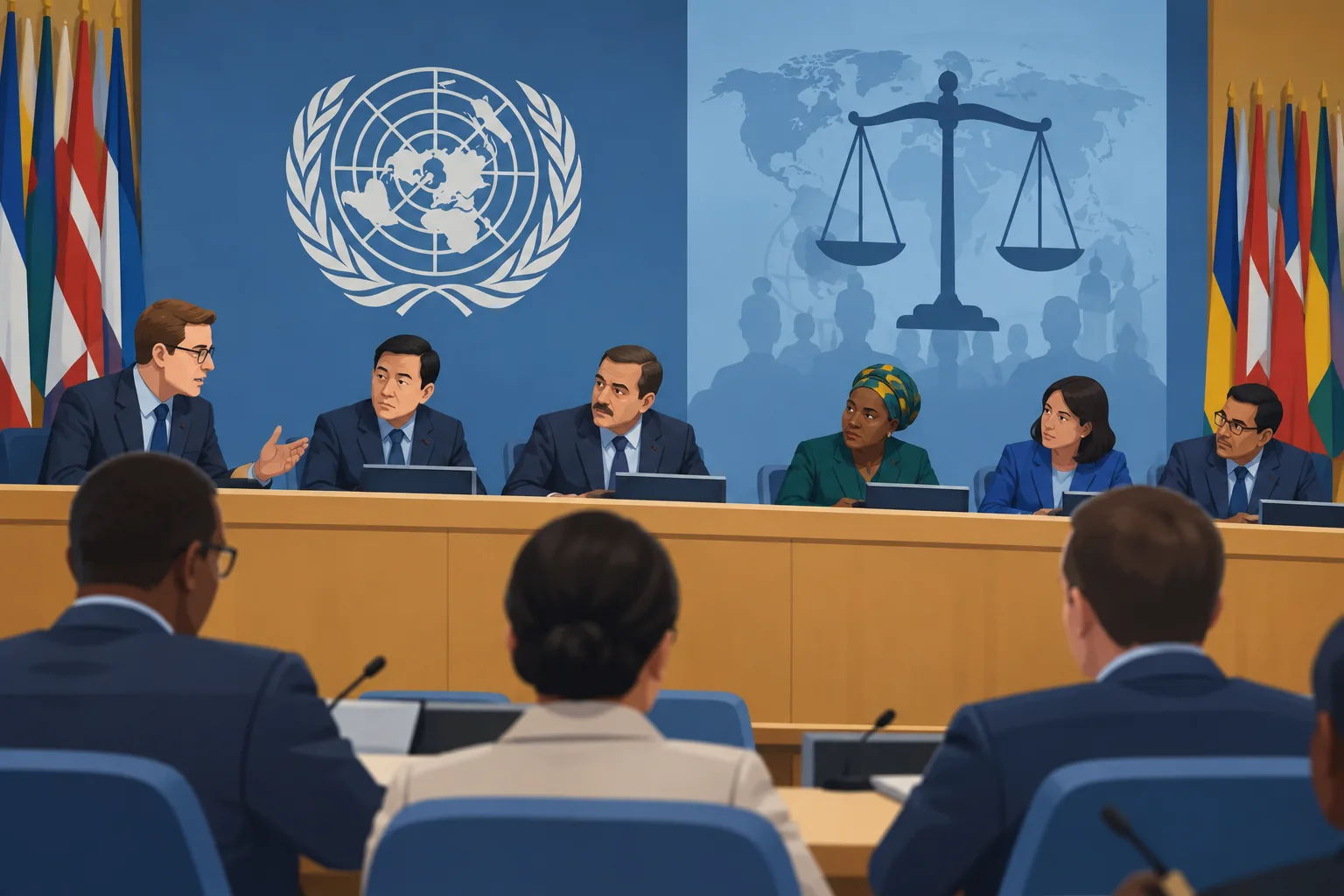
UN debate weighs universal jurisdiction against risks of selective justice
Countries at the UN’s Sixth Committee are debating how universal jurisdiction can help prosecute grave crimes abroad while guarding against selective or politically motivated use.
Review information is loading.
The UN General Assembly’s Sixth Committee has opened a debate on universal jurisdiction, with countries divided over how to use the principle to prosecute serious crimes committed abroad without enabling selective or politically motivated justice.
Universal jurisdiction allows a state to prosecute certain grave crimes regardless of where they occurred or the nationality of those involved. The Czech Republic, speaking for Austria and Slovakia, described it as a safeguard against impunity when other routes to justice are closed, and called for greater legal clarity. Its representative said referring the issue to the International Law Commission could help depoliticise the discussion. [1]
China said there was no international consensus on the principle’s scope and application, and argued that its use should be confined to “extremely exceptional and isolated cases”. Türkiye said it should not displace states with a direct connection to an alleged crime, and should be considered only when states with primary jurisdiction are genuinely unable or unwilling to investigate or prosecute. [1]
Other speakers stressed the danger of impunity. Myanmar’s representative said the country’s legal system was controlled by the military junta and called universal jurisdiction a “critical lifeline”. Rwanda’s representative supported accountability for the gravest crimes but warned that the principle could be abused, citing what she described as questionable cases against African officials while genocide suspects remained in the same jurisdictions. [1]
The European Union said the debate reflected differing national views alongside a shared commitment to preventing the gravest crimes from going unpunished. It called for efforts both to reduce reliance on universal jurisdiction and to provide legal certainty when it is used. Maldives highlighted the resources needed for complex cross-border investigations, including mutual legal assistance, evidence-sharing and specialist judicial training. [1]
The discussion began during the Sixth Committee’s 81st session on 14 October. The UN account also reports that the committee concluded a separate debate on a proposed treaty concerning the protection of people affected by disasters. [1]
Sign in to give this article a thumbs up or down.
About this discussion and AI questions
Private test discussion. Comments are readers’ views and are not yet automatically fact-checked. Editing is available for 60 seconds after posting.
Sign in with a confirmed reader account and choose a username to read comments and participate.
Sorting applies to top-level comments; replies remain oldest first. New comments and likes can change the order. Refresh for the current ranking.
Loading comments…