UN delegates call for funding as international-law course demand outstrips places
Delegates at the UN General Assembly’s Sixth Committee called for sustained funding for international-law training, as hundreds of applicants compete for limited places on regional courses.
Review information is loading.
The UN General Assembly’s Sixth Committee has heard calls to fund international-law training as demand for regional courses outstrips available places and financial constraints threaten the programme’s work.
At a meeting on 22 October, speakers highlighted the UN Programme of Assistance in the Teaching, Study, Dissemination and Wider Appreciation of International Law, which provides training and educational resources. Its advisory committee chair, Samuel Yao Kumah of Ghana, called it a crucial tool for strengthening national legal capacity and said financial contributions were important to expanding its activities.
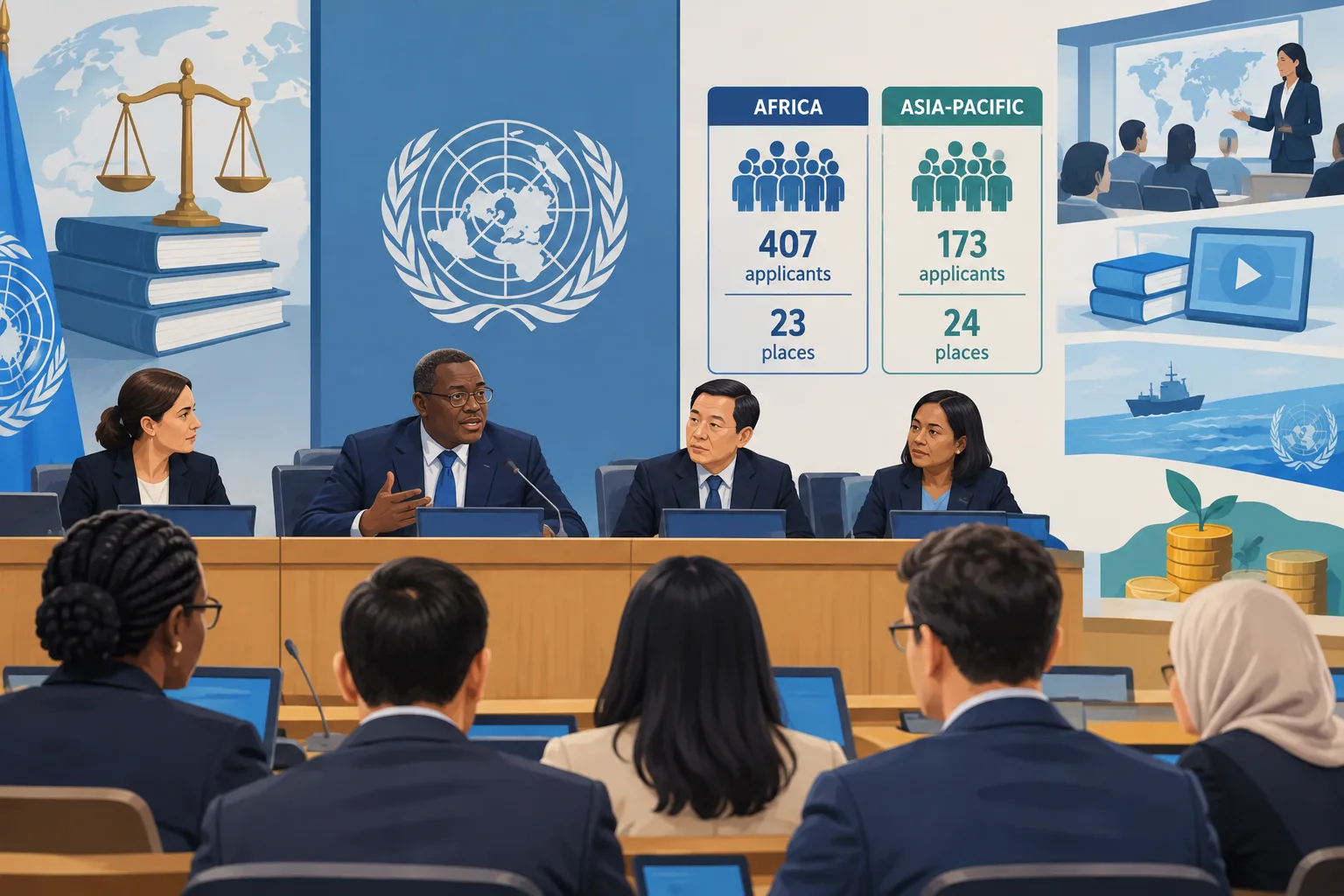
The scale of demand was evident in applications for regional courses: 407 people applied for 23 places on the course for Africa, while 173 candidates sought 24 places on the Asia-Pacific course, delegates said. Senegal’s representative said demand exceeded supply; the Philippines’ representative, speaking for ASEAN, warned against letting short-term financial constraints push in-person training down the agenda.
The programme also supports the Audiovisual Library of International Law and publishes educational material. Secretary of its advisory committee Markus Pallek said 25 new conferences had been published in the library over the reporting period. He said voluntary contributions remained essential to realising the programme’s potential.
Funding concerns extended to a related fellowship in the law of the sea. Vladimir Jareš, director of the UN Division for Ocean Affairs and the Law of the Sea, said the fellowship could cost up to $75,000, while its trust fund held $51,000 in July. He said 37 beneficiaries from 31 developing countries would have completed the fellowship, and argued awards should be made every year.
Delegates also pointed to gaps in regional provision. Libya, speaking for the Arab Group, said no training courses had been held in Arabic or dedicated to Arab States since 2015, and called for more Arabic-language courses. France’s representative cited vacant posts as a constraint on the Audiovisual Library, while the Group of 77 and China urged the Secretariat to explore partnerships with academic institutions to support financial sustainability.
The UN’s account of the committee meeting is for information media and is not an official record.
Sign in to give this article a thumbs up or down.
From the discussion
Private test discussion. Comments are readers’ views and are not yet automatically fact-checked. Editing is available for 60 seconds after posting.
Sign in with a confirmed reader account and choose a username to read comments and participate.
Sorting applies to top-level comments; replies remain oldest first. New comments and likes can change the order. Refresh for the current ranking.
Loading comments…