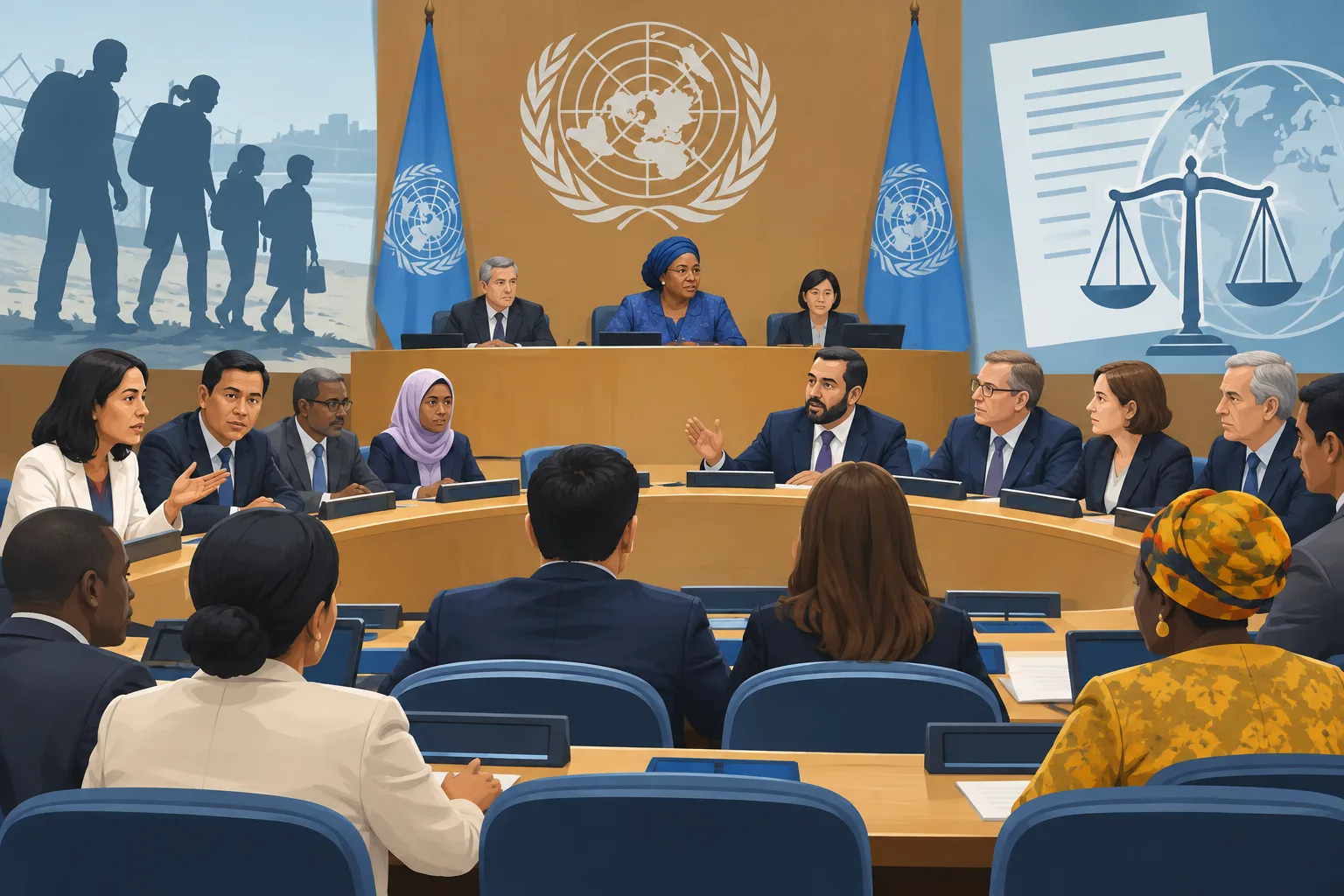
UN delegates split over binding rules on expulsion of foreigners
UN delegates disagreed over whether draft rules on expelling foreigners and the responsibility of international organisations should lead to binding conventions, with some backing further work and others warning that consensus or legal foundations were lacking.
Review information is loading.
The UN General Assembly’s Sixth Committee has heard sharply differing views on whether draft rules governing the expulsion of foreigners and the responsibility of international organisations should become binding international law.
At a meeting on 21 October, delegates considered draft articles prepared by the International Law Commission. Some speakers backed further work towards a convention, while others said the proposals went beyond existing law or lacked sufficient support.
On expulsion, El Salvador’s representative called for safeguards that balance states’ authority with human dignity, and said migration should be addressed as an administrative matter rather than a criminal one. The Philippines stressed that states’ power to regulate entry and removal must be exercised consistently with human rights and due process, including protection against arbitrary expulsion and access to consular assistance.
Bangladesh argued that the rules could provide a basis for a convention, pointing to the experience of Rohingya people who fled to Bangladesh after being driven from Myanmar. Iran said a convention would be premature and argued that provisions allowing people without lawful status to challenge expulsion went beyond existing law. The Netherlands also opposed a convention, saying the draft did not reflect state practice; the United States said it would not support a binding instrument that limited a state’s ability to remove foreigners.
Mexico said the committee should decide the eventual form of the draft articles and suggested replacing “alien” with “foreigner”, arguing the former term could be dehumanising and outdated.
Delegates also debated the International Law Commission’s 2011 draft articles on the responsibility of international organisations. China said any rules should reflect how organisations differ from states and distinguish their responsibility from that of their member states. Serbia called for further development of the rules, while Burkina Faso and Germany said important questions remained unsettled and were not ready for a convention.
Deputy Secretary-General Amina Mohammed said the partnership between the Sixth Committee and the International Law Commission was important to maintaining confidence in international law. The UN account describes the meeting coverage as information for media, not an official record.
Sign in to give this article a thumbs up or down.
About this discussion and AI questions
Private test discussion. Comments are readers’ views and are not yet automatically fact-checked. Editing is available for 60 seconds after posting.
Sign in with a confirmed reader account and choose a username to read comments and participate.
Sorting applies to top-level comments; replies remain oldest first. New comments and likes can change the order. Refresh for the current ranking.
Loading comments…