UN experts warn disabled people are being shut out of emergency aid
UN experts say inaccessible information, evacuation plans and shelters can block people with disabilities from life-saving aid during conflicts and disasters.
Review information is loading.
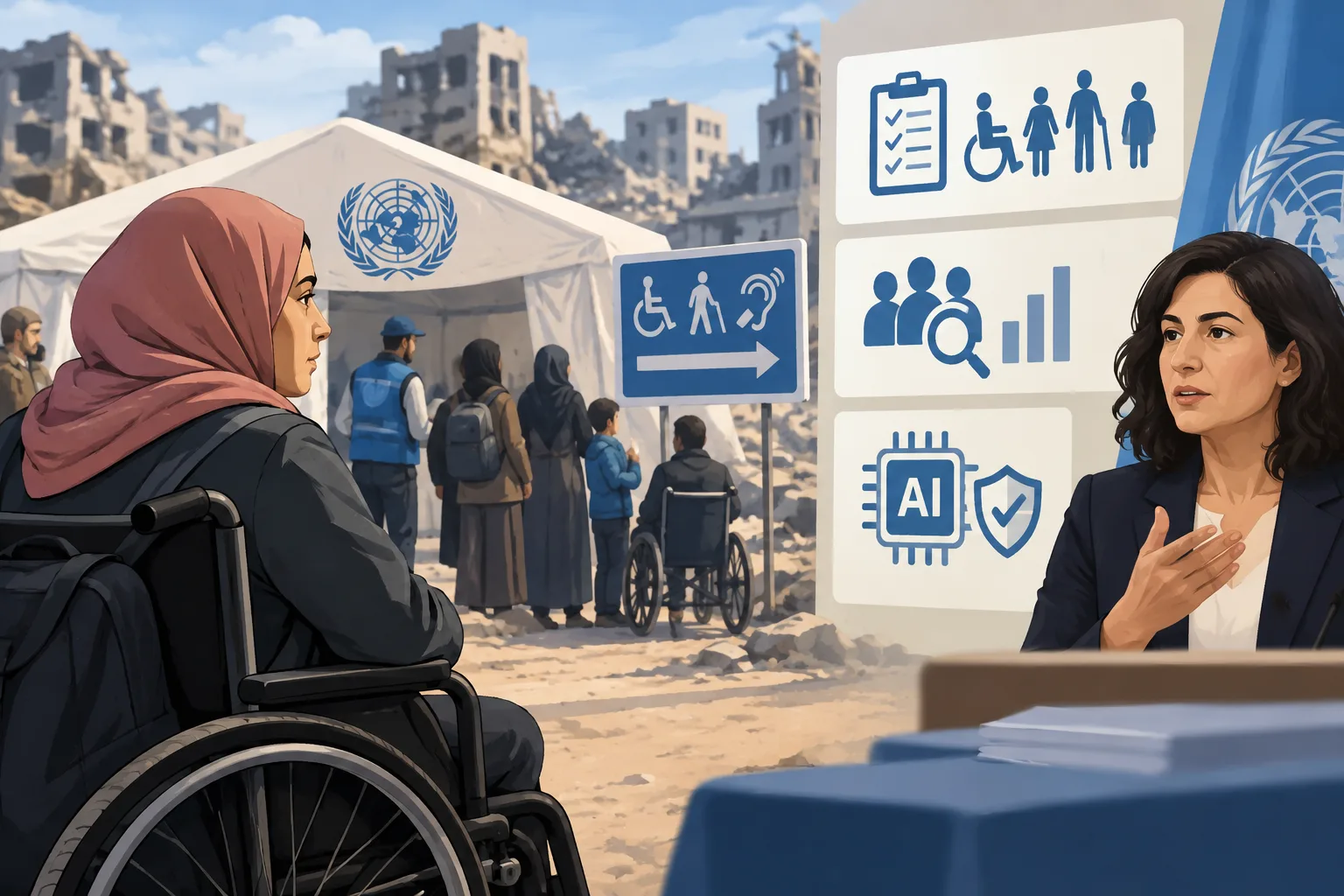
United Nations experts have warned that people with disabilities are being shut out of vital humanitarian aid during conflicts and disasters, calling for emergency plans to include them from the outset rather than treating accessibility as optional.
Heba Hagrass, the UN Special Rapporteur on the rights of persons with disabilities, said inaccessible information, evacuation procedures that fail to account for disability-related needs and unsuitable shelters continue to obstruct access to assistance. These barriers can have life-threatening consequences, she told the General Assembly’s Third Committee on 23 October.
Hagrass also warned that people with disabilities are often consulted only after major humanitarian decisions have been made, while a lack of disability-disaggregated data makes it harder to identify who is being left behind. She said women and girls face intersecting discrimination and people with disabilities face heightened risks of violence, exploitation and neglect during displacement.
“Inclusion cannot be viewed as an optional component of humanitarian action or a luxury when resources permit,” Hagrass said, calling it a human rights obligation and a prerequisite for an effective response.
Ukraine’s representative said more than 3.6 million people in the country now live with disabilities, and cited barriers to evacuation and medical care, as well as injuries and trauma caused by Russia’s war. He said people with disabilities must be included in humanitarian response and reconstruction before the conflict ends.
The meeting also heard warnings about artificial intelligence. Miyeon Kim, chair of the UN Committee on the Rights of Persons with Disabilities, said AI could improve accessibility and independent living, but technologies developed without disabled people’s participation could reproduce discrimination and undermine privacy and autonomy. She called for accessible design, human oversight and remedies, and said human control and accountability must be maintained when AI is used in warfare.
The committee also discussed minority rights, including a warning from UN Special Rapporteur Nicolas Levrat that States must not use the protection of minorities as a justification for unilateral intervention abroad.
Sign in to give this article a thumbs up or down.
From the discussion
Private test discussion. Comments are readers’ views and are not yet automatically fact-checked. Editing is available for 60 seconds after posting.
Sign in with a confirmed reader account and choose a username to read comments and participate.
Sorting applies to top-level comments; replies remain oldest first. New comments and likes can change the order. Refresh for the current ranking.
Loading comments…