UN investigator warns foreign support is sustaining Sudan’s war
A UN investigator says cross-border networks are sustaining Sudan’s war, while drawing a crucial distinction between people operating from several countries and those countries’ governments.
Review information is loading.
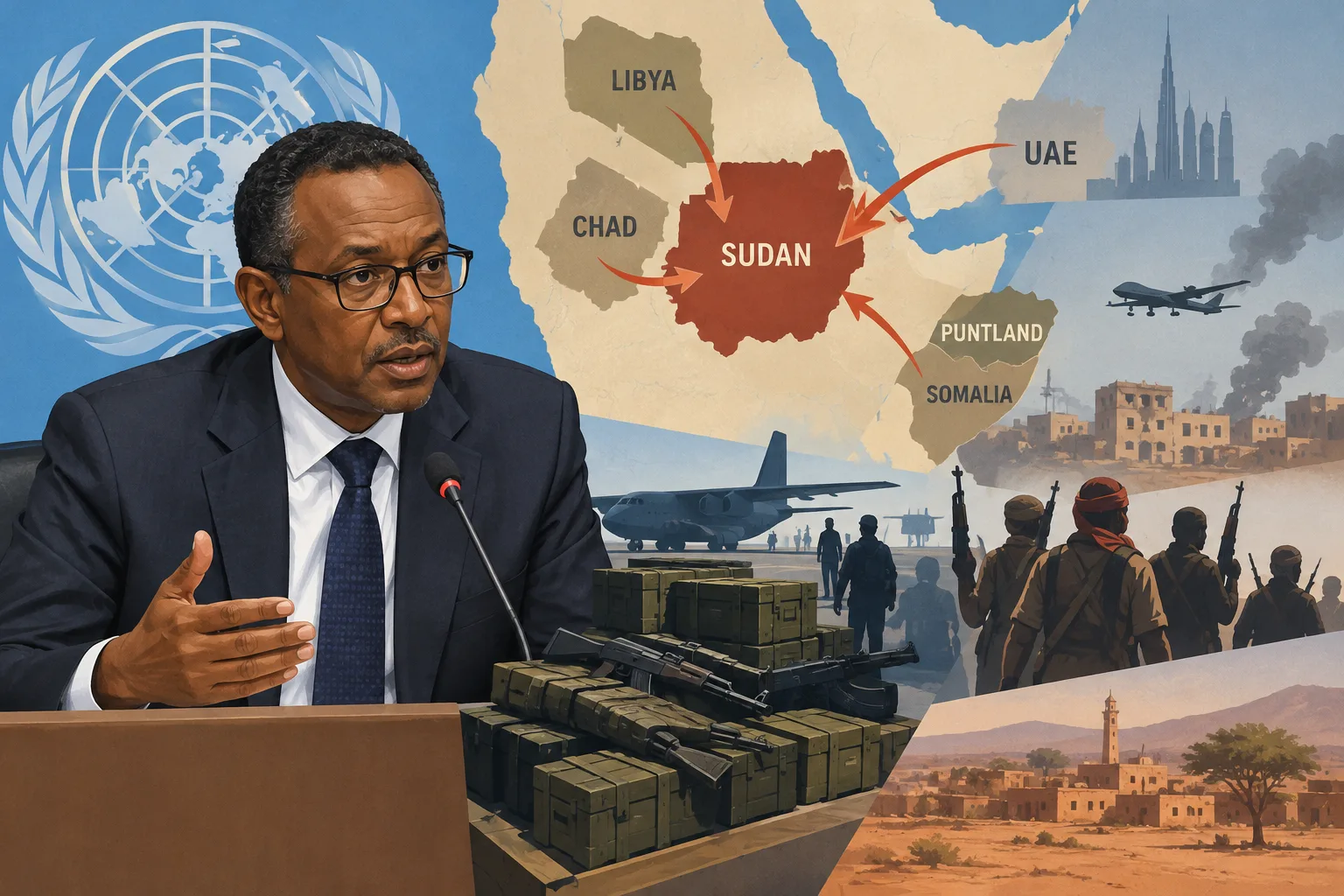
Mohamed Chande Othman, who chairs the UN’s independent fact-finding mission for Sudan, told the General Assembly’s human rights committee on 28 October that foreign weapons, military technology and fighters were sustaining the war. The mission has identified a network supporting the paramilitary Rapid Support Forces (RSF), but Othman said it had not established that the governments of the countries involved were directing it.
He named individuals and organisations operating from the United Arab Emirates, Chad, south-eastern Libya and Puntland in Somalia. At a separate news conference, he said investigators had found evidence of continuing transfers of weapons, technology and personnel. The distinction between the network and the states where it operates matters: activity on a country’s territory does not, by itself, establish that its government supplied the RSF.
The warning builds on a mission report dated September, rather than announcing a newly discovered network. Drawing in part on witnesses with direct knowledge, that report found reasonable grounds to believe that a cross-border network had supplied the RSF with weapons, logistical support, training and foreign personnel, including Colombian contractors. Human Rights Watch separately traced routes taken by Colombian contractors in an investigation published in May. It argued that their deployment appeared to have UAE state backing — a stronger conclusion than the UN mission has reached.
The UAE rejected allegations that it had provided military or other support to the RSF and denied facilitating foreign fighters. Chad said it was neutral and denied that its territory or facilities had been used to provide military support. The UN mission nevertheless found that private networks had used parts of Chad as transit routes.
The mission also found evidence that Sudan’s armed forces had used foreign-supplied drones in strikes affecting civilian sites. Its investigation into the origins and transfer of those systems remains preliminary. In both sides’ drone operations, the mission documented attacks on civilians and essential infrastructure, some of which it said may amount to war crimes.
Othman’s warning came as the mission reported further danger to civilians in El Obeid, where it said RSF-attributed drone strikes had disrupted services and forces affiliated with the army had intensified surveillance and arbitrary arrests. Mission members called for the existing UN arms embargo on Darfur to be extended across Sudan. That remains a proposal, not a decision taken at the committee meeting.
Sign in to give this article a thumbs up or down.
About this discussion and AI questions
Private test discussion. Comments are readers’ views and are not yet automatically fact-checked. Editing is available for 60 seconds after posting.
Sign in with a confirmed reader account and choose a username to read comments and participate.
Sorting applies to top-level comments; replies remain oldest first. New comments and likes can change the order. Refresh for the current ranking.
Loading comments…