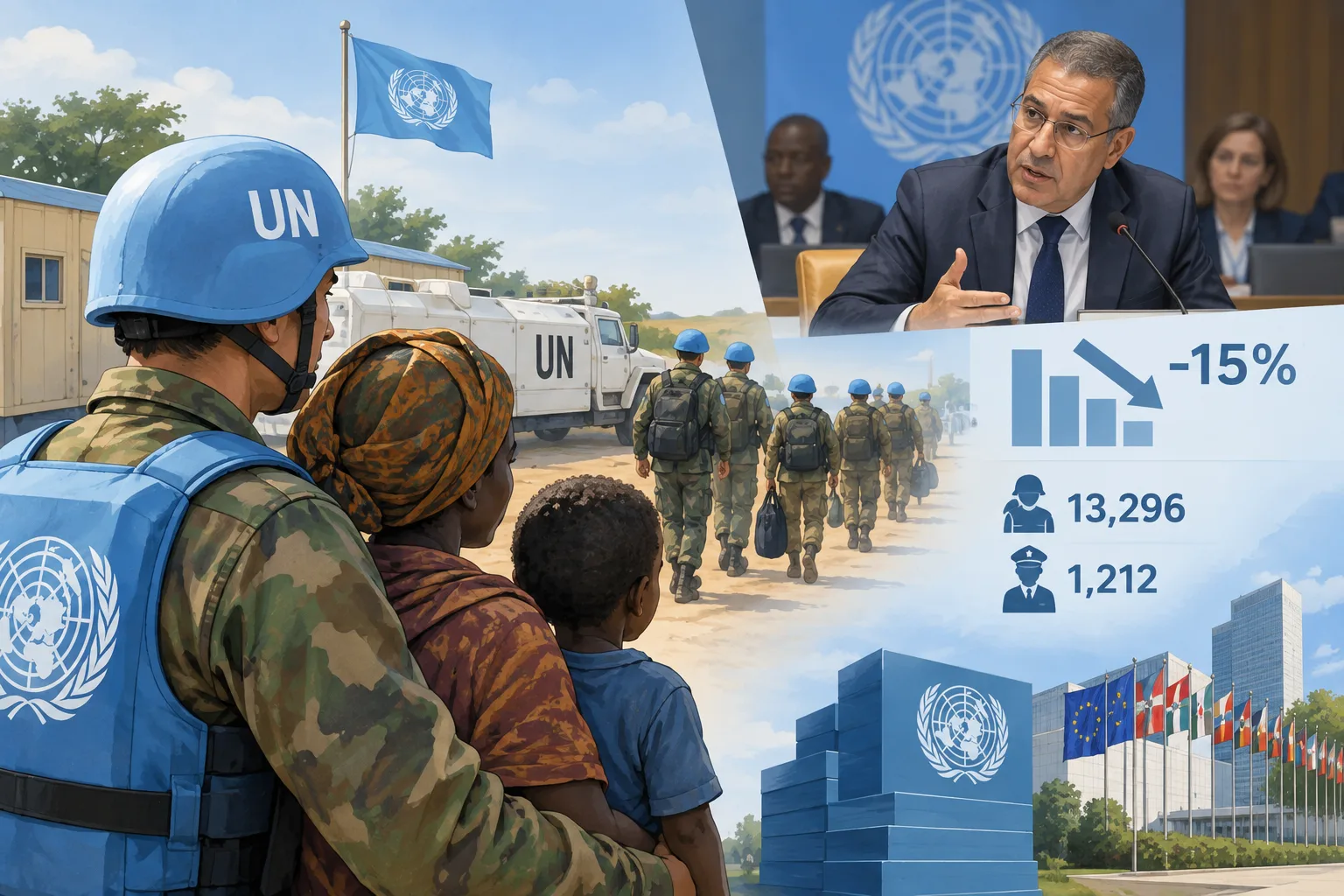
UN peacekeeping missions cut spending by 15% amid liquidity crisis
UN peacekeeping missions have cut expenditure by 15% and sent home thousands of troops and police amid a liquidity crisis, officials told the General Assembly’s Fourth Committee. They warned that predictable funding is essential to protect civilians and sustain operations.
Review information is loading.
UN peacekeeping missions have cut expenditure by 15% and repatriated 13,296 troops and 1,212 police amid a UN liquidity crisis, senior officials told the General Assembly’s Fourth Committee on 5 November. They urged member states to pay their assessed contributions in full and on time, warning that predictable funding is essential to protect civilians and deliver on missions’ mandates.
Mohamed Khaled Khiari, a UN assistant secretary-general, said peacekeepers sheltered more than 1,000 civilians at their base in South Sudan’s Abiemnom village during a large-scale attack in March. He described this as one example of the lives peacekeepers had saved.
Khiari warned that the departure of peacekeepers can increase the risk of renewed conflict. The UN Interim Force in Lebanon is due to conclude operations at the end of 2026. The UN Mission for the Referendum in Western Sahara ceased operations and began liquidation on 1 November after the Security Council did not renew its mandate.
Atul Khare, the under-secretary-general for operational support, said reimbursements to countries contributing troops and police were up to date, but cautioned that this was no guarantee for the future. More than 700 staff had left through contingency planning and over 400 through early separation, he said.
Catherine Pollard, the under-secretary-general for management strategy, policy and compliance, said her department had worked with missions on contingency plans and spending reductions, including a hiring freeze. Improved methods and tools had helped generate about $35 million in savings in 2024-25, she said, while prolonged cash pressures affected operational flexibility and the delivery of mandated results.
Delegates also called for clear, realistic mandates and said cost-cutting should not compromise mission effectiveness or personnel safety. The European Union’s representative said peacekeeping operations should be shaped by security needs and political objectives, rather than financial constraints.
The discussion comes amid wider debate over UN mission funding. In a separate discussion of the proposed 2027 budget for special political missions, countries urged a dedicated account to make their financing more predictable.
Sign in to give this article a thumbs up or down.
About this discussion and AI questions
Private test discussion. Comments are readers’ views and are not yet automatically fact-checked. Editing is available for 60 seconds after posting.
Sign in with a confirmed reader account and choose a username to read comments and participate.
Sorting applies to top-level comments; replies remain oldest first. New comments and likes can change the order. Refresh for the current ranking.
Loading comments…