UN vote urges end to Cuba embargo as support falls sharply
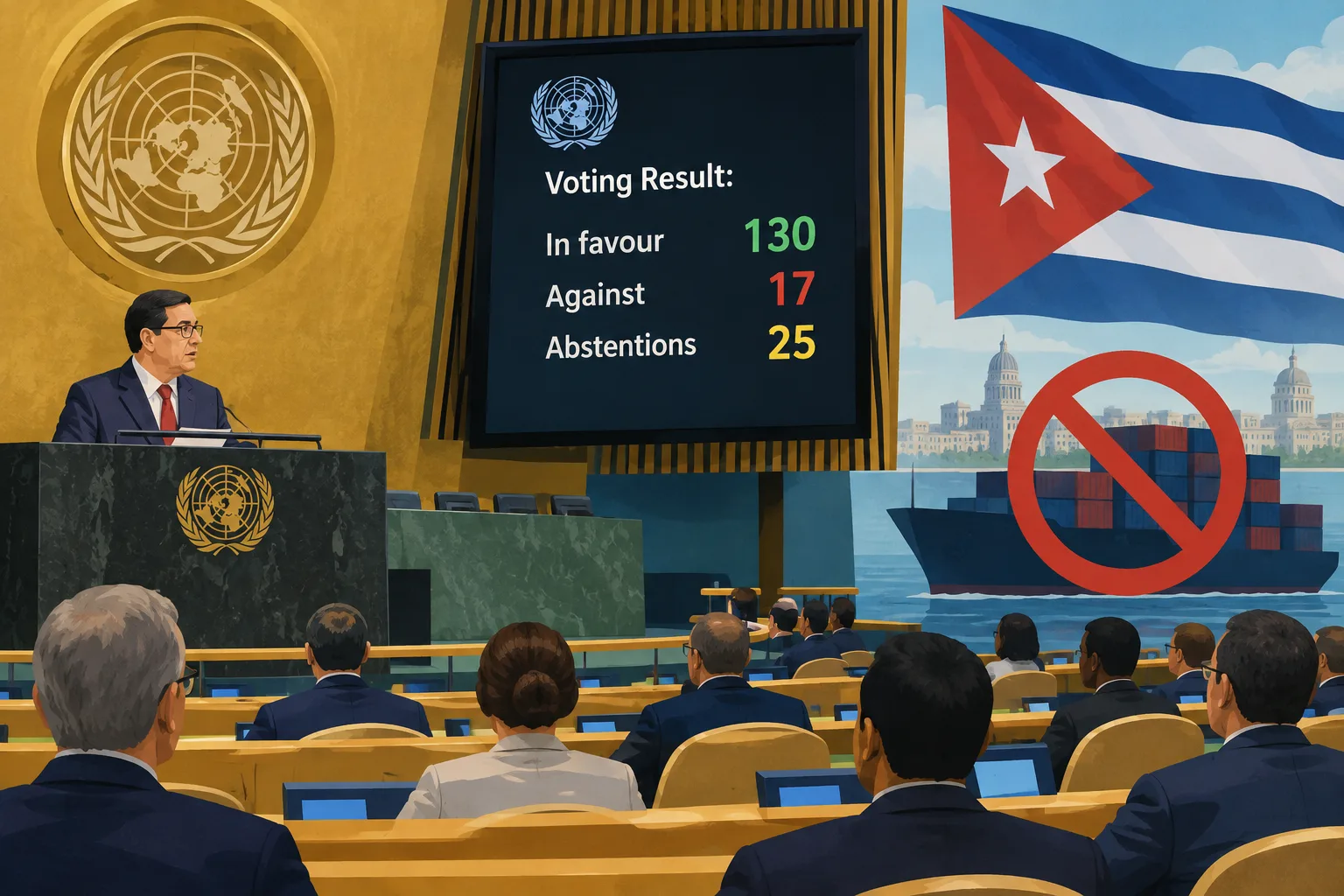
The UN General Assembly voted 130-17 to urge an end to the US embargo on Cuba, but 25 abstentions and a sharp fall in support from last year marked a shift in the vote.
Review information is loading.
The UN General Assembly voted 130 to 17, with 25 abstentions, to urge an end to the United States’ economic embargo on Cuba — while support for the resolution fell sharply from last year. The vote on Wednesday was the 34th time the Assembly had adopted the measure, according to the Associated Press and Reuters.
The resolution is not legally binding, and only the US Congress can lift the embargo. But the result carries political weight: last year, 165 countries voted in favour, seven against and 12 abstained.
Germany, Italy and Latvia were among Western countries that abstained for the first time in decades. Several other countries, including Bosnia, Colombia, Costa Rica, Ecuador, Lithuania, Morocco, North Macedonia, Paraguay and Slovenia, voted against after previously supporting the resolution, AP reported.
US Ambassador to the UN Mike Waltz said he was satisfied that countries including Germany and South Korea had shifted their position. He told reporters that Washington expected the number to grow. The US had urged member states to reject the resolution, accusing Cuba’s government of corruption and repression. Havana rejects US accusations.
Cuban Foreign Minister Bruno Rodríguez presented the draft resolution, arguing that the embargo harms ordinary Cubans. The vote took place amid heightened tensions between the two delegations, including a shouting match on the Assembly floor on Tuesday.
The United States has maintained the embargo for more than 60 years. The Trump administration has increased pressure on Cuba since January, including through a de facto fuel blockade, Reuters reported. AP said fuel shortages have contributed to prolonged power cuts affecting services including water and communications.
The annual resolution has been adopted for more than three decades, with a break in 2020 during the Covid pandemic. Despite its repeated passage, it has not changed US policy.
Sign in to give this article a thumbs up or down.
From the discussion
Private test discussion. Comments are readers’ views and are not yet automatically fact-checked. Editing is available for 60 seconds after posting.
Sign in with a confirmed reader account and choose a username to read comments and participate.
Sorting applies to top-level comments; replies remain oldest first. New comments and likes can change the order. Refresh for the current ranking.
Loading comments…