UN warns of winter energy crisis in Ukraine as Black Sea attacks threaten food exports
Ukraine told the UN Security Council that attacks in November had left more than 850,000 people without electricity. UN officials also warned that attacks on Black Sea shipping were disrupting food exports.
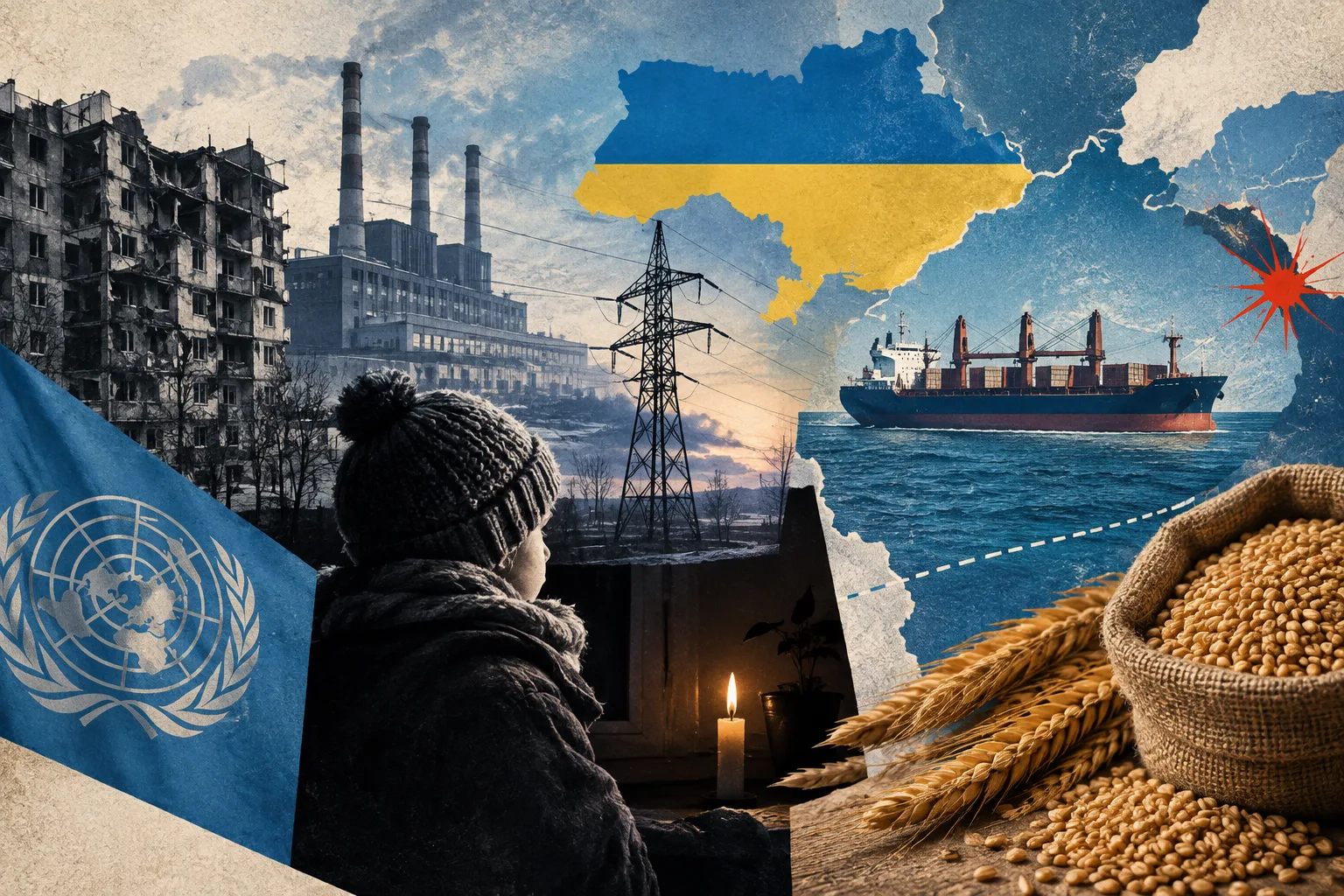
Ukraine’s representative told the council that Russian attacks in November had shut down three thermal power plants and left more than 850,000 people without electricity.
Rosemary DiCarlo, the UN’s political affairs chief, said strikes on energy infrastructure had been more extensive and systematic than at the same point last year. Families were facing winter without heat, power or water, she said.
The UN Development Programme said it was working with Ukraine’s national and local authorities, with the aim of restoring power and heat for winter. Earlier in November, a Kyiv mother told the BBC that her household had electricity for only four or five hours a day.
DiCarlo told Monday’s meeting that at least five people had reportedly been killed in Russian attacks across four Ukrainian regions that day. Separately, Ukraine’s representative said at least 11 people had been killed in a Russian strike on a residential building in Dymer, in the Kyiv region, where rescue operations were continuing.
Russia’s representative, Anna Evstigneeva, said Moscow targeted only facilities providing products for Ukraine’s armed forces. She accused Ukraine of attacking Russian ports, commercial vessels and energy infrastructure, and said Russia would not accept a new grain deal.
Her comments followed President Vladimir Putin’s statement last week that he would no longer consider a pause in attacks at sea and on energy facilities, after Ukrainian strikes on the bridge linking Russia to occupied Crimea.
Pressure on food supplies
In a September analysis, the US think tank Center for Strategic and International Studies said Russian attacks had disrupted Ukrainian exports, while Ukrainian attacks had damaged grain infrastructure and grain-carrying ships at Russian ports.
CSIS said Ukrainian grain exports in the first two weeks of August were 75% lower than in the comparable period in 2025, linking the fall to Russian attacks on ships and export infrastructure.
Luke Lindberg, head of the World Food Programme (WFP), told the council that the cost of a basic diet in south-central Sudan had risen 130% since February. He pointed to bottlenecks in maritime routes and climate pressures as factors.
Food prices face several pressures. The think tank, citing UN food-price data, said world wheat prices in August were 15% higher than a year earlier, although cereal prices overall remained well below their 2022 peak. It also identified drought and high fertiliser costs as factors reducing production in Canada and across EU countries.
The WFP also says violence, displacement and restrictions on movement have disrupted access to food in Sudan. It says disruption on the Red Sea, a separate shipping route, has pushed up fuel and fertiliser costs.
Sign in to give this article a thumbs up or down.
From the discussion
Private test discussion. Comments are readers’ views and are not yet automatically fact-checked. Editing is available for 60 seconds after posting.
Sign in with a confirmed reader account and choose a username to read comments and participate.
Sorting applies to top-level comments; replies remain oldest first. New comments and likes can change the order. Refresh for the current ranking.
Loading comments…