US appeals court upholds block on federal pregnancy protections for Texas state workers
A divided court found that a $1.7 trillion Biden-era spending law was passed unconstitutionally, but its order is limited to enforcement against Texas as an employer.
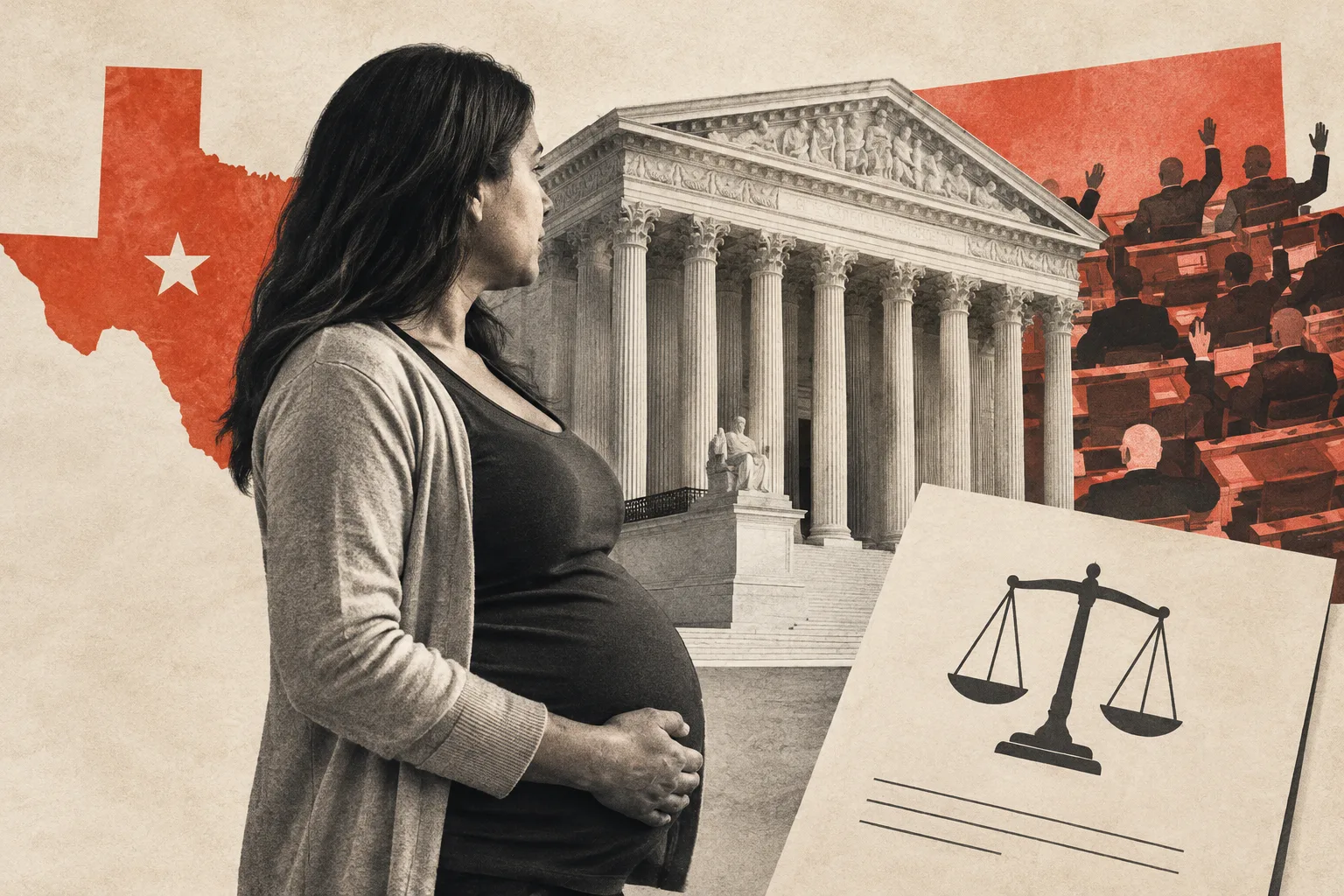
A US appeals court has upheld a block on federal enforcement of a pregnancy workplace law against the Texas state government, after finding that the wider spending law containing it was passed unconstitutionally.
The Fifth Circuit Court of Appeals ruled 9–8 on 20 November that the House of Representatives had not met the constitutional requirement for a quorum when it passed the Consolidated Appropriations Act of 2023. But the judges stressed that their decision does not block the entire $1.7 trillion spending law, which was signed by then-president Joe Biden.
The court upheld a permanent injunction preventing the federal government from enforcing the Pregnant Workers Fairness Act against Texas as an employer. The law requires certain employers to accommodate needs related to pregnancy and childbirth, such as time off for medical appointments or exemptions from heavy lifting. The injunction does not cover every employer in Texas.
A district judge issued the injunction in 2024. A three-judge panel of the same appeals court overturned that decision in 2025, before the full court reheard the case.
The dispute centred on a rule adopted during the Covid-19 pandemic that allowed House members to designate colleagues to vote and record their presence on their behalf. The House passed the bill by 225 votes to 201, with one member voting present, according to the court. Of the 427 members who recorded a vote, 226 did so by proxy.
A quorum is the minimum number of members needed to conduct business. The majority said the House had reached one only by counting absent members represented by proxies, which it found insufficient under the Constitution. The judges said they were deciding Independently verifiedState of Texas v. Blanche, No. 24-10386 (5th Cir. 2026) :: Justia, not whether Congress could use proxy voting in general.
In dissent, Judge James Graves argued that the Constitution does not require physical presence and said the majority’s reasoning “shoehorns a much larger requirement into the Constitution”. He noted that no member had formally objected that a quorum was lacking, although Texas representative Chip Roy questioned whether a physical quorum was present and reserved the right to object.
Sign in to give this article a thumbs up or down.
From the discussion
Private test discussion. Comments are readers’ views and are not yet automatically fact-checked. Editing is available for 60 seconds after posting.
Sign in with a confirmed reader account and choose a username to read comments and participate.
Sorting applies to top-level comments; replies remain oldest first. New comments and likes can change the order. Refresh for the current ranking.
Loading comments…