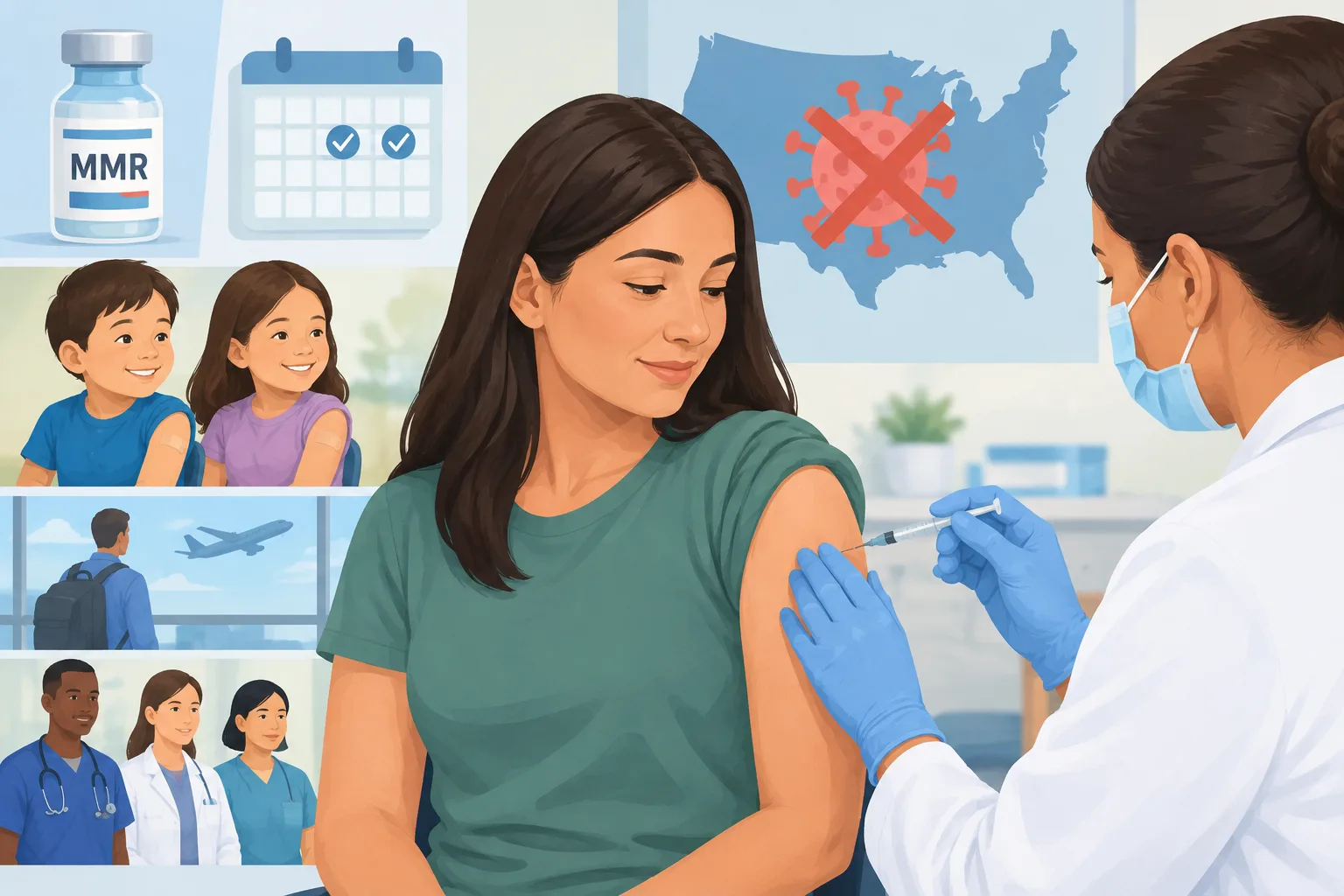
US loses measles-elimination status: who might need another vaccine dose?
People who have had two doses of the MMR vaccine generally do not need a measles booster. Others may need a dose depending on their vaccination history, exposure risk and health.
Review information is loading.
The Pan American Health Organization announced on 17 November that the US had lost the measles-elimination status it held for 26 years, CNN reported. The change follows more than a year of continuous local transmission.
Elimination did not mean there were no cases. Losing the status means the virus has been spreading locally for a prolonged period. Measles is highly contagious and can cause serious complications, including pneumonia and inflammation of the brain.
Who might need another dose?
Guidance from the US Centers for Disease Control and Prevention (CDC), published before the announcement, says two properly spaced doses of the measles, mumps and rubella (MMR) vaccine usually provide lifelong protection against measles. A further dose is not generally recommended for measles protection.
For most adults, one documented dose or other evidence of immunity is sufficient. CNN says people vaccinated before 1989 who did not receive a second dose may want to consider one. The CDC does not recommend a general catch-up programme for a second adult dose, but advises two doses for certain groups without other evidence of immunity, including healthcare workers, international travellers and some people at increased risk during an outbreak. Local health departments can advise on outbreak-specific recommendations.
People unsure of their vaccination history should first look for written records, the CDC says. If records and other evidence of immunity cannot be found, vaccination may be appropriate. Birth before 1957 is generally considered evidence of immunity, although healthcare workers may need particular consideration.
People who received an inactivated measles vaccine, or a vaccine of unknown type, before 1968 should be revaccinated, according to the CDC. Anyone with questions about their circumstances can speak to a healthcare professional.
Children and exposure
The usual US childhood schedule is an MMR dose at 12–15 months and another at 4–6 years. The second MMR dose can be given earlier, at least 28 days after the first.
Infants aged 6–11 months may receive an early dose before international travel or during an outbreak when the local health department recommends it. They still need two doses after their first birthday.
MMR is not suitable for everyone: pregnant people and those with severe immunosuppression should not receive it. People with a weakened immune system or a history of a serious allergy or reaction to a vaccine should discuss vaccination with a healthcare professional.
After exposure to measles, people without sufficient evidence of immunity should promptly contact a healthcare professional or health department. An MMR dose within 72 hours may offer protection or lessen illness; immunoglobulin within six days is another option for eligible people.
Sign in to give this article a thumbs up or down.
About this discussion and AI questions
Private test discussion. Comments are readers’ views and are not yet automatically fact-checked. Editing is available for 60 seconds after posting.
Sign in with a confirmed reader account and choose a username to read comments and participate.
Sorting applies to top-level comments; replies remain oldest first. New comments and likes can change the order. Refresh for the current ranking.
Loading comments…