US Thanksgiving meal prices rise 6.3%, but retailer bundles offer cheaper options
The American Farm Bureau Federation estimates that a Thanksgiving meal for 10 will cost 6.3% more than last year, though retailer bundles offer cheaper options and another analysis found a slight decline.
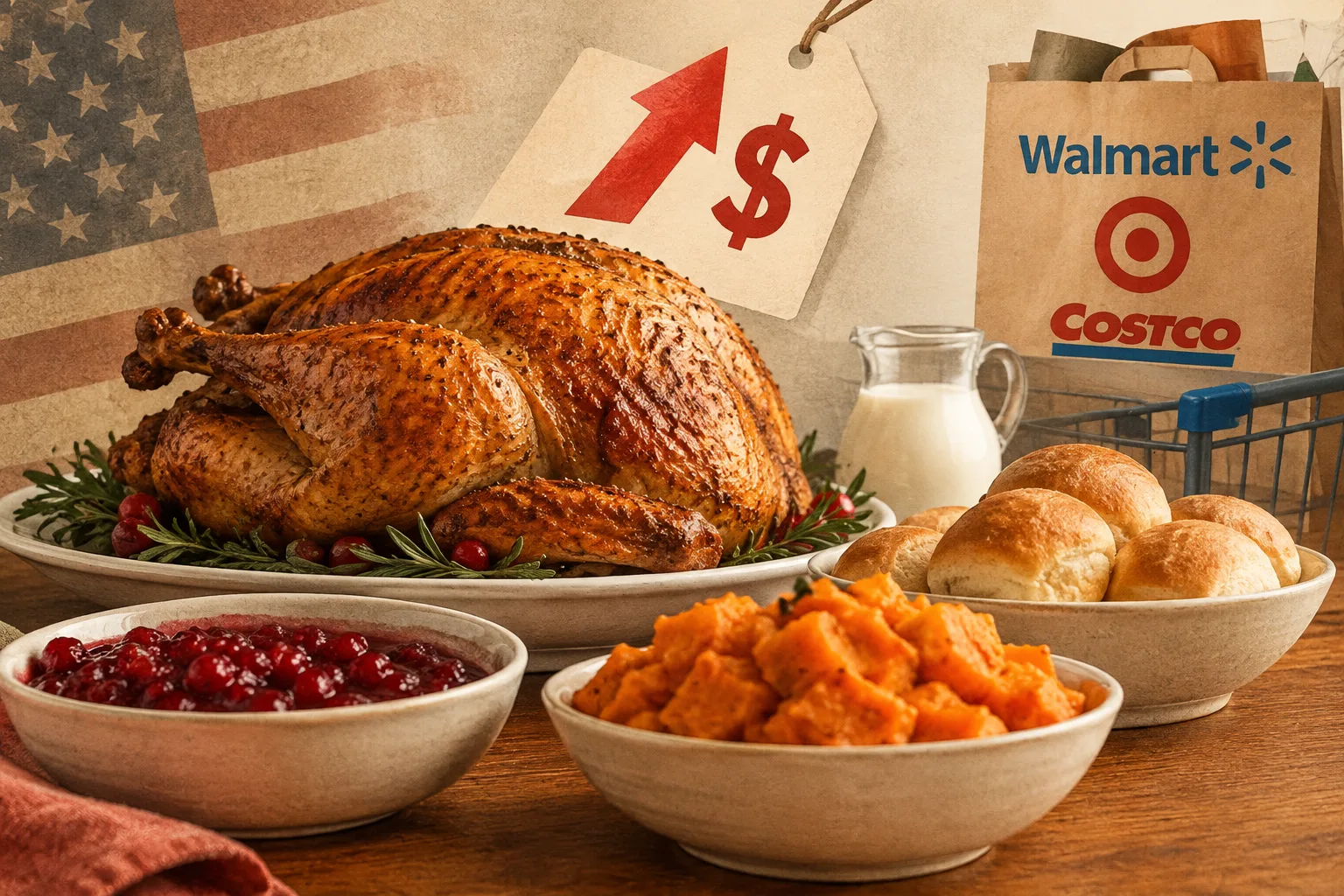
US households face a higher bill for Thanksgiving dinner this year, with the American Farm Bureau Federation estimating that a meal for 10 will cost $58.63 — 6.3% more than in 2025. The increase is the first since 2022, though the average remains below that year’s record of $64.05.
The federation’s annual survey found the biggest rise in turkey: a 16-pound frozen bird averaged $23.68, up 10% on last year. Cranberries and milk cost nearly 9% more, dinner rolls were up 7%, and three pounds of sweet potatoes cost 5% more.
The figures are based on prices checked by volunteer shoppers in the first week of November. The federation says prices may fall in the days before Thanksgiving.
Cameron Castillo, an economist with the federation, cited diesel costs as a factor in higher food prices. The national average for diesel was $5.81 a gallon on Monday, according to AAA. Castillo also pointed to the turkey population’s recovery from avian flu, which has affected supply.
But estimates differ depending on what is included. Wells Fargo’s Agri-Food Institute calculated that a Thanksgiving meal for 10, including dessert, would cost $78.93, down 0.4% from a year ago. Its analysis found turkey prices were largely steady, although some were “way up”, according to the institute’s chief agricultural economist, Michael Swanson.
Retailers are offering lower-priced bundles. Walmart’s meal for 10 costs about $35, around 12% less than last year, while Target’s $30 bundle serves six. Costco has offered a $200 meal for eight. The packages differ in size and contents, so their prices are not directly comparable with the federation’s survey.
Food prices are also affecting household budgets more broadly. A LendingTree survey found that more than half of consumers said inflation was affecting their plans or budgets; 62% of potential hosts said they might need to borrow, including 18% who planned to use buy-now, pay-later loans.
Sign in to give this article a thumbs up or down.
From the discussion
Private test discussion. Comments are readers’ views and are not yet automatically fact-checked. Editing is available for 60 seconds after posting.
Sign in with a confirmed reader account and choose a username to read comments and participate.
Sorting applies to top-level comments; replies remain oldest first. New comments and likes can change the order. Refresh for the current ranking.
Loading comments…