US voters oust sheriffs who backed ICE cooperation, but wider picture is unclear
Voters replaced two sheriffs whose offices had worked with immigration authorities, while a Wisconsin winner has promised to end his county’s agreement. The results do not establish a nationwide electoral pattern.
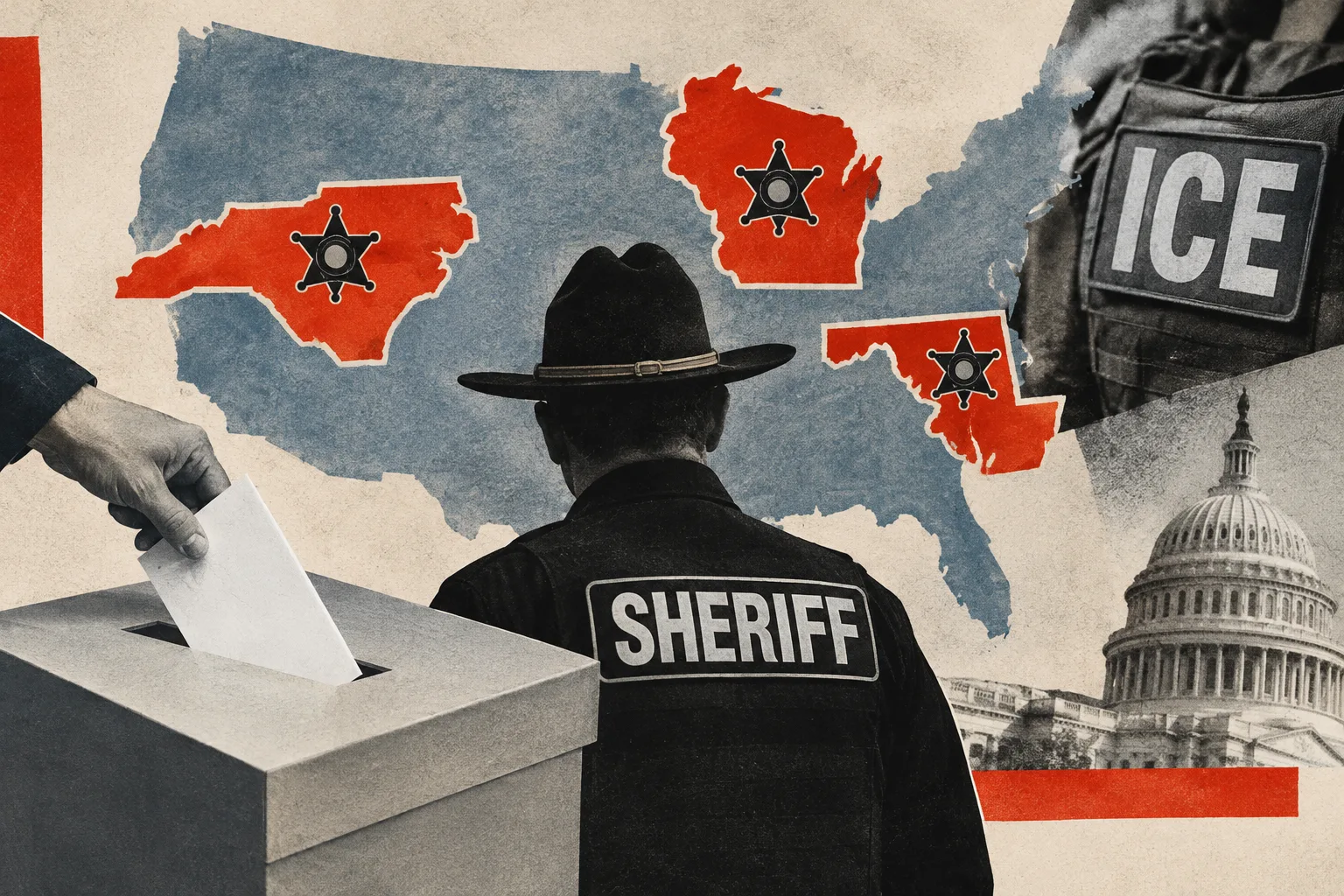
Voters in North Carolina and Maryland have defeated sheriffs whose offices had helped federal immigration enforcement, while a newly elected Wisconsin sheriff has promised to end his county’s agreement with Immigration and Customs Enforcement (ICE).
The contests featured debate over local involvement in President Donald Trump’s immigration drive. But the results alone cannot show how much those agreements influenced voters, or whether the defeats reflect a broader national trend.
The Associated Press says it reviewed about 250 elections involving sheriff’s offices with 287(g) agreements, and that many sheriffs running were unopposed. It did not give a breakdown of how many incumbents won or lost.
The 287(g) programme allows designated local officers to perform certain immigration enforcement duties under ICE supervision. Some agreements concern people already in local custody; another model allows officers to carry out immigration enforcement during their routine work.
In Alamance County, North Carolina, independent Shannon Long defeated Republican Terry Johnson, who had been sheriff since 2002. Elon News Network reported that Long won 52.41% of the vote. Long told AP he would not participate in 287(g); the sheriff’s office was still participating when AP reported the result.
Long said many Latino residents feared engaging with the sheriff’s office. Johnson has denied allegations that his office racially profiled minority residents; a Justice Department lawsuit over the allegations ended in a settlement.
Johnson initially told AP that immigration policy could have contributed to his defeat. He later said it probably did not, pointing instead to his long time in office and the national political climate for Republicans.
In Winnebago County, Wisconsin, Democrat Jason Rippl won an open sheriff’s seat. County results list 36,400 votes for Rippl and 33,323 for Republican Darin Rice; the sitting sheriff was retiring. Rippl promised to end the county’s agreement on his first day in office. Rice supported continuing the agreement but opposed using it for street-level enforcement, Wisconsin Watch reported.
In Frederick County, Maryland, Democrat Karl Bickel defeated Republican Sheriff Chuck Jenkins, another long-time supporter of cooperation with ICE. The Maryland State Archives records Independently verifiedFrederick County, Maryland - General Election Returns 2026 and Independently verifiedFrederick County, Maryland - General Election Returns 2026.
But Maryland had already banned such agreements in February. Maryland Matters reported in May that Frederick had notified ICE it had to end the partnership.
The programme’s national reach is substantial. In July, 6,632 arrests — 14% of ICE’s total that month — had a 287(g) reference, according to an analysis of ICE data by the advocacy group FWD.us. The Deportation Data Project, which processed the data, says the records cannot distinguish street arrests from transfers from custody.
Sign in to give this article a thumbs up or down.
From the discussion
Private test discussion. Comments are readers’ views and are not yet automatically fact-checked. Editing is available for 60 seconds after posting.
Sign in with a confirmed reader account and choose a username to read comments and participate.
Sorting applies to top-level comments; replies remain oldest first. New comments and likes can change the order. Refresh for the current ranking.
Loading comments…