Why is the UK energy price cap rising by 26 per cent in January?
When the UK regulator Ofgem announced a higher energy price cap on 25 November 2026, two explanations drew much of the attention: UK climate policy and the war with Iran. Which explanation accounts for the cost component that rose the most between the two quarters?
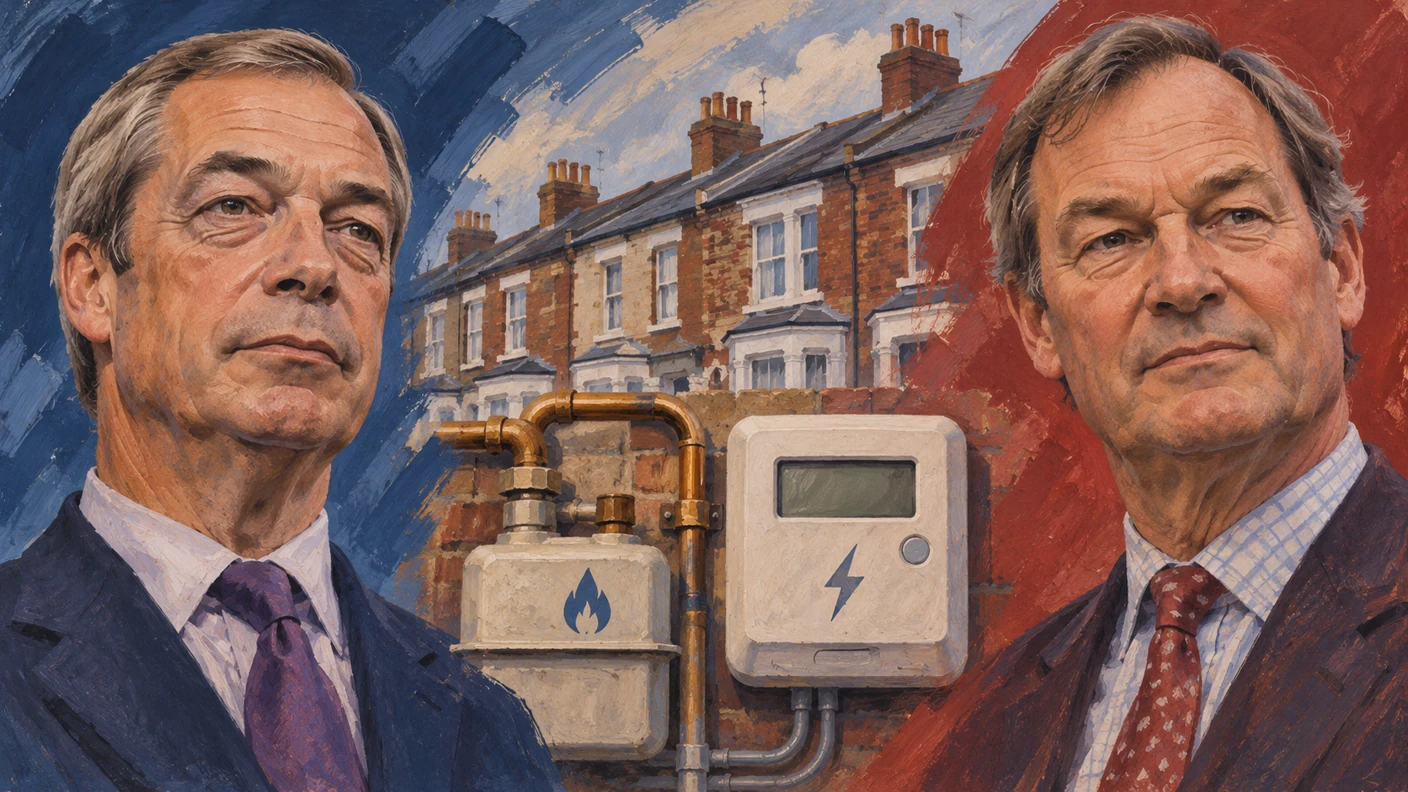
On 25 November 2026, Politics UK reported that the energy price cap would rise by 26 per cent from January. [3]
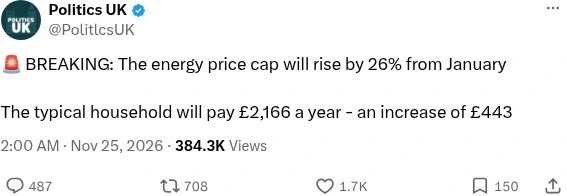
Nigel Farage, leader of Reform UK, shared the report with a single sentence above it: “Labour and the Tories net zero obsession is going to bankrupt Britain.” By placing that sentence above the headline about the 26 per cent increase, he gave the impression that net zero policy explained the announced rise. [1]
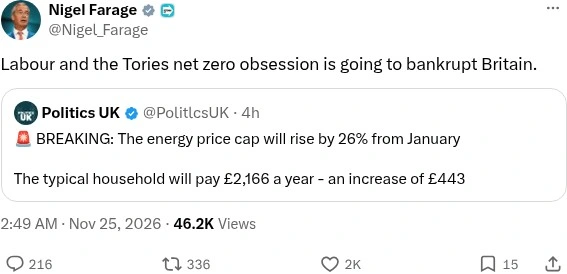
Earlier that morning, Rupert Lowe, leader of Restore Britain, had pointed to the war with Iran in a separate post: “British families are paying the price for the war in Iran.” [2]
In England, Scotland and Wales, the cap limits the price per unit of gas and electricity and the standing charges for households on a standard tariff. It does not set a maximum for an individual energy bill, which also depends on how much energy the household uses. [4]
Ofgem compares October–December 2026 with January–March 2027 for a household that uses both gas and electricity and pays by direct debit. At the same typical level of consumption, the annualised amount rises from £1,723 to £2,166: an increase of £443, or 26 per cent when rounded. These are illustrative figures: they show what the household would pay if the rates for each quarter applied for a full year. [4]Checked in the originalAt the same typical level of consumption, the annualised amount rises from £1,723 to £2,166: an increase of £443, or 26 per cent when rounded.Bij hetzelfde typische verbruik stijgt het bedrag op jaarbasis van £1.723 naar £2.166: £443 meer, afgerond 26 procent. Energy price cap to rise by 26% from January 2027
The wholesale cost component rises from about £810 to about £1,220 on an annualised basis, an increase of roughly £410. That is by far the largest contribution to the £443 rise. Ofgem also includes contracts for difference in this component, so the figure does not solely reflect the cost of buying gas. [5]Checked in the originalThe wholesale cost component rises from about £810 to about £1,220 on an annualised basis, an increase of roughly £410.De groothandelspost stijgt op jaarbasis van circa £810 naar circa £1.220: zo’n £410 meer. Ofgem technical breakdown of the January–March 2027 cap
Ofgem points to conflict and instability in the Middle East as the main drivers of wholesale price movements. The impact was felt chiefly in the cost of buying gas: according to the regulator, the war kept wholesale gas prices high. Low European gas stocks added to the upward pressure. [5][6]Checked in the originalThe impact was felt chiefly in the cost of buying gas: according to the regulator, the war kept wholesale gas prices high.Dat werkte vooral door in de inkoop van gas: volgens de toezichthouder hield de oorlog de groothandelsprijs voor gas hoog. Ofgem’s consumer explanation of the January–March 2027 changesOfgem points to conflict and instability in the Middle East as the main drivers of wholesale price movements.Voor de prijsbewegingen op de groothandelsmarkt wijst Ofgem vooral op het conflict en de instabiliteit in het Midden-Oosten. Ofgem technical breakdown of the January–March 2027 cap
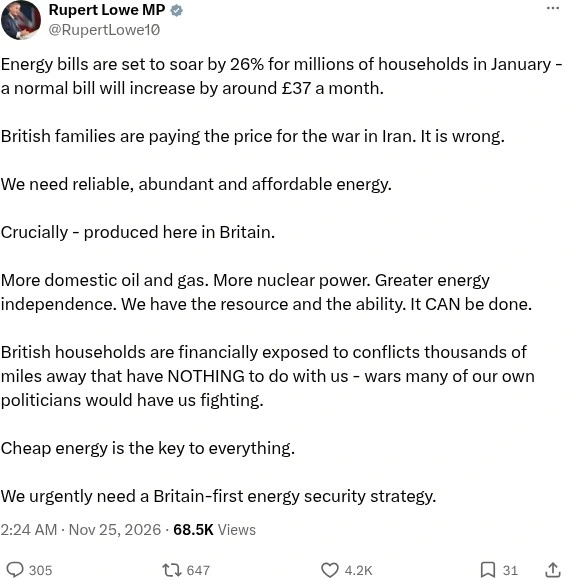
Image: editorial AI illustration by News Made Clear / ChatGPT ImageGen.
Farage’s suggestion that net zero policy explains this rise is misleading: it overlooks the largest measured cost increase, in the wholesale component. For this quarter, Lowe’s reference to the war with Iran is consistent with Ofgem’s explanation for higher procurement costs. This comparison between quarters does not show what climate policy costs or delivers in the long term.
Sign in to give this article a thumbs up or down.
From the discussion
Private test discussion. Comments are readers’ views and are not yet automatically fact-checked. Editing is available for 60 seconds after posting.
Sign in with a confirmed reader account and choose a username to read comments and participate.
Sorting applies to top-level comments; replies remain oldest first. New comments and likes can change the order. Refresh for the current ranking.
Loading comments…