Young walking groups grow across the UK as people seek friendship offline
Young walking groups are expanding across the UK, offering people in their twenties and thirties a way to meet others and spend time outdoors. A Ramblers navigation course for 18- to 25-year-olds has also seen demand nearly double.
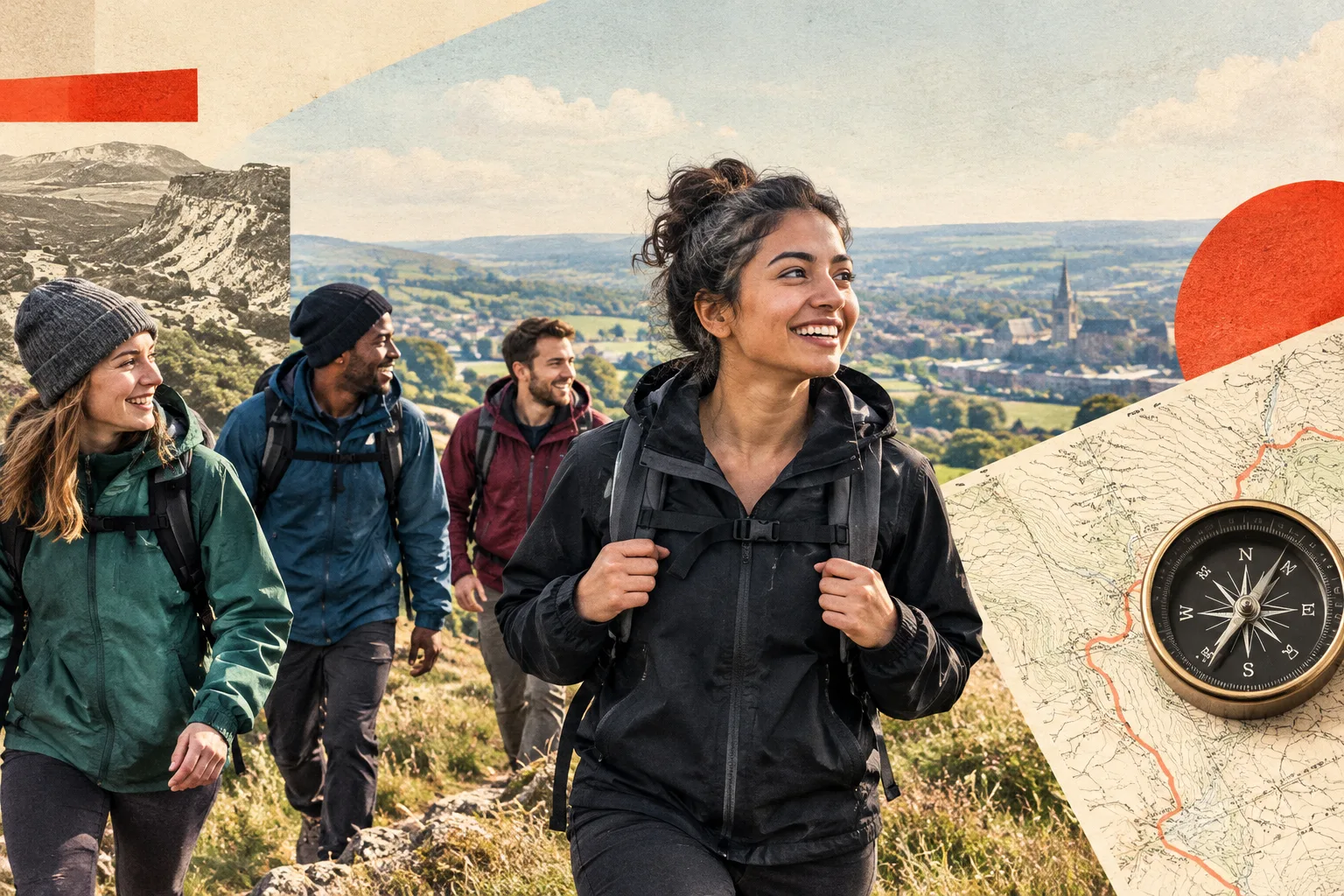
Young walking groups are growing across the UK as more people in their twenties and thirties look for friendship, time outdoors and a break from screens, according to the BBC. One Leicester group now has more than 300 members, while a Sheffield group has grown from 250 to 350 in two years.
The BBC reports that nearly 9% of people aged 16 to 34 are regular hill walkers or hikers, up from 2.3% eight years ago, citing Sport England. The Ramblers, a walking charity, says groups from Inverness to Nottinghamshire have seen membership rise over the past two years, and demand for its map-and-compass course for 18- to 25-year-olds has nearly doubled.
For some, the appeal is learning to navigate without a phone. Alistair Cooper, who leads the Ramblers’ Out There Award programme, says many participants want to stop relying on a digital map marker. He says some missed outdoor activities during the Covid pandemic and want to explore but are unsure where to begin.
Others describe walking as a way to meet people during changes in their lives. Miranda Chambers-Reid, who leads a Ramblers group for people in their twenties and thirties in Sheffield, says walking can provide “an instant friend group”. Its membership has risen by 100 over two years.
In Leicester, Sej Chauhan founded Girls Who Walk after feeling lonely while studying in Bristol. The group focuses on walks in parks and socialising without spending much; it has grown to more than 300 members in two years, most aged 25 to 35. “Social media can often fill the void outside of work and home, but it doesn’t provide the connection that people are craving,” she says.
Some walkers also value the mental-health benefits. Environmental science student Deborah Odutayo, 24, told the BBC that solo hiking feels therapeutic, particularly for her mental health. Dr Danny Longman, a lecturer in human evolutionary physiology at Loughborough University, says being close to nature can benefit wellbeing, brain function and physical performance.
Access is not equal: work, childcare and limited access to green space can make it harder to get outdoors. Longman says even an urban park or garden can offer a chance to move in nature; for those indoors, he suggests bringing natural sounds or imagery into the home.
Sign in to give this article a thumbs up or down.
From the discussion
Private test discussion. Comments are readers’ views and are not yet automatically fact-checked. Editing is available for 60 seconds after posting.
Sign in with a confirmed reader account and choose a username to read comments and participate.
Sorting applies to top-level comments; replies remain oldest first. New comments and likes can change the order. Refresh for the current ranking.
Loading comments…