News Made Clear · Loading…
Category
Regions
Continents
Topics
Dutch government prepares gas storage backstop for winter 2027-28
Loading statistics…
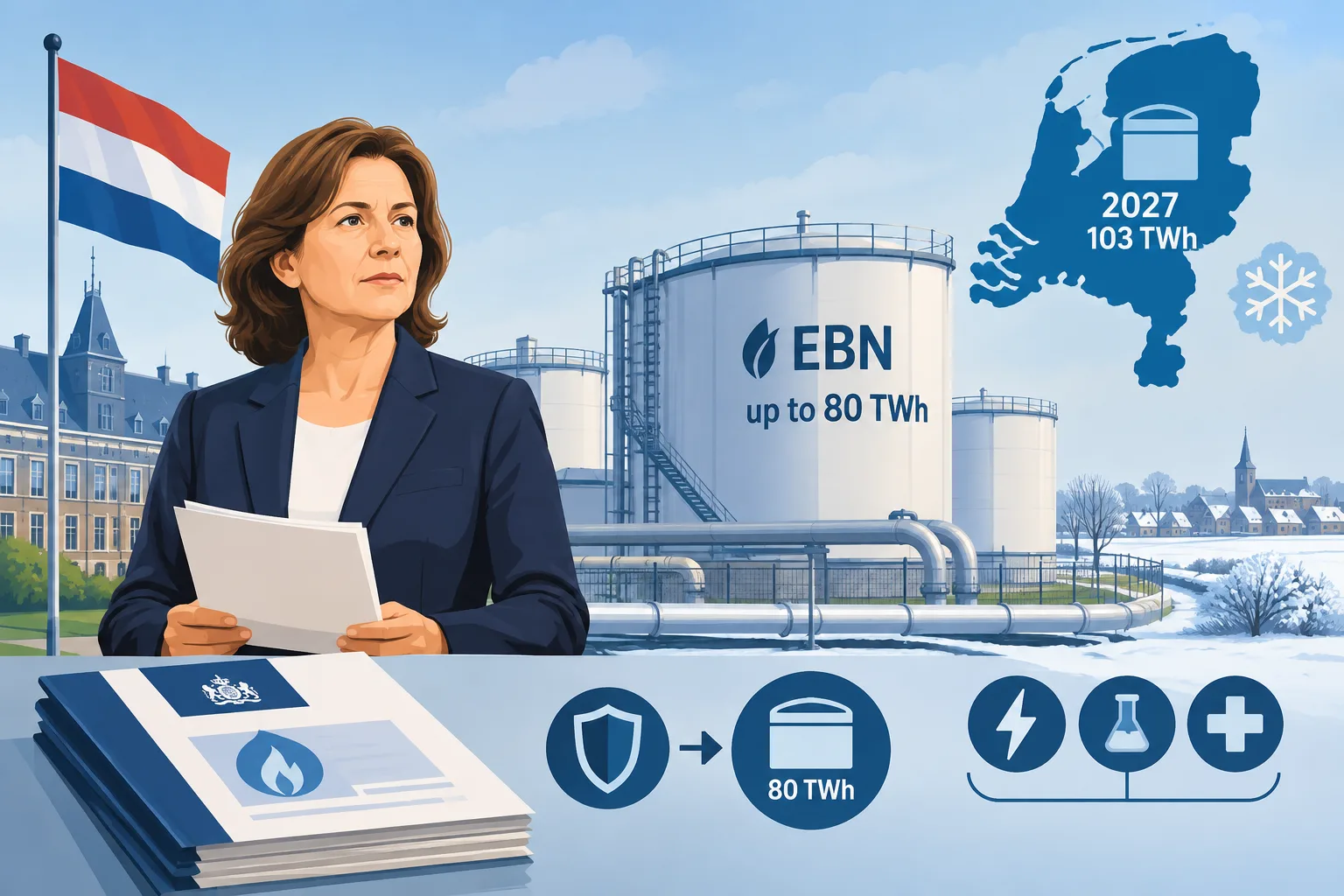
The Dutch government says supplies should cover the winter of 2027-28, including in cold weather, if enough gas is available. It is preparing to store up to 80 TWh through state energy company EBN if the market falls short.
The Dutch government says gas supplies should be sufficient for the winter of 2027-28, including in cold weather, provided enough gas is available. It plans to set a national storage target for 2027 and has authorised state energy company EBN to store up to 80 terawatt-hours if the market does not do so, with up to €1 billion in subsidy available. [1]
The government’s updated National Crisis Plan for Gas sets out roles, agreements and scenarios for public and private organisations if supplies are threatened or interrupted and social disruption is at risk. It sits above existing measures, including the plan for protecting and restoring gas supplies, which contains steps to limit demand. [1]
The revision draws on lessons from recent energy crises, including the war in Ukraine and disruption around the Strait of Hormuz, and takes account of lower gas production in the Netherlands. It also details the role of regional safety authorities and considers the effects of gas shortages on electricity generation, chemicals and healthcare. [1]
The annual winter forecast from grid operator GTS says supply security for 2027-28 is assured even in a cold winter, but the government says that depends on sufficient gas being available. The EU’s filling target for the Netherlands in 2027 is 103 TWh; under difficult market conditions, the country may deviate by up to 10 percentage points. In the past five years, about 70 TWh a year has been withdrawn from storage to meet winter demand. [1]
The government says the market remains responsible for filling storage first. EBN’s mandate is a backstop: it may store up to 80 TWh to cover any shortfall, and the subsidy may not be needed in full if companies store enough gas themselves. The EU filling target is currently due to apply for the last time in 2027, ahead of an expected wider review of European energy-security rules. [1]
How do we know?
1 listed sources · explore evidence, limitations and provenance.
Sign in to give this article a thumbs up or down.
About this discussion and AI questions
Private test discussion. Comments are readers’ views and are not yet automatically fact-checked. Editing is available for 60 seconds after posting.
Sign in with a confirmed reader account and choose a username to read comments and participate.
Sorting applies to top-level comments; replies remain oldest first. New comments and likes can change the order. Refresh for the current ranking.
Loading comments…