News Made Clear · Loading…
Category
Regions
Continents
Topics
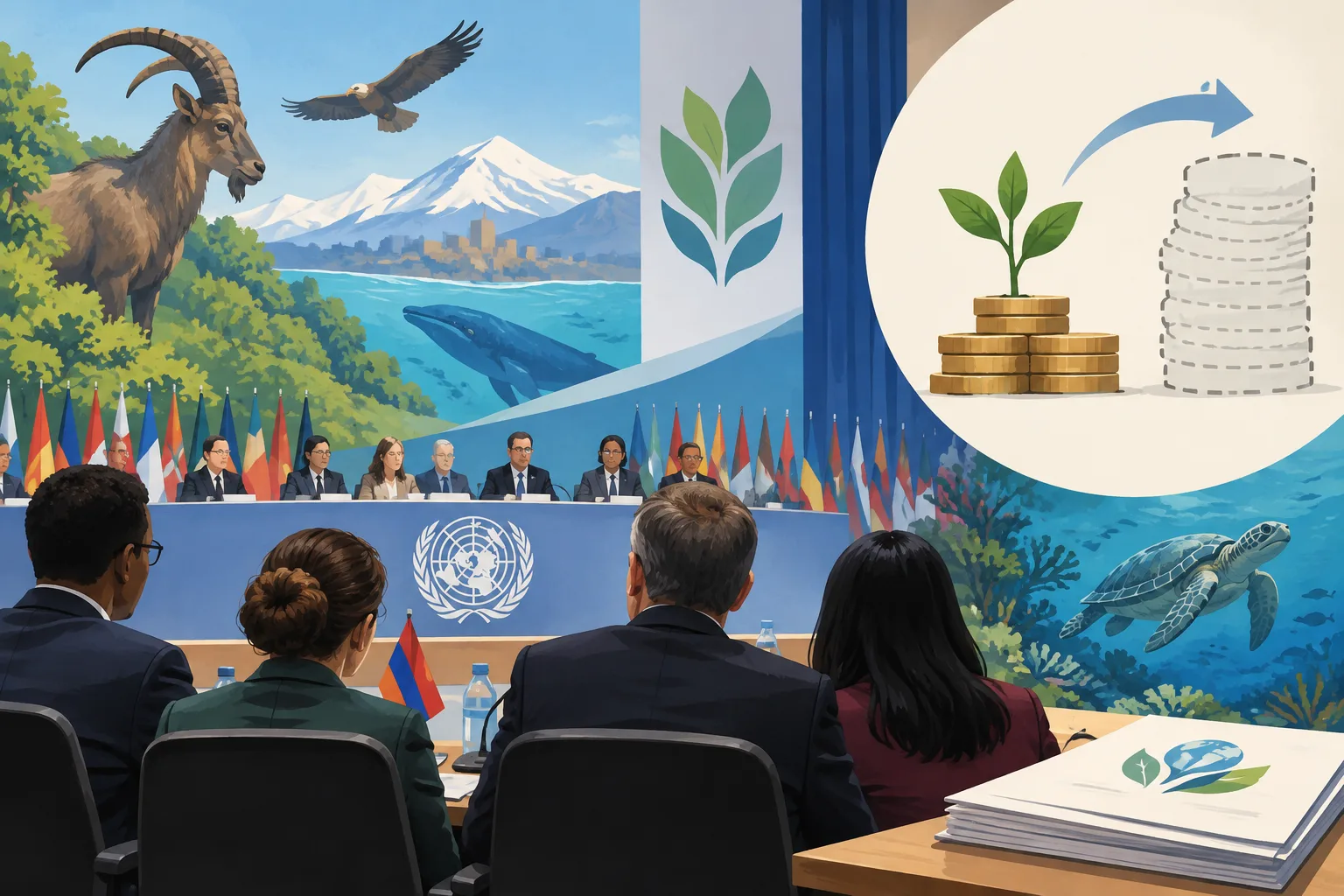
UN nature talks agree action plan, but funding gap persists
Loading statistics…
Countries at UN nature talks in Armenia agreed a new action plan, while funding pledges remain short of global targets and a voluntary fund for companies has attracted little money.
Review information is loading.
Countries at UN nature talks in Armenia have agreed a new action plan, but funding to halt biodiversity loss remains far below what governments say is needed.
Delegates from nearly 200 countries reached agreement in Yerevan early on Saturday, after talks ran beyond their planned finish. The deal acknowledges that countries are falling behind on commitments made in 2022 under the Global Biodiversity Framework, including a target to protect 30% of the world’s land and seas by 2030.
A UN assessment cited by the BBC found the world on track to meet only one of the framework’s 24 targets. The new plan sets out a course correction, though environmental campaigners described the agreement as limited in detail.
“While not particularly exciting or detailed, it’s good news that countries could reach agreement,” Catherine Weller of Fauna & Flora told the BBC. She said countries could not continue towards 2030 without changing course.
Money remains a central obstacle. Governments had pledged $30bn for nature recovery by 2030 and aimed to mobilise another $170bn from private sources. The BBC reported that pledges were not keeping pace with those goals, as some countries redirected aid towards defence and repeated energy shocks.
More than $1bn was pledged during the talks, half of it from philanthropists, including Leonardo DiCaprio’s Re:wild organisation. But little progress was made on a separate voluntary fund for companies that profit from genetic material found in nature. The fund, known as the Cali Fund, had been estimated to have the potential to raise up to $3.6bn a year; at the start of the meeting, pledges stood at $10,000.
Anna Ducros, a researcher at the International Institute for Environment and Development who attended the talks, said governments were also subsidising industries that harm nature, including large-scale fishing. She argued that governments were spending on nature while also paying for activities that damage it.
There was some progress on commitments to reduce harmful subsidies, but the BBC reported that the Cali Fund’s voluntary status made it difficult to press companies to contribute. The dispute over funding therefore remains unresolved even as governments have agreed on the action plan.
How do we know?
1 listed sources · explore evidence, limitations and provenance.
Sign in to give this article a thumbs up or down.
About this discussion and AI questions
Private test discussion. Comments are readers’ views and are not yet automatically fact-checked. Editing is available for 60 seconds after posting.
Sign in with a confirmed reader account and choose a username to read comments and participate.
Sorting applies to top-level comments; replies remain oldest first. New comments and likes can change the order. Refresh for the current ranking.
Loading comments…