News Made Clear · Loading…
Category
Regions
Continents
UN committee urges stable funding for radiation science body
Loading statistics…
The Fourth Committee approved a draft urging adequate, predictable resources for the UN radiation science committee, whose annual session has been postponed until 2027 amid staffing and operational constraints.
Review information is loading.
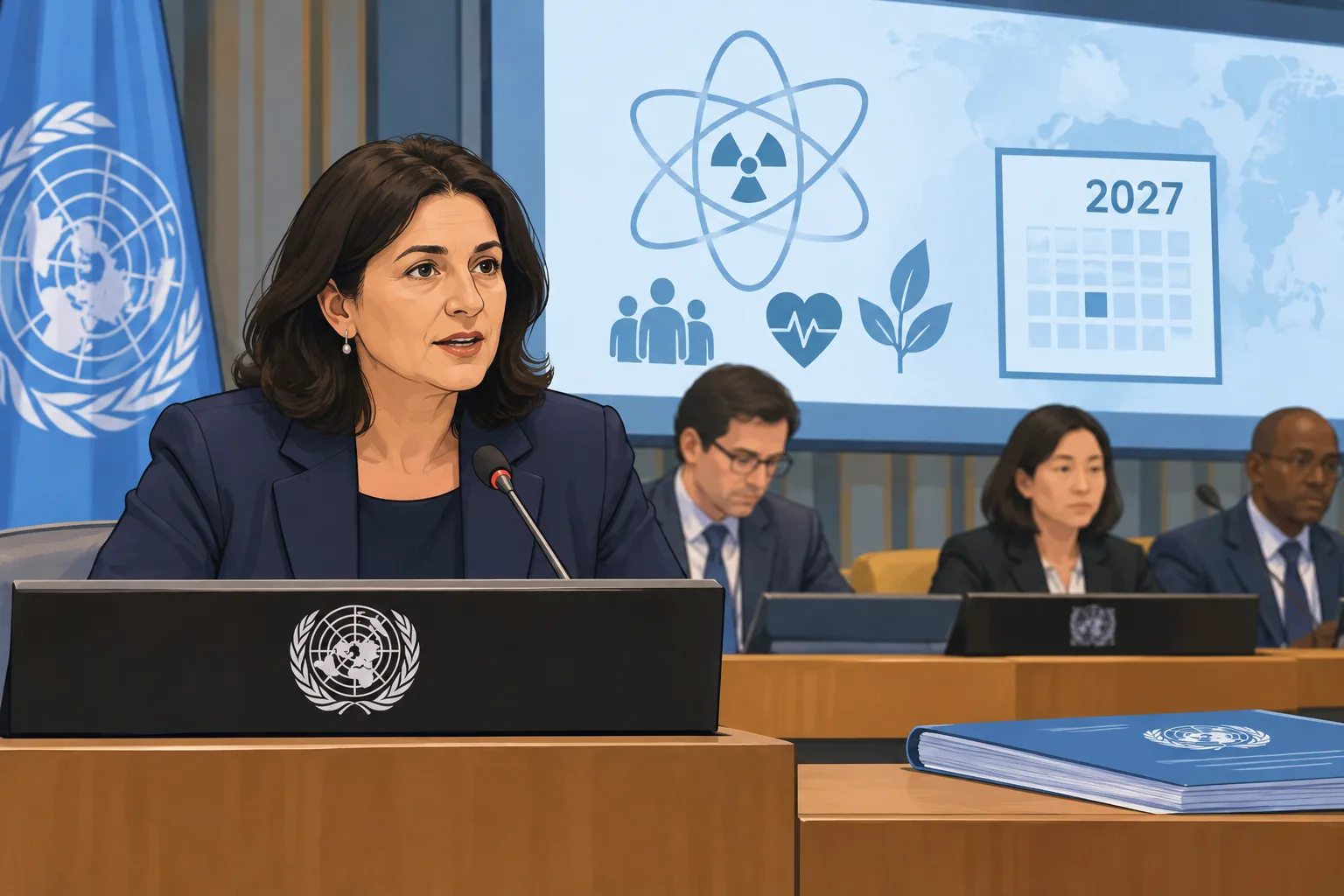
The UN General Assembly’s Fourth Committee has approved a draft resolution calling for predictable funding for the United Nations Scientific Committee on the Effects of Atomic Radiation, after staffing and resource constraints delayed its work and postponed its annual session until 2027.
The committee approved the text without a vote on 21 October. It commends the scientific body’s work and urges that its regular budget be sufficient for planned activities, subject to measures to manage the UN’s liquidity constraints. It also encourages member states able to do so to make voluntary contributions.
The draft takes note of the postponement of the committee’s 73rd session and reiterates the need for annual sessions so its reports can reflect the latest findings. It asks the UN Secretary-General to provide the General Assembly at its 82nd session with a list of states interested in joining the committee. That request does not itself enlarge the committee, Chair Sarah Baatout told delegates.
Baatout said the committee evaluates evidence on the medical, health and environmental effects of atomic radiation, rather than prescribing policy or setting safety standards. It brings together experts nominated by 31 member states. She said it had adopted assessments on epidemiological studies of ionising radiation and cancer, and on effects on the circulatory system, while staffing shortages, limited resources and operational disruptions had delayed other work.
Belgium’s representative said the draft also asks the Secretary-General to transfer organisational responsibility for the committee from the UN Environment Programme to another office, while keeping its secretariat in Vienna.
Delegates from several countries and regional groups called for stable resources and administrative support. Speaking for Canada, Australia and New Zealand, New Zealand’s representative described the committee’s assessments as an important basis for evidence-informed decisions on health and the environment. The EU representative highlighted its work on medical exposure and preparedness for nuclear and radiological emergencies. Russia’s delegate, meanwhile, said the body should remain exclusively scientific and opposed expanding its activities.
How do we know?
1 listed sources · explore evidence, limitations and provenance.
Sign in to give this article a thumbs up or down.
About this discussion and AI questions
Private test discussion. Comments are readers’ views and are not yet automatically fact-checked. Editing is available for 60 seconds after posting.
Sign in with a confirmed reader account and choose a username to read comments and participate.
Sorting applies to top-level comments; replies remain oldest first. New comments and likes can change the order. Refresh for the current ranking.
Loading comments…