News Made Clear · Loading…
Category
Topics
UN Security Council set to vote on digital risks to children in conflict
Loading statistics…
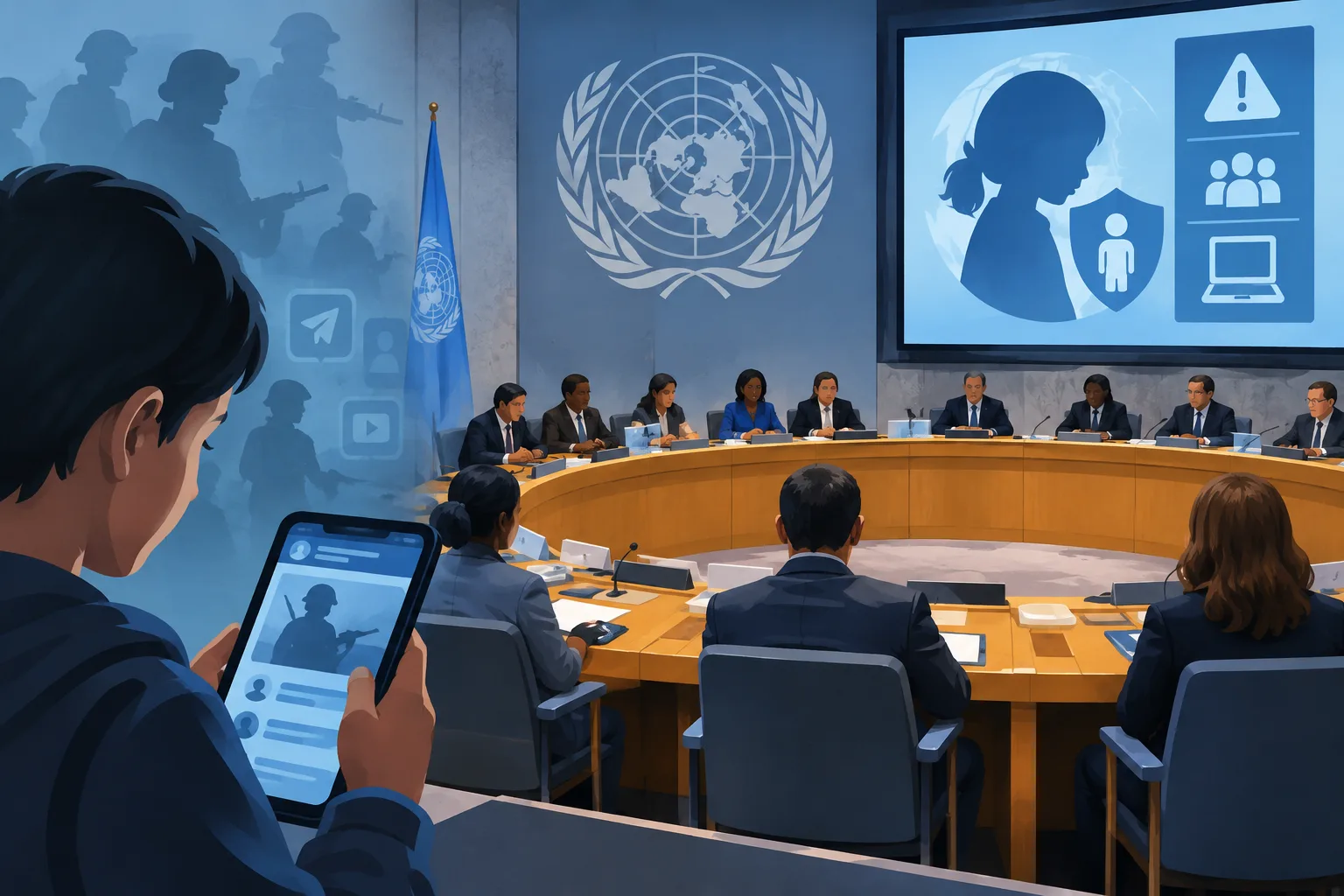
The Security Council was scheduled to consider a Greek-drafted resolution on digital technology and violations against children in conflict. The UN meeting page does not confirm whether it was adopted.
The UN Security Council was due to vote on 19 October on a draft resolution addressing how digital technologies can be used to commit or facilitate violations against children in armed conflict. The draft also calls for better digital literacy to help children recognise risks, but the result of the vote is not confirmed in the available UN meeting coverage.
Greece drafted the text, which Security Council Report said was put forward after lengthy negotiations. It urges states to improve compliance with international law, including where violations are committed, facilitated or amplified through digital technologies. It also calls on the UN Special Representative for Children and Armed Conflict to compile good practice and encourages the Secretary-General to collect lessons on the risks and benefits of digital technology for children affected by conflict. Both tasks are subject to available resources. [1]
The proposal follows growing concern about online recruitment. A supplementary analysis by the UN Office of the Special Representative said it had received an increasing number of anecdotal reports of social media and other platforms being misused to target children for grave violations, particularly recruitment. It cited reports from Colombia, Haiti, Nigeria, Sudan and Syria, while noting that the office lacked a mandate to monitor the issue. [1]
Negotiations exposed disagreement over how strongly the Council should address the issue. Russia, the UK and the US argued that a presidential statement might be more appropriate than a resolution, with Russia saying there was not yet enough evidence to establish a trend, according to Security Council Report. The draft was revised after objections, including US requests to remove references to the Special Representative and existing Council language on child protection. Some of those references were retained, while a proposed paragraph on reintegration and rehabilitation was dropped. [1]
The text also encourages states to consider partnerships with digital service providers to reduce children’s exposure to harmful content or contact. It does not require states to adopt such measures. Security Council Report said some practitioners questioned whether a resolution on this emerging issue would make a practical difference while child-protection work faces funding constraints. [1]
How do we know?
2 listed sources · explore evidence, limitations and provenance.
Sign in to give this article a thumbs up or down.
About this discussion and AI questions
Private test discussion. Comments are readers’ views and are not yet automatically fact-checked. Editing is available for 60 seconds after posting.
Sign in with a confirmed reader account and choose a username to read comments and participate.
Sorting applies to top-level comments; replies remain oldest first. New comments and likes can change the order. Refresh for the current ranking.
Loading comments…