News Made Clear · Loading…
Category
Regions
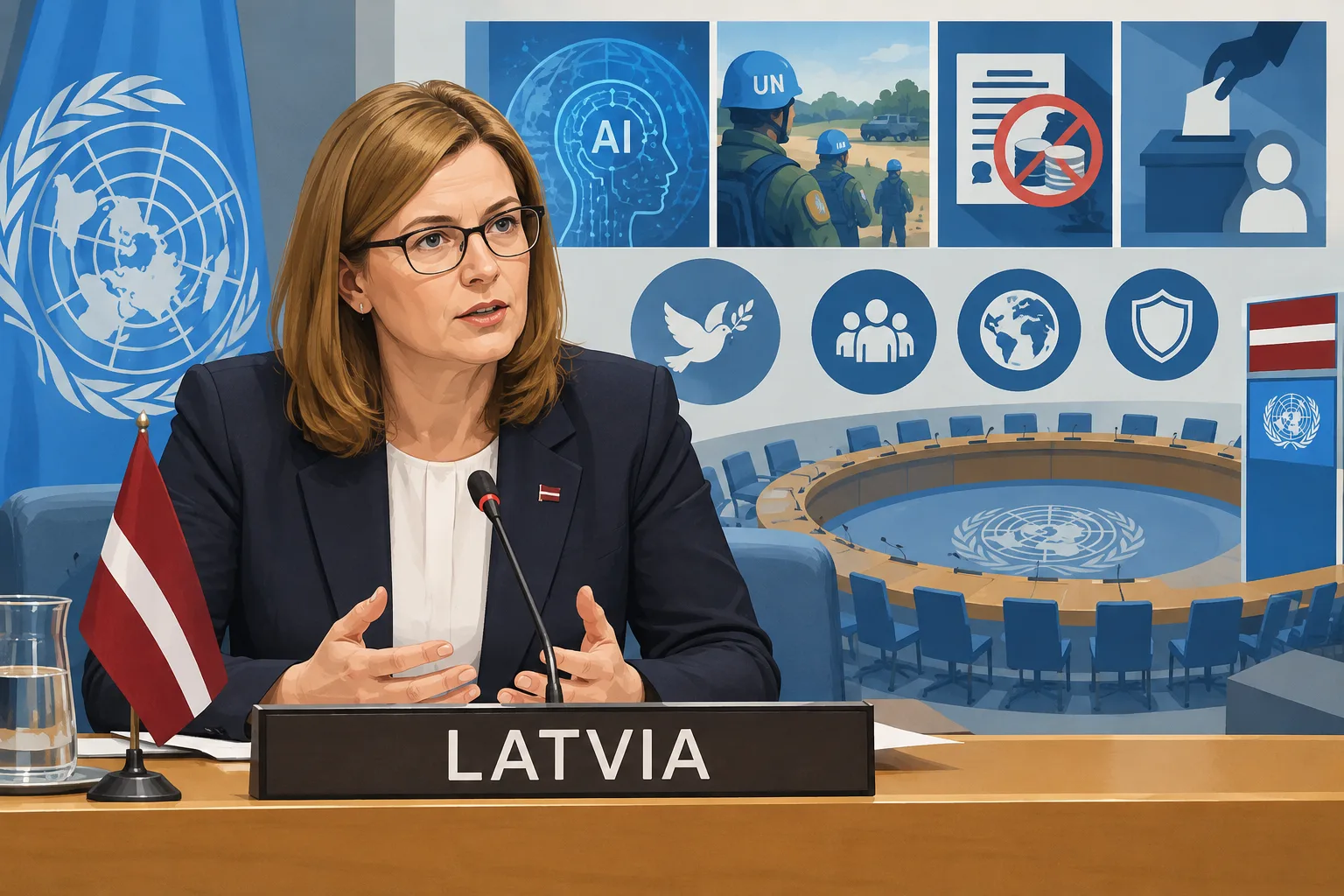
Latvia sets November agenda for UN Security Council
Loading statistics…
The UN Security Council has adopted its November programme, including a high-level meeting on conflict and technological change, planned sanctions and peacekeeping votes, and secretary-general selection straw polls.
Review information is loading.
Latvia’s ambassador to the United Nations has set out a November Security Council programme featuring a high-level meeting on conflict resolution and rapid technological change, alongside planned votes on peacekeeping mandates and sanctions. The Council has adopted the programme, ambassador Sanita Pavļuta-Deslandes said on 2 November.
The signature event, on 24 November, will examine how rapid technological change affects conflict resolution. Pavļuta-Deslandes said it would be held at a high political level, but did not name who would chair it. A second high-level briefing is scheduled for 23 November, with details to be announced later.
The Council is also expected to vote on renewing the mandates of the UN peacekeeping missions in the Central African Republic and Abyei, and on sanctions measures concerning Yemen and Al-Shabaab. These are planned items; the announcement does not establish that the votes will take place as scheduled.
Other agenda items include meetings on South Sudan, Libya, Syria, Lebanon and the Palestinian question, as well as elections to the International Court of Justice. The ambassador said a meeting on Ukraine could also be expected during the month, as in previous months, while additional meetings may be requested by member states.
The Council will hold straw polls as it considers candidates for the next UN secretary-general, Pavļuta-Deslandes said. She gave no dates, saying their timing and whether they would be colour-coded were decisions for Council members. She also said Türkiye’s candidate had become official after a formal letter was sent to the Council president and the president of the General Assembly.
Latvia holds the Council presidency for November, its first and only month in the rotating role. Pavļuta-Deslandes said the presidency would prioritise civilian protection, women’s participation in peace and political processes, and emerging threats, including the effects of technology on peace and security.
How do we know?
2 listed sources · explore evidence, limitations and provenance.
Sign in to give this article a thumbs up or down.
About this discussion and AI questions
Private test discussion. Comments are readers’ views and are not yet automatically fact-checked. Editing is available for 60 seconds after posting.
Sign in with a confirmed reader account and choose a username to read comments and participate.
Sorting applies to top-level comments; replies remain oldest first. New comments and likes can change the order. Refresh for the current ranking.
Loading comments…