News Made Clear · Loading…
Category
Regions
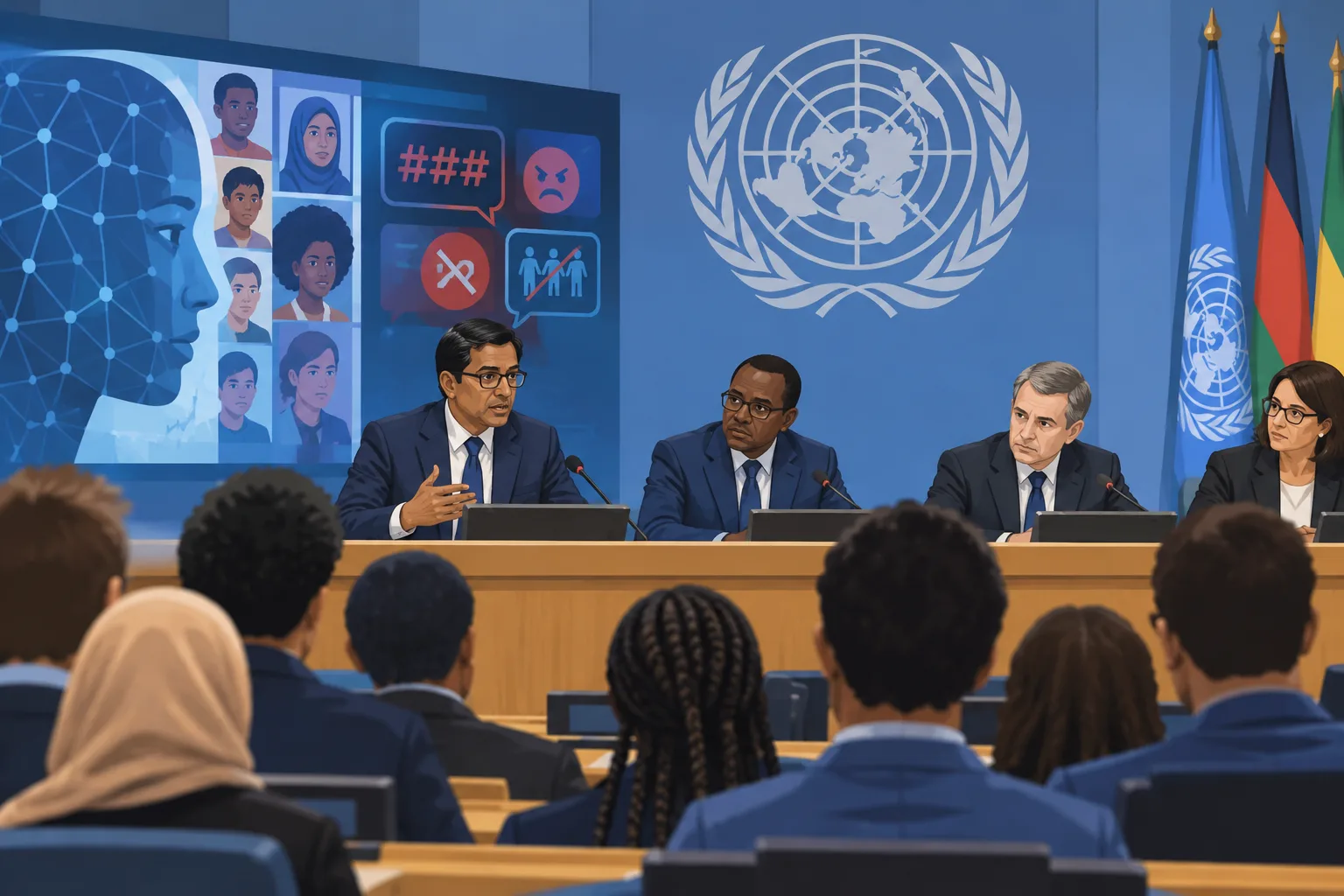
UN experts warn AI and online platforms can entrench racial discrimination
Loading statistics…
UN experts told the General Assembly’s Third Committee that AI and digital platforms can entrench racial discrimination and spread hate, and called for stronger human-rights protections.
Review information is loading.
United Nations experts have warned that artificial intelligence and online platforms can reproduce racial discrimination and amplify hate, urging states to move beyond voluntary pledges and strengthen protections grounded in international human rights law.
Speaking to the General Assembly’s Third Committee on 2 November, Ashwini K.P., the UN Special Rapporteur on contemporary forms of racism, said AI systems are shaped by data and institutions carrying historical inequalities. They risk encoding past discrimination into future decisions, he warned, with particular concerns about policing, criminal justice and public services.
He said algorithmic systems could disproportionately misidentify, surveil and profile racialised communities, while predictive technologies may reproduce discriminatory policing. Online platforms, he added, had accelerated the spread of racial hatred, with people including migrants, Roma, Muslims, Palestinians, Jewish people and people of African descent facing discrimination and harassment. Women and girls may also face overlapping racial and gender-based abuse.
James Ndirangu Waweru, who chairs a UN working group on implementing the Durban Declaration and Programme of Action, said digital technologies had amplified hateful narratives and misinformation amid a resurgence of racism, xenophobia and intolerance. He also described continuing inequalities for people of African descent in areas including justice, education, employment, housing and political participation.
Waweru said the working group had completed a second reading of a draft UN declaration on the rights of people of African descent. Several states had argued that reparations for slavery should extend beyond financial compensation to include remembrance, acknowledgement, apologies, reconciliation and healing, he reported.
Gün Kut, chair of the UN Committee on the Elimination of Racial Discrimination, warned that persistent discrimination and financial constraints threatened the implementation of the convention against racial discrimination. He said chronic underfunding of the UN treaty-body system, worsened by a liquidity crisis, put decades of progress at risk.
The meeting also heard competing political positions. Israel’s representative accused the treaty body of politicising human rights and criticised its use of the term genocide. Iran’s delegate, in turn, warned against selective responses to racism and raised concerns about Islamophobia and discrimination against Palestinians.
The UN’s account of the meeting is labelled as information for media, not an official record.
How do we know?
1 listed sources · explore evidence, limitations and provenance.
Sign in to give this article a thumbs up or down.
About this discussion and AI questions
Private test discussion. Comments are readers’ views and are not yet automatically fact-checked. Editing is available for 60 seconds after posting.
Sign in with a confirmed reader account and choose a username to read comments and participate.
Sorting applies to top-level comments; replies remain oldest first. New comments and likes can change the order. Refresh for the current ranking.
Loading comments…