News Made Clear · Loading…
Category
Regions
Continents
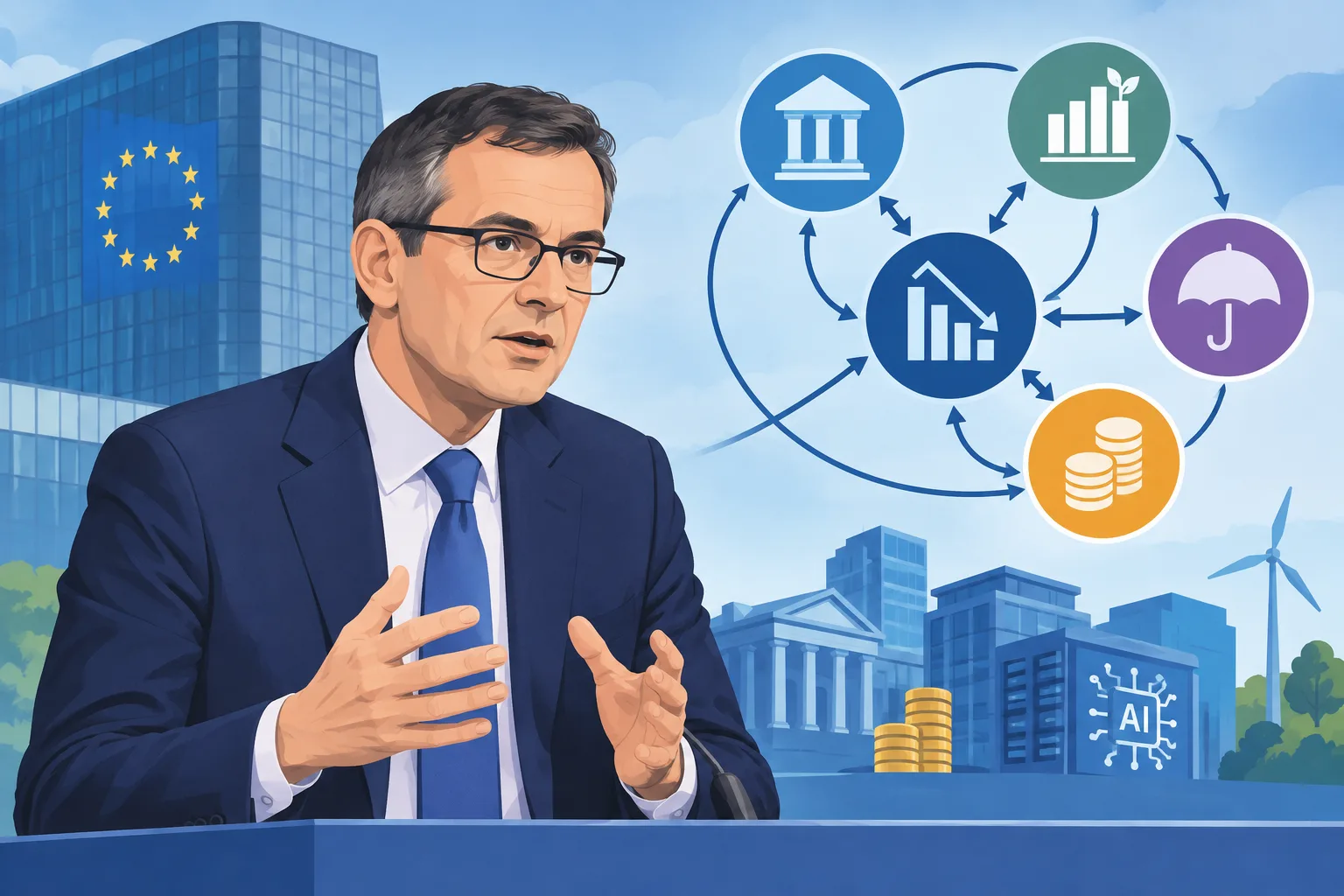
ECB calls for stress tests that track risks across financial system
Loading statistics…
ECB Supervisory Board member Patrick Montagner says stress testing should better capture how shocks can spread between banks and other financial institutions, alongside faster exercises for emerging risks.
Review information is loading.
The European Central Bank wants stress tests to look beyond individual banks and assess how shocks can spread across the wider financial system, including through investment funds, insurers and private lenders.
In a speech on Friday, ECB Supervisory Board member Patrick Montagner said the framework should combine established bank tests with faster, more focused exercises for emerging risks. He pointed to the European Systemic Risk Board’s work on a system-wide stress test, which is intended to be developed by 2028.
Montagner said conventional tests remain useful for comparing banks and informing capital assessments, but their common scenarios and simplified assumptions cannot capture every institution’s vulnerabilities or the way multiple firms may react to a crisis at once.
If many institutions sell the same assets, cut lending or seek funding simultaneously, their individual efforts to protect themselves could add pressure to markets and deepen losses, he said. System-wide exercises should examine those shared exposures and feedback loops across sectors.
The ECB’s recent exercises illustrate why different tests are needed. A 2024 cyber resilience exercise examined banks’ ability to respond to and recover from a severe incident, while a 2026 reverse stress test asked banks to develop geopolitical scenarios that would reduce their Common Equity Tier 1 capital ratios by at least 300 basis points. Montagner said the latter identified shortcomings in some risk assessments, the translation of scenarios into financial measures and the credibility of proposed management actions.
He also argued that exploratory exercises can reveal gaps in data, risk measurement and preparedness even when they do not produce a comparable capital estimate. The ECB’s 2022 climate exercise, for example, found that many banks relied on proxies and broad sector assumptions when assessing climate risks.
Montagner cited investment in artificial intelligence infrastructure as an emerging area where a system-wide perspective could be useful. Financing is coming from banks, capital markets, private credit and other investors, he said, and stress tests could map overlapping exposures and examine how falling valuations or weaker revenue expectations might affect collateral and refinancing.
He cautioned that stress tests cannot predict the next crisis. Their value, he said, depends on asking a clear question and interpreting results within the limits of the methods used.
How do we know?
1 listed sources · explore evidence, limitations and provenance.
Sign in to give this article a thumbs up or down.
About this discussion and AI questions
Private test discussion. Comments are readers’ views and are not yet automatically fact-checked. Editing is available for 60 seconds after posting.
Sign in with a confirmed reader account and choose a username to read comments and participate.
Sorting applies to top-level comments; replies remain oldest first. New comments and likes can change the order. Refresh for the current ranking.
Loading comments…