News Made Clear · Loading…
Category
Regions
Continents
Topics
How to keep your home warmer as UK energy bills are forecast to rise
Loading statistics…
With UK household energy bills forecast to rise in January, practical steps such as blocking draughts, using curtains strategically and heating only occupied rooms may help retain warmth. Experts caution that people should not put their health at risk by avoiding heating altogether.
Review information is loading.
As colder weather approaches in the UK and energy bills are forecast to rise, households can try simple ways to retain heat before turning up the thermostat. But energy advisers warn against going without heating altogether, particularly for older people and anyone vulnerable to cold.
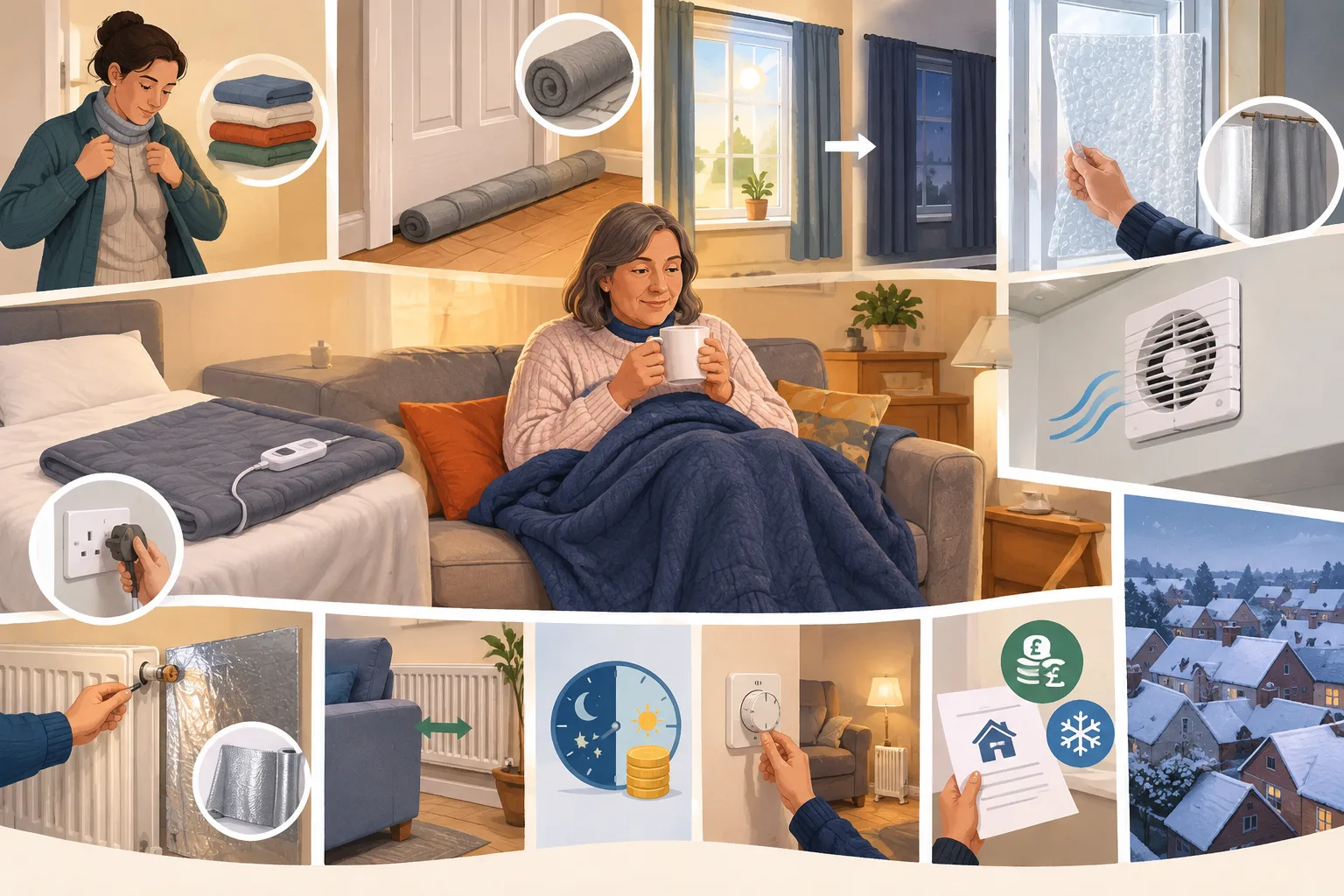
BBC News spoke to households and energy specialists about keeping warm at lower cost. Suggestions include wearing several thin layers, closing doors to keep warmth in the room being used, and opening curtains on sunny days before closing them at dusk.
Draughts around doors can be reduced with commercially available excluders or improvised alternatives such as rolled towels. For single-glazed windows, National Energy Action’s Sophie Burr suggests secondary glazing or thermal curtains; bubble wrap is another possible low-cost option. Energy editor Emily Seymour says homes still need some ventilation to help prevent damp, and warns against blocking extractor fans or designed ventilation.
Using an electric blanket to warm a bed or sofa can cost between 2p and 8p an hour on its highest setting, according to Which? testing cited by the BBC. The London Fire Brigade advises unplugging blankets before getting into bed unless they have a thermostat control, not using one with a hot-water bottle, and replacing it every 10 years.
Other suggestions include moving furniture away from radiators, bleeding radiators to improve efficiency and checking whether an energy supplier offers cheaper off-peak rates. Burr says radiator foil can reflect heat back into a room. The BBC also reports that some households turn heating on only in the rooms they are using, while keeping it at a low level when away to reduce the risk of mould or burst pipes.
Seymour cautions against leaving heating off completely, citing health risks and the possibility of frozen pipes. Those struggling to pay bills can check whether they qualify for support such as the Warm Home Discount or Winter Fuel Payment, and contact their supplier to discuss repayment plans or other schemes.
The advice comes as Cornwall Insight forecasts a £276 rise in the typical annual household energy bill in January, a predicted 16% increase. The BBC reports that 9.4% of households in England were estimated to be in fuel poverty in 2025.
How do we know?
1 listed sources · explore evidence, limitations and provenance.
Sign in to give this article a thumbs up or down.
About this discussion and AI questions
Private test discussion. Comments are readers’ views and are not yet automatically fact-checked. Editing is available for 60 seconds after posting.
Sign in with a confirmed reader account and choose a username to read comments and participate.
Sorting applies to top-level comments; replies remain oldest first. New comments and likes can change the order. Refresh for the current ranking.
Loading comments…