News Made Clear · Loading…
Category
Regions
Continents
Dossiers
AI ANALYSIS & OPINION
Times carried fake polls, but Trump overstates what the scandal proves
Loading statistics…
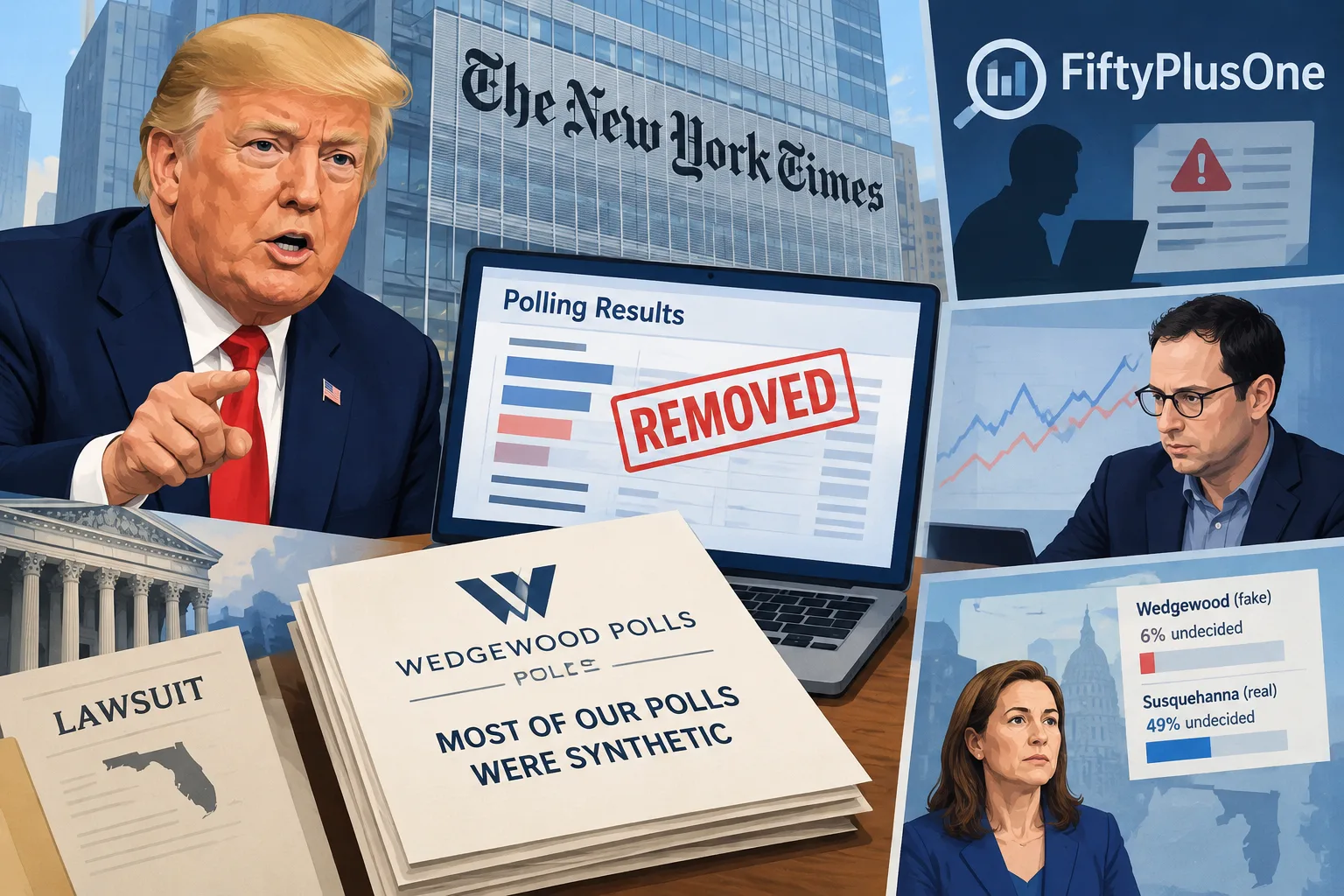
The newspaper removed 15 Wedgewood polls after the outfit admitted fabricating most of its data. That failure does not substantiate Trump’s sweeping attack or, by itself, his claimed legal advantage.
Review information is loading.
The New York Times did publish fabricated figures from Wedgewood Polls and removed 15 of the outfit’s polls after it admitted making up most of its data. That confirms the core of Donald Trump’s accusation — but not his sweeping verdict that everything about the newspaper is “ARTIFICIAL”.
“The New York Times got caught!” Trump wrote on Truth Social late on 22 October 2026, US eastern time. He also said his lawsuit against the paper was “getting stronger and stronger”.
The removals had already been reported by the Lynnwood Times on 21 October, before Trump’s post. The affair exposes a genuine failure to screen outside polling data, rather than establishing that the newspaper manufactured the results itself.
How the invented figures got through
Wedgewood’s admission followed a request for comment on 20 October from FiftyPlusOne, an election-analysis site that had also included its figures. The site said it had identified fraudulent raw survey data supplied by the outfit.
Wedgewood described its operation as an “experimental project” intended to expose weak oversight in the polling industry. It maintained that one crowdfunded Nebraska poll was genuine, while acknowledging that most of its releases were synthetic.
FiftyPlusOne said it had checked Wedgewood’s background before accepting its polls: researchers reviewed its methodology and confirmed previous polling experience for one of the people whose names it supplied. Those checks did not prevent invented data from being accepted.
The Times also described a screening process. In an editor’s note quoted by Ars Technica, the newspaper said Wedgewood had answered questions about its pollsters’ identities, survey methods and funding.
The paper said it used the figures for state and congressional-district races. They never entered its national trackers or averages of Trump’s approval rating or voters’ preference for which party should control Congress, according to the note.
The same note said the Times had excluded figures from Median Strategies — another outfit that admitted fabricating polls — because it had not answered questions about its methodology. That is relevant counterevidence to a claim of indiscriminate acceptance, but it does not excuse the failure over Wedgewood.
The false figures also travelled beyond the Times. Poll analyst Nate Silver said his Silver Bulletin election model received Wedgewood’s numbers through the newspaper’s database. After removing them, he reported that its averages and forecasts were “basically unchanged”, while cautioning that other polls were arriving at the same time.
Where comparable averages existed, Silver calculated that Wedgewood’s Democratic margins were about 0.6 percentage points more favourable than his earlier averages. Individual differences ran in both political directions.
How do we know?
10 listed sources · explore evidence, limitations and provenance.
Sign in to give this article a thumbs up or down.
About this discussion and AI questions
Private test discussion. Comments are readers’ views and are not yet automatically fact-checked. Editing is available for 60 seconds after posting.
Sign in with a confirmed reader account and choose a username to read comments and participate.
Sorting applies to top-level comments; replies remain oldest first. New comments and likes can change the order. Refresh for the current ranking.
Loading comments…