News Made Clear · Loading…
Category
Regions
Continents
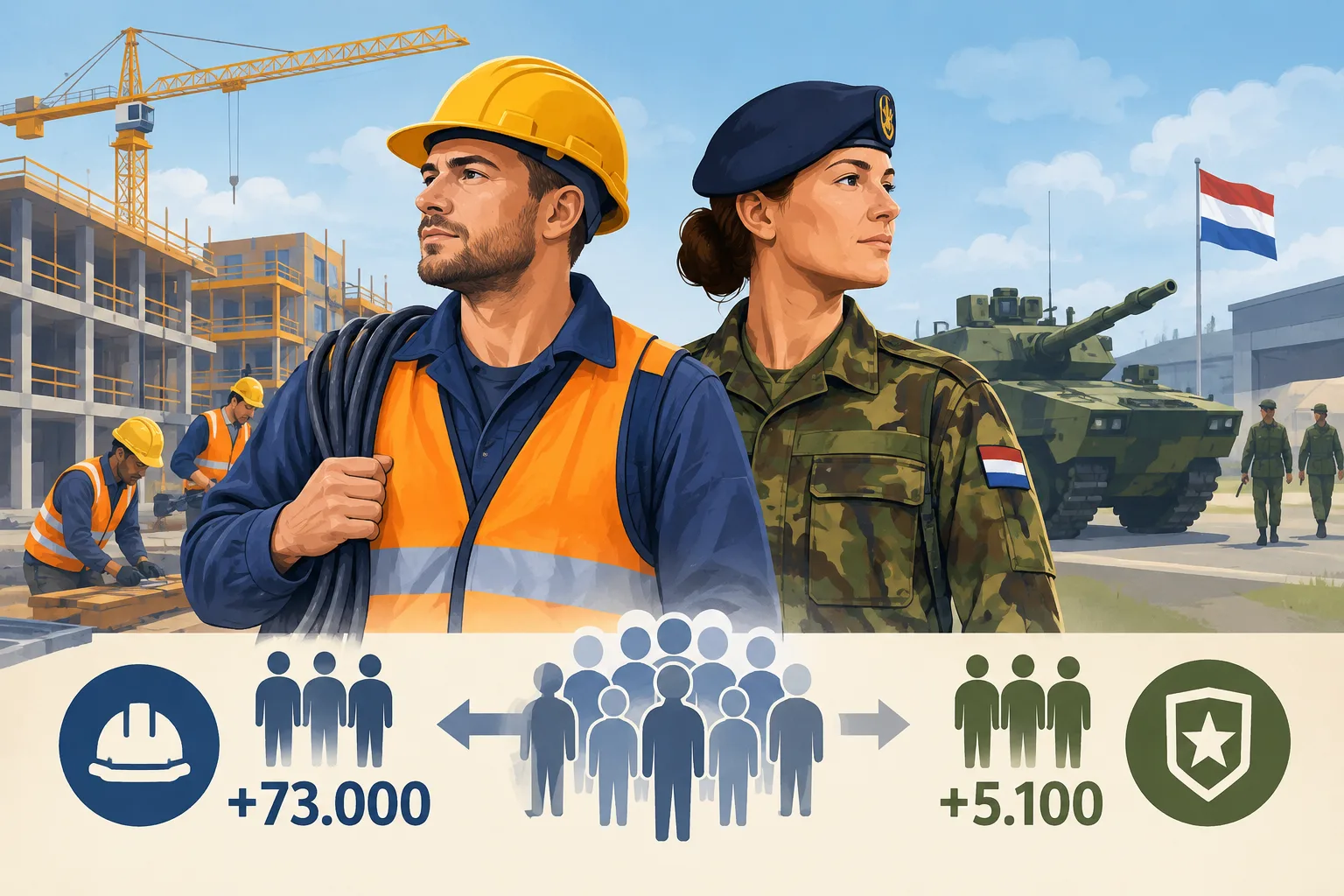
Construction and defence compete for 73,000 Dutch workers, EIB warns
Loading statistics…
The Dutch construction sector may need 73,000 additional workers by 2030, the EIB estimates, as defence expansion adds competition for scarce technical staff. The institute says overlapping demand could delay projects, though shrinking employment in other sectors may ease the pressure.
Review information is loading.
The Dutch construction sector may need about 73,000 additional workers between 2027 and 2030, as it competes with defence for scarce technical staff, the Economic Institute for Construction (EIB) says. The institute warns that overlapping labour needs could delay projects and make it harder to deliver housing, infrastructure and energy upgrades at the same time as defence expands.
The estimate includes around 52,000 people expected to enter the sector from training. More than 21,000 others would need to come from elsewhere, including other industries or abroad.
Construction and defence are seeking workers from some of the same technical occupations, including mechanics and electrical technicians. The EIB says the overlap is especially significant in civil engineering and also affects work to make buildings and infrastructure more energy-efficient. In occupations where staff are already hard to find, even a shortfall of a few workers can delay projects, it says.
Defence plans to grow its workforce to 100,000 by 2030. The EIB estimates that this would generate additional demand across the defence sector equivalent to about 5,100 full-time jobs a year through 2035.
The institute cautions that the pressure on construction could be less severe than its headline estimate suggests. It expects employment to shrink in some sectors that compete with construction for workers, including industry, trade and rental services, and other business services. It also says it is uncertain whether defence will recruit enough people to meet its plans.
Recruitment from abroad could help fill construction vacancies, but the EIB says stricter housing requirements and a shortage of suitable accommodation may limit the arrival of temporary foreign workers. It also warns that changing public and political attitudes towards labour migration could constrain support for more workers coming to the Netherlands.
How do we know?
1 listed sources · explore evidence, limitations and provenance.
Sign in to give this article a thumbs up or down.
About this discussion and AI questions
Private test discussion. Comments are readers’ views and are not yet automatically fact-checked. Editing is available for 60 seconds after posting.
Sign in with a confirmed reader account and choose a username to read comments and participate.
Sorting applies to top-level comments; replies remain oldest first. New comments and likes can change the order. Refresh for the current ranking.
Loading comments…