News Made Clear · Loading…
Category
Regions
Continents
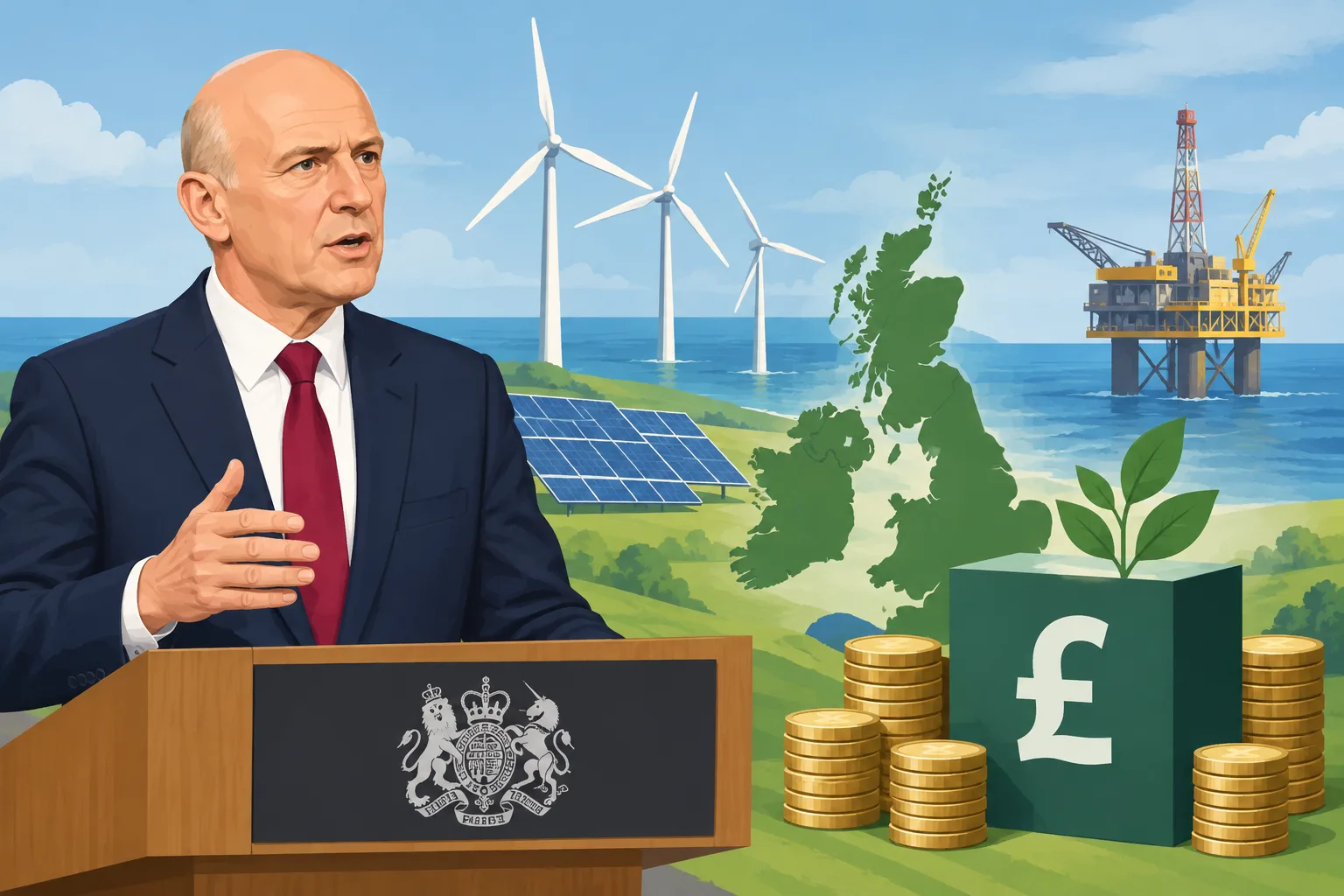
UK unveils £2bn energy fund alongside £1tn North Sea what-if
Loading statistics…
The UK’s new clean-energy fund has an announced £2bn starting sum. The £1tn figure in the debate is a hypothetical value for North Sea revenues that could have been invested in the past.
Review information is loading.
The UK government has announced a £2bn Energy Wealth Fund to invest in renewable and low-carbon energy projects. It unveiled the plan on Wednesday alongside its approval of the Jackdaw gas field. A much larger figure cited by Chancellor John Healey — £1 trillion — describes what Britain might have accumulated under a different policy decades ago, not the value of the new fund.
The Energy Wealth Fund will sit within the existing National Wealth Fund and invest in projects across the UK. The BBC reports that its initial £2bn will be diverted from the parent fund. The government calls the sum an initial injection and says future North Sea oil and gas tax revenues will flow into the new fund, but its announcement gives no proportion or timetable for those transfers.
According to BBC economics editor Faisal Islam, internal Treasury modelling estimated that a fund could have reached about £1 trillion if £200bn in historical North Sea receipts had been invested, never withdrawn and earned returns comparable to Norway’s oil fund. That is an estimate of a hypothetical investment balance. It does not establish that Britain’s public finances would have been £1 trillion better off: governments would also have had to replace the receipts diverted from their budgets, through other taxes, borrowing or spending decisions.
A previous UK government document put cumulative oil and gas production taxes at about £350bn in 2019–20 prices. That cannot be directly compared with the £200bn used in the Treasury scenario without knowing the latter figure’s price basis, years and tax categories.
Norway first paid money into its fund in 1996. Its manager says the fund invests abroad and can help cover budget deficits — unlike both the no-withdrawals Treasury scenario and the UK’s planned domestic energy investments. Its past returns therefore offer no forecast for the new fund. HMRC recorded £4.5bn in UK oil and gas production tax revenues in 2024–25, down from £6.1bn the year before; how much of future receipts reaches the Energy Wealth Fund remains to be decided.
How do we know?
6 listed sources · explore evidence, limitations and provenance.
Sign in to give this article a thumbs up or down.
About this discussion and AI questions
Private test discussion. Comments are readers’ views and are not yet automatically fact-checked. Editing is available for 60 seconds after posting.
Sign in with a confirmed reader account and choose a username to read comments and participate.
Sorting applies to top-level comments; replies remain oldest first. New comments and likes can change the order. Refresh for the current ranking.
Loading comments…