News Made Clear · Loading…
Category
Regions
Continents
Four options for Labour as Budget headroom shrinks
Loading statistics…
Higher borrowing costs may have cut the government’s fiscal headroom, leaving Chancellor John Healey to weigh new revenue or spending cuts. Four options include higher taxes on banks and gambling machines, VAT collection by online marketplaces and welfare reductions.
Review information is loading.
The UK government may need to raise taxes or cut spending in Wednesday’s Budget to rebuild its financial buffer, as higher borrowing costs squeeze the money available to meet its fiscal rules. But Labour’s 2024 manifesto ruled out increases to income tax, VAT and National Insurance, narrowing the options facing Chancellor John Healey.
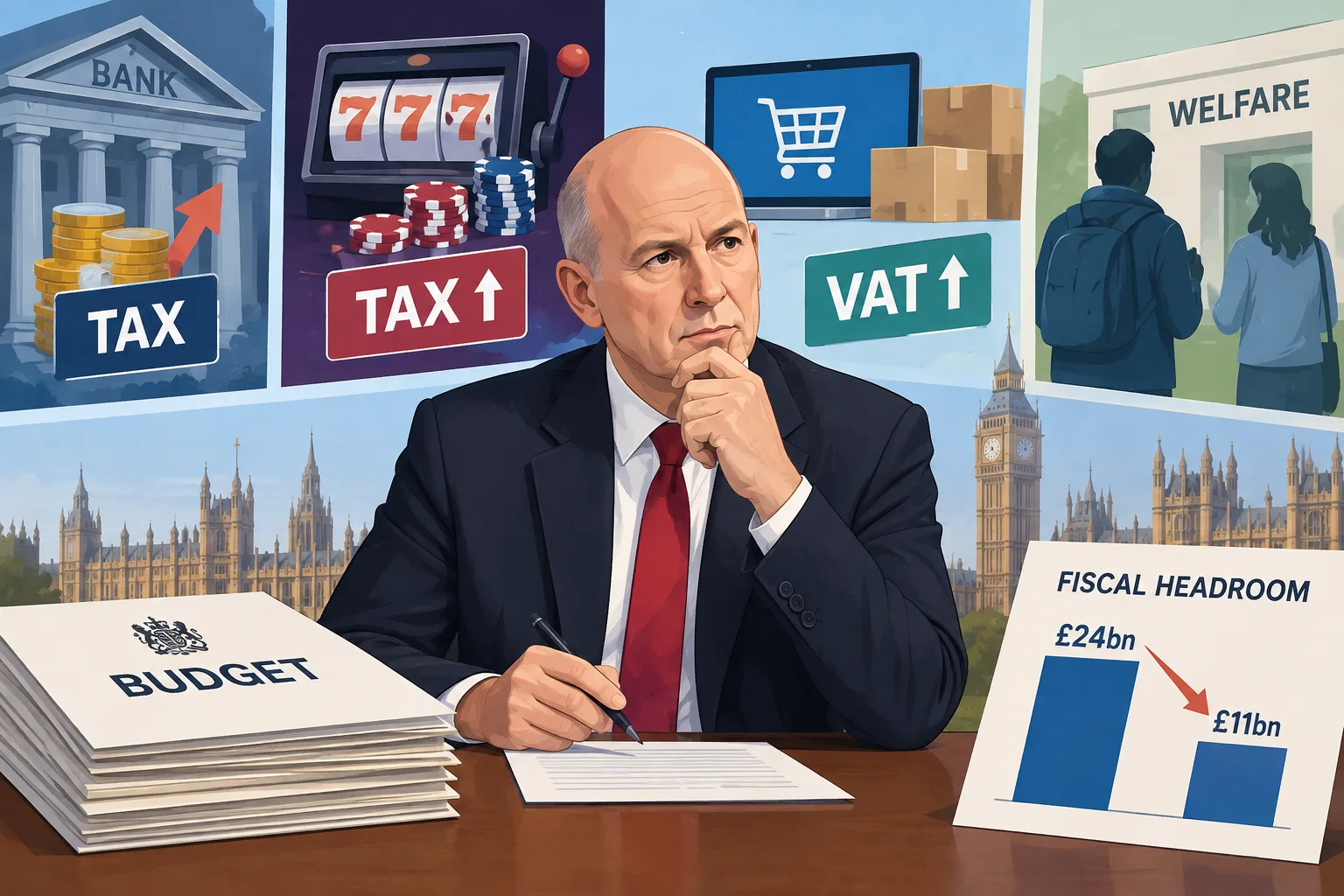
Economists estimate that the government’s fiscal headroom may have fallen from about £24bn six months ago to as little as £11bn, partly because interest rates on government borrowing have risen. The buffer is the amount the government has to spare while meeting its targets for borrowing and debt.
BBC News has outlined four possible routes: higher taxes on banks and gambling machines, requiring online marketplaces to collect VAT owed by sellers, and reducing welfare spending. They are possibilities, not confirmed Budget measures.
Taxes on banks and gambling
Raising the corporation tax surcharge paid by banks from 3% to 5.5% could bring in an extra £1bn to £2bn a year, according to Tax Policy Associates. Banks have warned that higher taxes could discourage investment in the UK. Some of the cost might also reach customers through lower savings rates or more expensive borrowing, while pension savers could be affected if their investments include bank shares.
A separate proposal is to double the tax on electronic gaming machines, from 20% to 40%. The Social Market Foundation estimates that could raise between £275m and £460m, depending on how gamblers respond. Players might face worse odds if operators pass on the tax, while the gambling industry warns that higher costs could threaten betting-shop jobs and the money bookmakers contribute to horse racing.
VAT collection and welfare
Making large online marketplaces responsible for collecting VAT owed by retailers could bring in about £1bn a year, according to reports cited by the BBC. The Treasury estimates that around £12bn in VAT goes unpaid annually, though platform-based sellers account for only part of that gap. Amazon supports the proposed change and estimates it could raise £700m a year. Some sellers might raise prices or leave platforms; stronger collection could also reduce the advantage enjoyed by businesses that fail to comply with VAT rules.
The three tax options together would raise at most about £3.5bn a year, according to the BBC’s analysis. That is substantially less than the savings claimed by opposition parties from restricting access to benefits: the Conservatives say they could save £36bn annually, and Reform says £50bn. Independent analysts have questioned whether such savings are realistic.
The cost of working-age health and sickness benefits is projected to rise from £68bn this year to £81bn in 2031. But welfare cuts could reduce the incomes of people receiving support, and campaigners warn that some could be pushed into poverty. Experts also say helping claimants into work may require upfront spending, limiting any short-term savings.
How do we know?
1 listed sources · explore evidence, limitations and provenance.
Sign in to give this article a thumbs up or down.
About this discussion and AI questions
Private test discussion. Comments are readers’ views and are not yet automatically fact-checked. Editing is available for 60 seconds after posting.
Sign in with a confirmed reader account and choose a username to read comments and participate.
Sorting applies to top-level comments; replies remain oldest first. New comments and likes can change the order. Refresh for the current ranking.
Loading comments…