News Made Clear · Loading…
Category
Regions
Continents
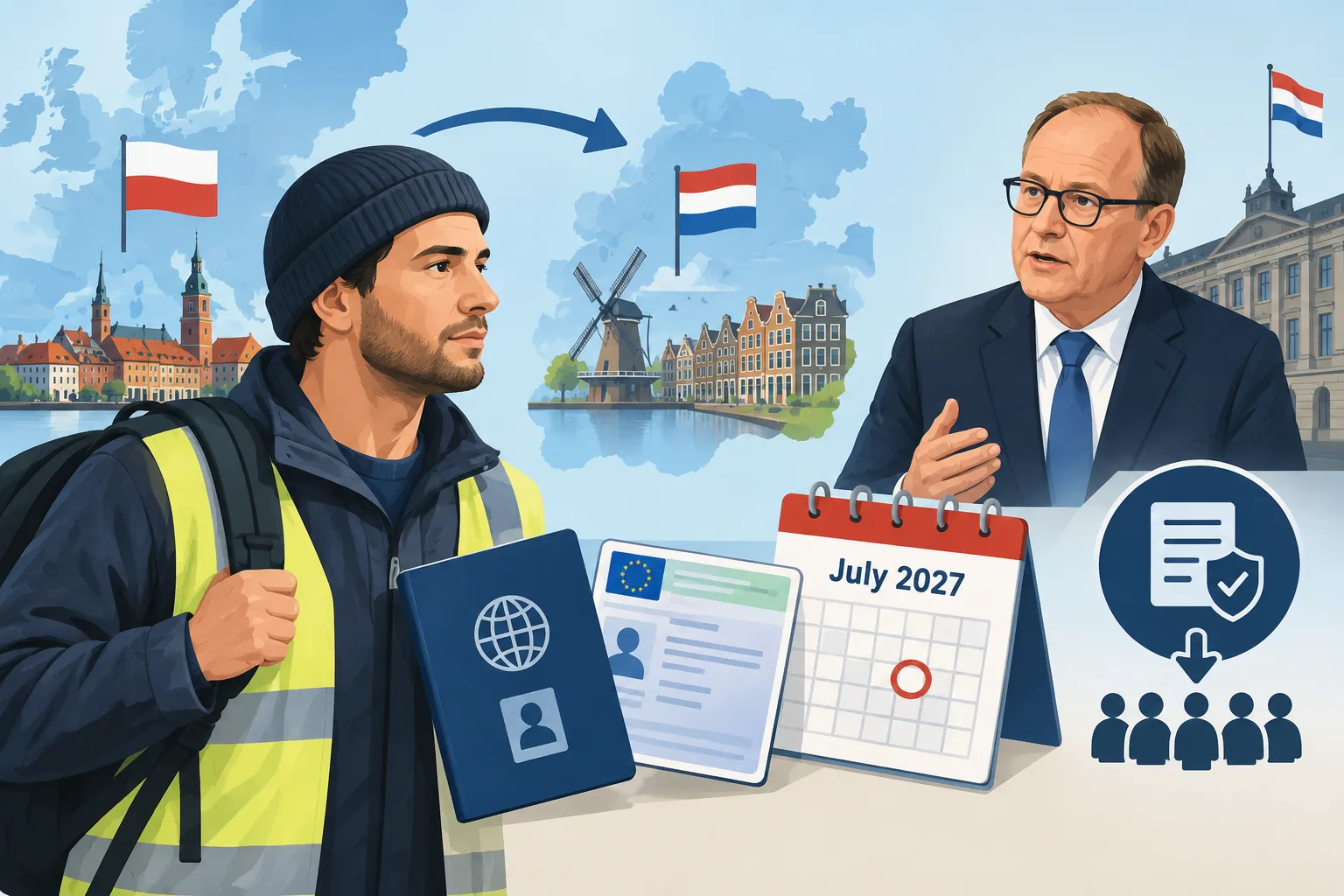
Dutch plan would require three months’ work before non-EU workers can be posted
Loading statistics…
The Dutch government proposes a three-month work requirement in another European country before non-EU workers can be posted to jobs in the Netherlands. The changes are expected to take effect in July 2027.
Review information is loading.
The Dutch government plans to require workers from outside the EU to have worked for at least three months in another European country before they can be posted temporarily to a job in the Netherlands. The proposed change is intended to curb misuse of cross-border employment rules and protect workers and businesses that follow Dutch regulations.
Social Affairs and Employment Minister Hans Vijlbrief told parliament the government wants to make it easier for the Netherlands Labour Authority to check whether postings are legitimate. The plan also includes requiring a worker’s work and residence permit in the country sending them to remain valid for longer than their temporary job in the Netherlands, so they can return there afterwards.
The government says some employers use the current route to bring non-EU workers directly to the Netherlands through companies in other European countries, where permit requirements may be less strict. It gives the example of a Belarusian national sent to work in the Netherlands through a Polish company. The government says the practice can leave workers vulnerable to underpayment and create unfair competition because taxes and social security contributions are not paid in the Netherlands.
The number of non-EU workers posted to the Netherlands rose from about 18,000 in 2021 to more than 29,000 in 2025, according to the government. It says the actual total is higher because research by Panteia found that about 38% of posted workers were not reported.
Employers could be fined if a posting does not meet the rules. The government expects the changes to take effect in July 2027; the proposal opens for public consultation on 7 November.
The proposal is part of a wider government approach to labour migration, which also aims to reduce demand for low-paid work, make use of workers already available in the Netherlands, and focus migration on labour needed for future prosperity.
How do we know?
1 listed sources · explore evidence, limitations and provenance.
Sign in to give this article a thumbs up or down.
About this discussion and AI questions
Private test discussion. Comments are readers’ views and are not yet automatically fact-checked. Editing is available for 60 seconds after posting.
Sign in with a confirmed reader account and choose a username to read comments and participate.
Sorting applies to top-level comments; replies remain oldest first. New comments and likes can change the order. Refresh for the current ranking.
Loading comments…