Alaska recruitment report supports Trump’s claim but does not establish fraud
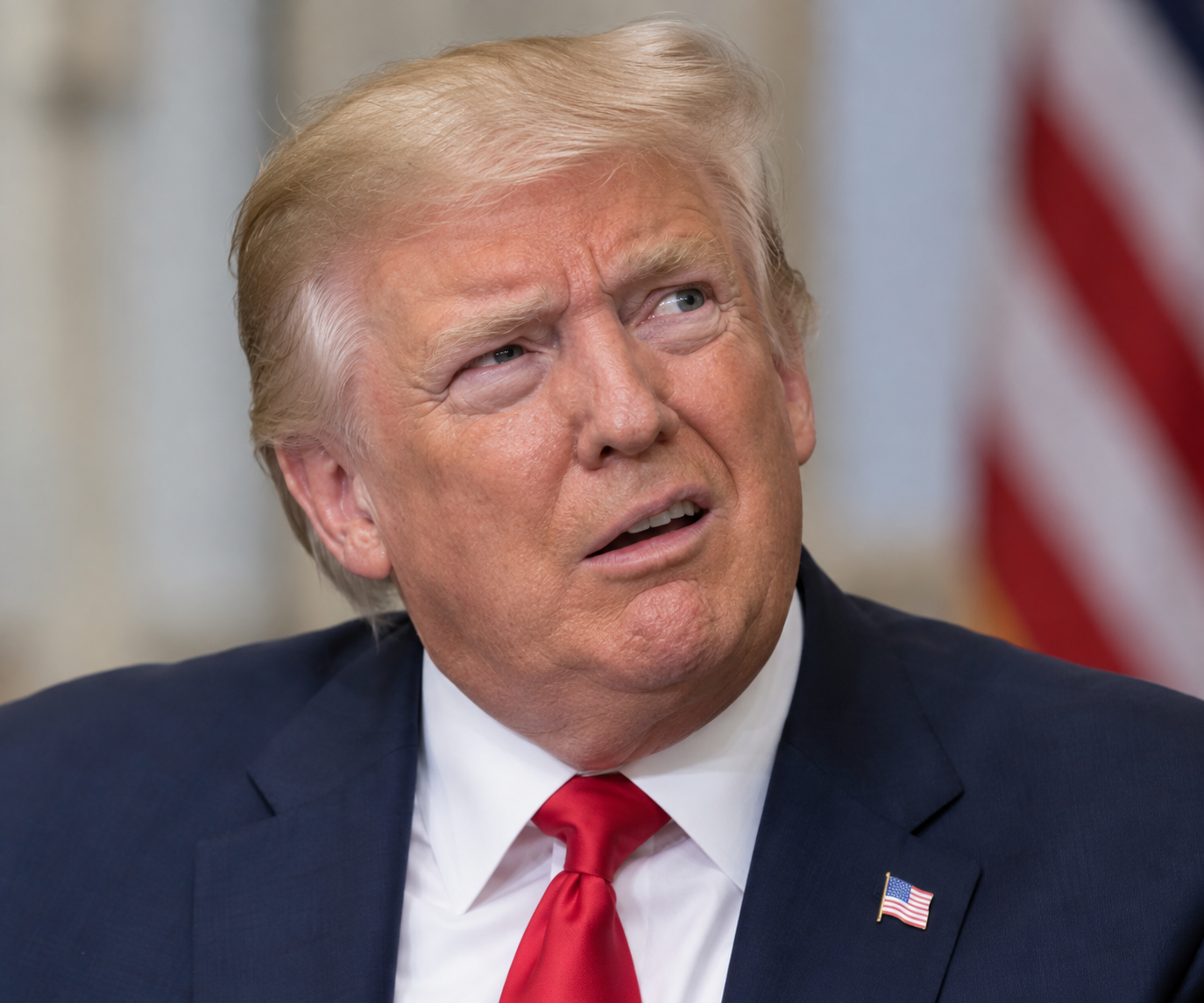
AI-generated editorial illustration of Donald Trump.
Loading statistics…
Donald Trump wants Mary Peltola and Senator Dan Sullivan’s namesake prosecuted. New reporting supports an organised recruitment effort, but Peltola’s personal involvement remains unresolved.
Donald Trump’s administration is seeking a court order to hold up Alaska’s Senate result under conditions that apply only if Republican Senator Dan Sullivan loses. The lawsuit raises allegations of voter confusion; it does not substantiate the Democratic election-theft plot Trump is presenting as fact.
In a Truth Social post on 24 October 2026, Trump accused Democrats of using Daniel J. Sullivan Jr., a retired teacher from Petersburg, to steal the incumbent’s seat. He suggested Alaska’s other Republican senator, Lisa Murkowski, “probably wants that to happen” because she opposed the Justice Department’s intervention.
Murkowski has endorsed the incumbent Sullivan. On 23 October she said Alaska had already addressed the issue by “clearly distinguishing the candidates on this year’s ballot”, adding: “The Department of Justice should never have filed this lawsuit.”
A delay tied to the senator’s defeat
The civil complaint was filed against Alaska and election bodies on 22 October, in a race that could help determine control of the US Senate. Trump told reporters the next day: “I’m the one that said do it.”
It asks a court to prevent certification if the senator loses and would have won had all votes for his namesake instead been cast for him, with ranked-choice counting rerun. The proposed pause would allow an investigation into whether those voters actually intended to support the senator.
The all-votes calculation is a proposed trigger for a hold, not a finding that every namesake vote was a mistake. It tests a hypothetical outcome rather than measuring voters’ intentions.
The department bases its case on the National Voter Registration Act, citing its election-integrity language. Democratic challenger Mary Peltola’s campaign and the Democratic Senatorial Campaign Committee sought to join the case on 23 October and argue for dismissal, saying the law regulates voter registration rather than candidate listings. Notre Dame law professor Derek Muller told the Associated Press that it does not authorise the department to block certification.
Alaska’s courts had already overturned election officials’ attempt to exclude the teacher in June. An August federal magistrate judge’s report in a separate case described the trial court’s reasoning: the extra “good faith” requirement was an unconstitutional additional qualification without statutory authority, and Sullivan was using his lifelong name. Those were ballot-access decisions, not a general clearance of his campaign finances.
The two Sullivans
The ballot lists the senator as “Sullivan, Dan S.” with the Republican and incumbent designations. The teacher is “Sullivan, Daniel J. Jr.”, without a party designation. Those distinctions also appear in the ballot graphic Trump shared beneath a “SCAM!” label.
How do we know?
24 listed sources · explore evidence, limitations and provenance.
Sorting applies to top-level comments; replies remain oldest first. New comments and likes can change the order. Refresh for the current ranking.
Loading comments…
Loading earlier articles…
The senator’s campaign has itself said Alaskans can tell the difference, while saying it would let the Justice Department complaint “run its course”.
Ranked-choice voting means a first preference for the teacher need not cost the senator a vote. If the teacher is eliminated, the ballot can transfer to the senator if he is the next continuing preference. A mistaken first choice could still matter if the senator is left unranked. But raw support for the namesake does not measure mistakes.
Local broadcaster KTUU’s account of official August Senate primary results puts Peltola at 49.54%, the senator at 41.40% and the teacher at 2.47%. Even assigning the teacher’s entire share to the senator would not have erased Peltola’s primary lead. That does not settle November’s different, ranked-choice contest.
The department’s suspicions rest on more than the shared surname. Its complaint cites the challenger’s request to appear as “Dan Sullivan”, his Republican registration shortly before filing, similar website styling and his hiring of consultant Amber Lee, who has worked with Democrats.
A June complaint from the National Republican Senatorial Committee alleged that Lee’s unpaid services amounted to an unlawful campaign contribution. It also cited $2,307.20 in 2024 website payments to her firm from Vote Alaska Before Party, a PAC that had supported Peltola. The payments cited concerned earlier PAC work; they do not document Peltola’s campaign paying to organise this candidacy.
The teacher says he decided to run on his own. In a June response reported by KTUU, he acknowledged hiring Lee but denied conversations with Peltola’s campaign about his candidacy. Peltola’s campaign also denied involvement. The group 907 Initiative, whose board includes Lee, denied involvement in September. KTUU reported on 23 October that its continuing checks had not established direct Democratic recruitment.
Trump also urged a yes vote on Ballot Measure 2 on 3 November. The state’s description covers more than ending ranked-choice voting: it includes restoring party primaries and repealing recent campaign-finance laws.
He warned that a Democratic win would immediately halt “everything we’ve done for Alaska”, but named no programme or decision to withdraw funding.
The federal case seeks a conditional hold on a result adverse to Trump’s preferred candidate. Neither that request nor the campaign links cited establish the organised attempt to steal the seat that he alleges.
Update
A Republican-led House committee has begun investigating reports that Democratic campaign aides sought to recruit candidates to weaken Alaska’s incumbent senator, Dan S. Sullivan. The inquiry follows a call by President Donald Trump for the prosecution of the senator’s Democratic opponent, Mary Peltola, and another candidate with a similar name.
The New York Times investigation that prompted Trump’s reaction provides substantial evidence of an organised recruitment effort. It does not establish that Peltola or the second Sullivan committed election fraud.
In a Truth Social post on 28 October, Trump said Democrats had put Daniel J. Sullivan Jr, a retired teacher from Petersburg, on the ballot to confuse voters. He called it “voter fraud at the highest level” and demanded that both the teacher and Peltola be removed from the race and prosecuted. Trump, who supports the Republican senator, cited the Times report in separate remarks.
What the investigation found
The Times reported that Peltola campaign aides and national Democratic officials worked on a project to find candidates who could draw support away from the senator, including by searching for people who shared his name. It said its reporting was based on interviews with 12 people who were involved, informed about the plan or approached as potential candidates, as well as text messages and documents.
Former Peltola campaign manager Elisa Rios told the newspaper that Democratic operative Jerid Kurtz had told campaign colleagues he had contacted the Petersburg Sullivan, who was open to running if it helped Peltola. Another prospective candidate, Matthew Salisbury, identified Kurtz from a photograph as the man who had asked him to run. Kurtz did not respond to the Times’ requests for comment.
Rios also said Peltola knew about the project but was not directly involved. Rios, who was dismissed by the campaign in August, later asked the newspaper to retract her statements. The Times said her interviews were consistent with its other reporting. It quoted some messages but has not released the underlying exchanges.
Peltola’s campaign and the Democratic Senatorial Campaign Committee denied recruiting candidates. Daniel J. Sullivan has previously said he decided to run on his own.
The Times also reported that a pro-Peltola political action committee paid about $87,000 to a firm co-owned by Kurtz. The committee said it had never hired or paid Kurtz for services; the report did not specify what the payments covered.
The newspaper noted that efforts to add candidates to divide an opponent’s support are generally considered legal and have been used by both parties in Alaska. That does not settle whether any particular conduct in this case was lawful.
The courts and the ballot
Trump referred to contrary “sworn statements” but did not identify them. In a proposed response to a federal lawsuit, lawyers for Peltola’s campaign and the Democratic Senate committee said they lacked sufficient information to judge the namesake’s alleged purpose and denied the allegation. The response was signed by lawyers, not presented as a sworn witness statement; Trump did not identify it as the document he meant.
Alaska’s Supreme Court upheld Daniel J. Sullivan’s inclusion on the primary ballot in June, after election officials had tried to exclude him. That decision did not address the allegations published later by the Times.
The Justice Department separately sued Alaska on 22 October, seeking to halt certification under certain conditions if Senator Sullivan loses. State officials have asked for the case to be dismissed, arguing that the voter-registration law cited by the department does not authorise the action.
Republican Governor Mike Dunleavy has ordered a state investigation into the recruitment allegations. On 29 October, House Oversight Committee chairman James Comer, also a Republican, requested interviews with Rios and Kurtz and said the committee would consider compulsory measures if they did not appear voluntarily.
The two Sullivans are distinguished on the November ballot. The teacher received 2.5% of the vote in August’s primary, but that figure does not show how many voters confused him with the senator. Under Alaska’s ranked-choice system, a vote can pass to a voter’s next remaining preference if their first choice is eliminated.
 Editorial illustration