News Made Clear · Loading…
Category
Regions
Continents
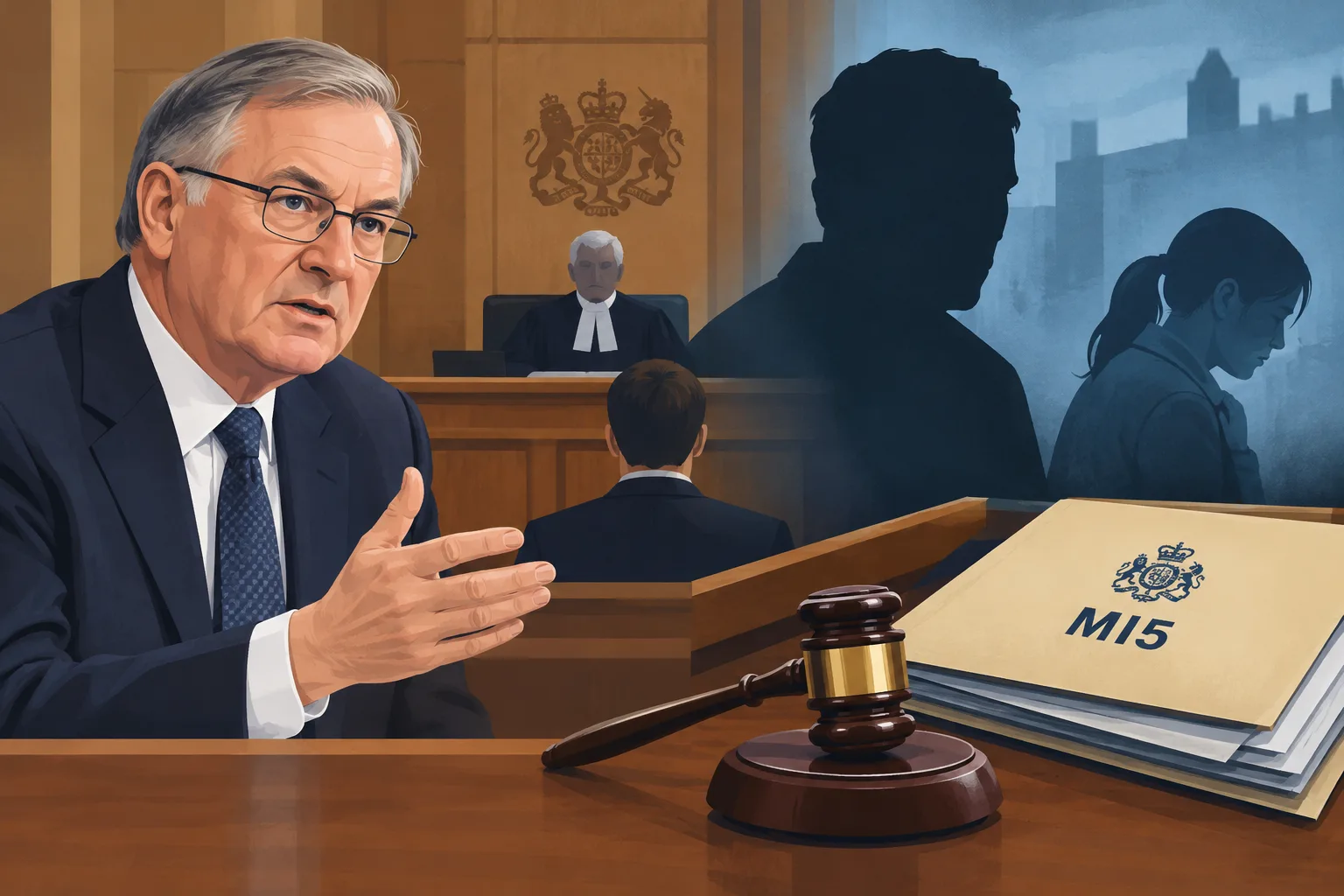
MI5 faces closer scrutiny in court after Agent X case, says Leveson
Loading statistics…
Lord Leveson expects judges to scrutinise the security service’s evidence more closely after it misled courts about an informant known as Agent X.
Review information is loading.
Judges are likely to be less willing to accept MI5’s statements without supporting evidence after the service misled courts in the Agent X case, Britain’s intelligence watchdog has said.
Lord Leveson, the investigatory powers commissioner and a former Court of Appeal judge, told the BBC that he had previously accepted what the security service said to him as a judge. He expected courts now to be “far more reluctant to accept, without evidential proof, things that are said in the future”.
His comments follow a High Court judgment this month which said the findings in an independent investigation would inevitably affect courts’ confidence in MI5’s corporate evidence and could justify closer scrutiny. Leveson’s remarks are a forecast, rather than a change to the rules of evidence.
The case centres on Agent X, an MI5 informant whose identity is protected by a court order. The BBC says he used his status to control and intimidate his former partner, known as Beth, and attacked her with a machete. Beth later brought a claim against MI5, alleging that it had failed to protect her.
MI5 told courts and its watchdog that it had followed its policy of neither confirming nor denying whether X was an informant. In fact, an MI5 officer had confirmed his status to a BBC journalist in 2020. Notes and recordings of the calls later exposed the error.
The watchdog had initially concluded that MI5 had disclosed X’s status, but was persuaded by the service to change its view. In Beth’s case, the Investigatory Powers Tribunal refused her request for disclosure of X’s status to her and her lawyers, accepting MI5’s position.
An independent investigation led by Sir John Goldring concluded that the officer who spoke to the BBC had lied, and that another officer had misrepresented what he was told. Both officers dispute Goldring’s findings. This month, the High Court declined to start contempt proceedings, saying that a police investigation would be a more appropriate route if further action were taken.
MI5 director general Sir Ken McCallum has accepted the investigation’s findings and apologised to the courts for the incorrect evidence and to Beth for additional distress. Leveson also told the BBC that MI5 had introduced a new policy on informants and domestic abuse following the case.
Sign in to give this article a thumbs up or down.
About this discussion and AI questions
Private test discussion. Comments are readers’ views and are not yet automatically fact-checked. Editing is available for 60 seconds after posting.
Sign in with a confirmed reader account and choose a username to read comments and participate.
Sorting applies to top-level comments; replies remain oldest first. New comments and likes can change the order. Refresh for the current ranking.
Loading comments…