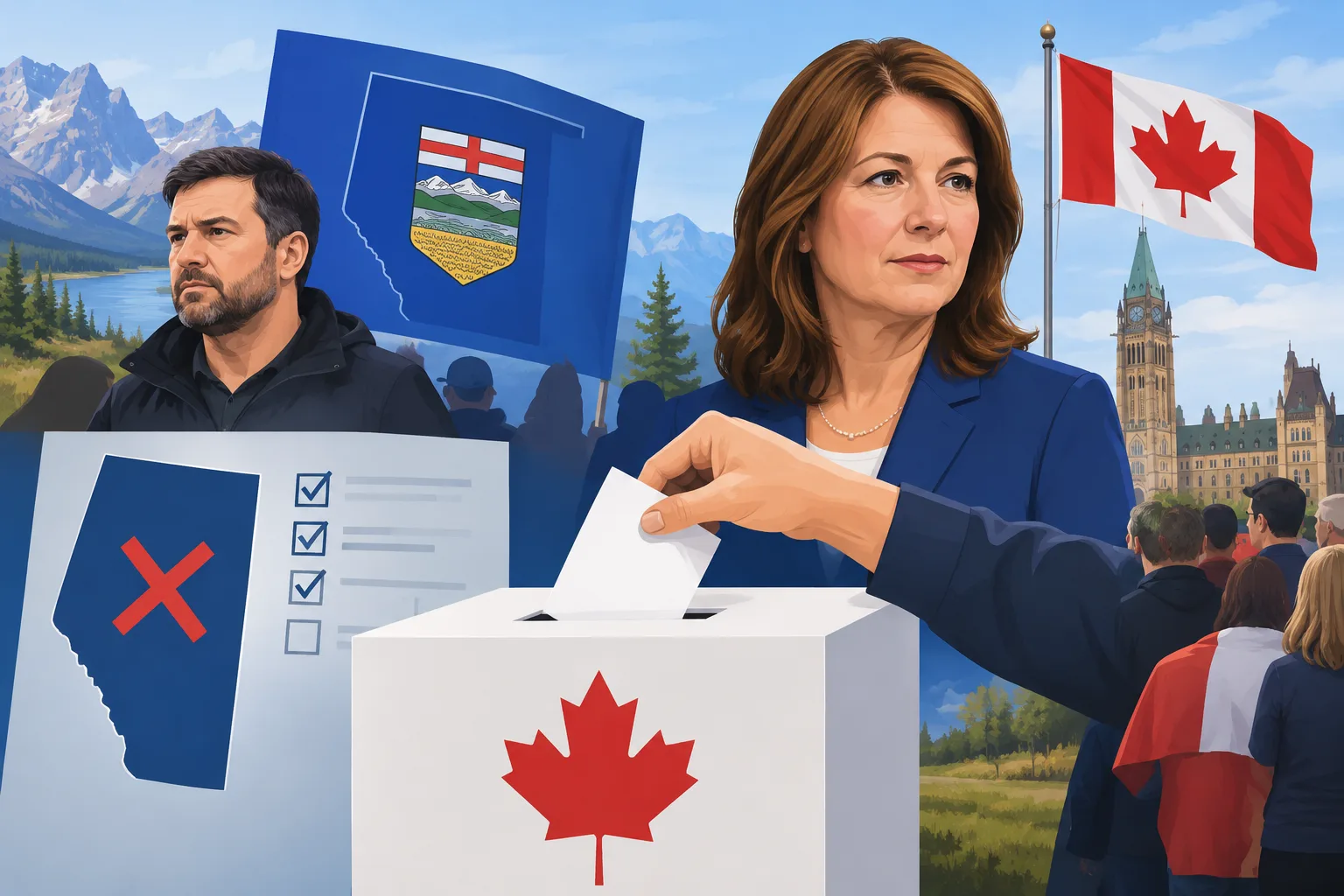
Alberta voters decisively reject pursuing separation from Canada
More than two-thirds of Alberta voters have rejected pursuing separation from Canada in a non-binding vote, but preliminary results suggest other proposals for greater provincial autonomy may have support.
Review information is loading.
More than two-thirds of Alberta voters have rejected pursuing separation from Canada in a non-binding vote, dealing a major blow to the province’s separatist movement while leaving a separate push for greater autonomy alive. [1]
The preliminary result was a clear defeat for campaigners who had spent more than a year seeking a vote on independence. Separatist leader Mitch Sylvestre told the BBC he was “Not happy”.
Alberta Premier Danielle Smith backed the campaign for unity and thanked voters for the result. She had lowered the petition threshold that allowed the citizen-led campaign to reach the ballot. The vote was non-binding, following a court decision that blocked an earlier pro-separation petition because it had not consulted First Nations whose land could be affected by independence.
Smith also put nine other questions to voters, most concerning greater provincial autonomy, including immigration. Very preliminary results suggested many could pass. Some supporters of a second binding separation referendum said they wanted leverage over Ottawa rather than outright independence; Smith has argued that the other questions could provide that leverage.
The separation result could put pressure on Smith, who has led the United Conservative Party since 2022. Jeffrey Rath, a Calgary lawyer and one of the movement’s main spokespeople, said she had “lost the confidence of the (party) base”. He and other separatist leaders say they will continue campaigning. Another campaigner, Keith Wilson, told supporters that “the conversation about Alberta’s future in Canada” would continue.
Prime Minister Mark Carney welcomed the result, saying Albertans had “made a clear choice”. Voters who opposed a referendum told the BBC they wanted to keep Canada united, and some feared an independent Alberta could be vulnerable to outside influence or annexation. Support for separation is rooted in western alienation: a long-standing sense among some western Canadians that the federal government in central Canada overlooks their interests.
Anger over federal policies affecting Alberta’s oil and gas industry has fuelled that sentiment. Carney and Smith have agreed to work towards a new pipeline from Alberta to Canada’s Pacific coast, but the province’s separatist campaigners say the debate over Alberta’s place in Canada is not over.
Sign in to give this article a thumbs up or down.
About this discussion and AI questions
Private test discussion. Comments are readers’ views and are not yet automatically fact-checked. Editing is available for 60 seconds after posting.
Sign in with a confirmed reader account and choose a username to read comments and participate.
Sorting applies to top-level comments; replies remain oldest first. New comments and likes can change the order. Refresh for the current ranking.
Loading comments…