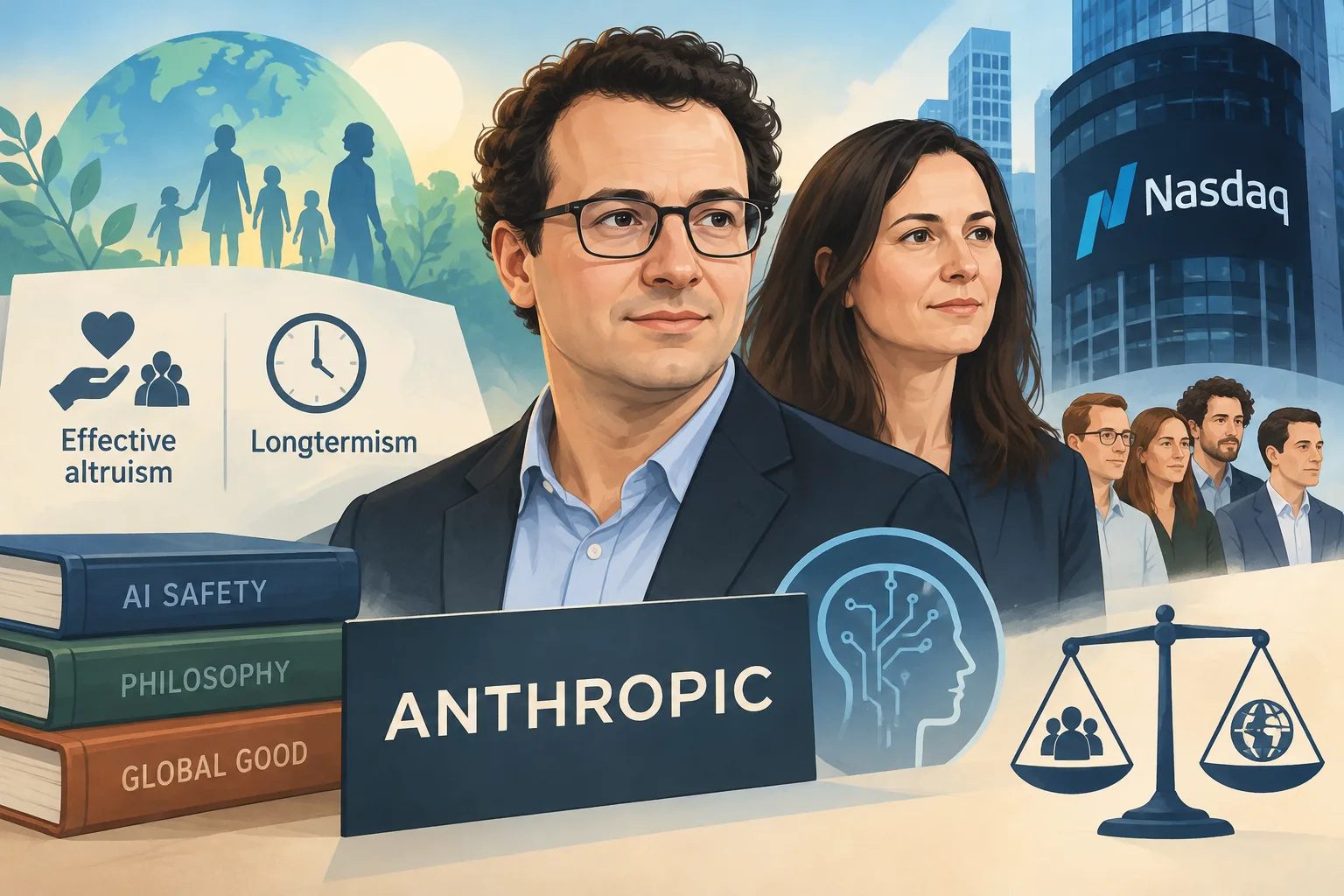
Anthropic’s AI safety focus is rooted in founders’ effective-altruism ties, CNN reports
Anthropic’s safety-first approach reflects founders’ links to effective altruism and longtermism, CNN reports, as the company prepares for a high-profile Nasdaq debut.
Review information is loading.
Anthropic’s safety-first identity is rooted in its founders’ links to effective altruism and longtermism, CNN reports, as the AI company prepares to begin trading on Nasdaq this week with a targeted valuation of $1.4tn.
The two ideas help explain why Anthropic places existential threats from artificial intelligence at the centre of its public image, CNN says. Effective altruism focuses on using evidence and reasoning to maximise the impact of charitable giving. Longtermism treats the wellbeing of future generations as a major moral priority.
Anthropic’s prospectus mentions safety more than 250 times, according to CNN, and the company is structured as a public-benefit corporation, which must balance shareholder interests with public wellbeing. It has repeatedly warned that advanced AI could pose catastrophic risks, while also arguing that the technology could bring substantial benefits.
Founders’ ties to the movement
Chief executive Dario Amodei was among the early signatories to the Giving What We Can pledge, promising to donate at least 10% of his income, and wrote in 2010 about giving $10,000 through GiveWell, a charity evaluator aligned with effective altruism.
Amodei later described himself as sympathetic to effective altruism but opposed to dividing people into tribes, CNN reported. His sister and co-founder, Anthropic president Daniela Amodei, has said she does not identify with the label. Other people connected to the company have closer ties: her husband, Holden Karnofsky, joined Anthropic’s safety team in 2025, while philosopher Amanda Askell has contributed to effective-altruism publications.
Some early investors also came from those circles. Sam Bankman-Fried directed $500m to Anthropic in 2021, before the collapse of his cryptocurrency exchange FTX. Early investor Dustin Moskovitz and his wife have directed billions of dollars to causes aligned with effective altruism, CNN reports.
Anthropic declined to comment to CNN, which said the company was in a mandatory quiet period ahead of its stock-market debut.
Debate over who should control AI
Effective altruism’s critics argue that its emphasis on calculating social good can overlook the complexity of human society. Stanford philosopher Leif Wenar, a prominent critic of the movement, told CNN that he worried about relying on the judgement of leaders who believe they alone can save the world from technology they helped create.
The argument carries particular weight as Anthropic enters public markets: the company’s founders will retain majority control of its voting shares, CNN reports. The company has presented safety as central to its mission, while also promoting the promise of AI to address challenges such as disease.
Sign in to give this article a thumbs up or down.
About this discussion and AI questions
Private test discussion. Comments are readers’ views and are not yet automatically fact-checked. Editing is available for 60 seconds after posting.
Sign in with a confirmed reader account and choose a username to read comments and participate.
Sorting applies to top-level comments; replies remain oldest first. New comments and likes can change the order. Refresh for the current ranking.
Loading comments…