Badenoch defends amputee marathon comparison in disability benefits row
The Conservative leader stood by her comparison as she argued that people with ADHD and mild anxiety should work. Disability benefits can, however, be paid to people who are in work.
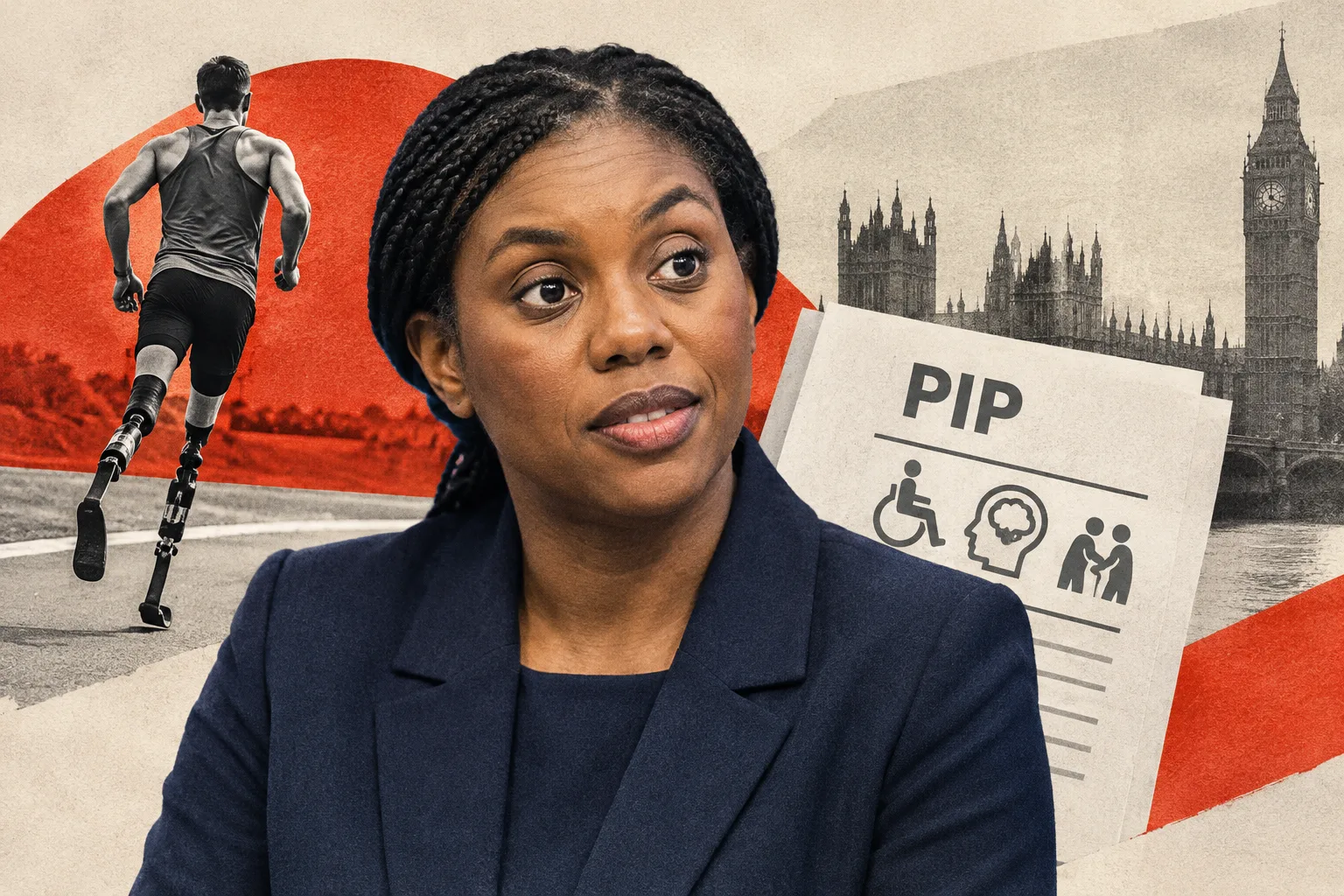
Kemi Badenoch has defended using the example of double amputees running marathons to argue that more disabled people should work, as she backed Conservative proposals to cut disability benefits.
An athlete’s achievement does not show how many other disabled people can work or what support they need. One of the benefits targeted by the proposal, Personal Independence Payment (PIP), can also be paid to people who are in work.
Speaking on BBC Radio 4’s Today programme, Badenoch said that “if people even with significant problems can work, then those who have ADHD and mild anxiety should go to work”. She rejected the suggestion that her earlier remarks were insensitive and said people who could work should be encouraged to do so.
Badenoch made the marathon comparison when launching her party’s welfare plan on 10 November. In that speech, she also said some people genuinely could not work and needed a safety net.
Paralympian and double amputee marathon runner Richard Whitehead criticised her example. He told the Guardian he was “gobsmacked” that sporting success would be “weaponised” in this way and said some families relied on support. Prime Minister Andy Burnham called Badenoch’s remarks “crass and insensitive”.
What the plan would change
The Conservatives say their opposition plan would end cash support for existing standard-rate PIP claimants with what the party describes as milder mental health and neurodiversity conditions, including anxiety, depression and ADHD. It would also remove a minority of enhanced-rate cases for those conditions.
PIP helps with extra living costs arising from a long-term condition or disability, and people can receive it while working. Its assessment considers difficulties with daily tasks and mobility, including whether a task can be done safely and what help is needed.
Universal Credit has a separate work-capability assessment, but someone found to have limited capability can still work if they feel able to; earnings can affect their payment.
The party estimates its wider welfare plan would save £36.1 billion a year by the end of the next parliament, including £13.7 billion from sickness and disability benefit reform. A separate breakdown estimates £14.1 billion in savings in 2029/30 from changes involving mental health and routine back and joint pain, across PIP and the health component of Universal Credit. The figures cover overlapping policies, not separate savings.
The party says it used assumptions from PIP data to estimate the effect on Universal Credit because a detailed breakdown was lacking. It proposes reinvesting £1 billion a year in health support for people no longer eligible for cash disability benefits.
A government-commissioned study of Access to Work, a separate scheme funding workplace support, interviewed 90 applicants and 26 employers. Some recipients said the support was essential to staying in work, while others said it made their working lives easier. The interviews were qualitative and not statistically representative.
Sign in to give this article a thumbs up or down.
From the discussion
Private test discussion. Comments are readers’ views and are not yet automatically fact-checked. Editing is available for 60 seconds after posting.
Sign in with a confirmed reader account and choose a username to read comments and participate.
Sorting applies to top-level comments; replies remain oldest first. New comments and likes can change the order. Refresh for the current ranking.
Loading comments…