China publishes nuclear and oil declaration after Trump, Xi and Putin meet
A declaration published by China after the Shenzhen talks sets out plans for nuclear dialogue and increased oil-product supplies, but gives few details and does not mention the wars in Ukraine or Iran.
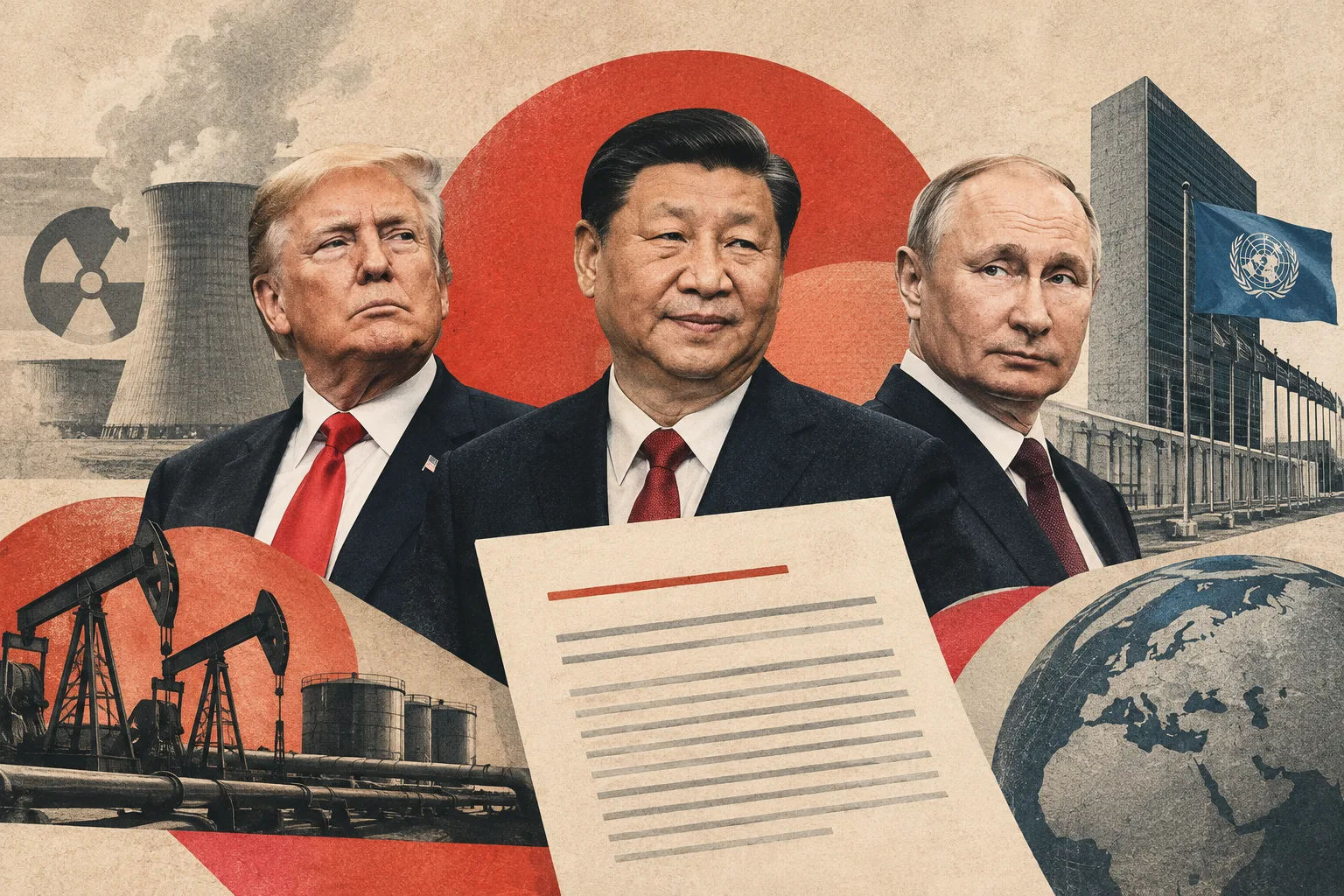
China has published a four-point declaration following talks between Donald Trump, Xi Jinping and Vladimir Putin, outlining plans for nuclear dialogue and increased supplies of refined oil products without setting a timetable.
The three leaders met for more than an hour on 19 November on the sidelines of the Asia-Pacific Economic Cooperation summit in Shenzhen. China’s foreign ministry published the text as a declaration by the three heads of state; Russian outlet RBC reported that the Kremlin also published it. The Associated Press reported that the US had not released the document.
The four-point text says the countries will hold dialogue on reducing nuclear risks and preventing the spread of nuclear weapons. It also says they plan to increase production and supplies of refined oil products and seek reform of the United Nations. It sets no volumes or timetable for the oil plan.
Their public opening remarks addressed nuclear disarmament and Russia’s war in Ukraine. Before the meeting, Trump had said he wanted to raise Ukraine with Xi and Putin. The Associated Press reported that Trump said he had raised the wars in Ukraine and Iran with the leaders earlier in the day; neither war is mentioned in the declaration.
CNN reported that Trump had loosened restrictions on Russian diesel in an effort to lower fuel costs. The KSE Institute estimated that Russia’s oil export revenue rose by $3.6 billion to $17.7 billion in September as global prices climbed. That estimate covers crude and oil products before the US change, so it does not measure any additional earnings from the diesel measure.
The declaration also says respect for state officials’ immunity and the principle of state consent are important, and that the International Criminal Court and similar bodies must not abuse their jurisdiction.
The ICC issued an arrest warrant for Putin in 2023 over the alleged unlawful deportation and transfer of Ukrainian children to Russia. Its 2026 annual report listed the warrant as outstanding during the reporting period ending in July. The declaration does not name Putin or say that the warrant is withdrawn.
In 2024, ICC judges found that Mongolia had failed to comply with a request to arrest and surrender Putin during a visit. They held that a head of state’s personal immunity did not prevent proceedings before the court. The legal question is contested: Mongolia argued that Putin had immunity as the head of a country outside the court’s treaty, and legal scholar Dominic Bielby has criticised aspects of the court’s reasoning.
Sign in to give this article a thumbs up or down.
From the discussion
Private test discussion. Comments are readers’ views and are not yet automatically fact-checked. Editing is available for 60 seconds after posting.
Sign in with a confirmed reader account and choose a username to read comments and participate.
Sorting applies to top-level comments; replies remain oldest first. New comments and likes can change the order. Refresh for the current ranking.
Loading comments…