Buried 2,600-year-old structure in Egypt may reveal ancient foundation techniques
Surveys have revealed a buried 26th-dynasty structure at Buto, where a layer of sand beneath the building may shed light on ancient foundation techniques.
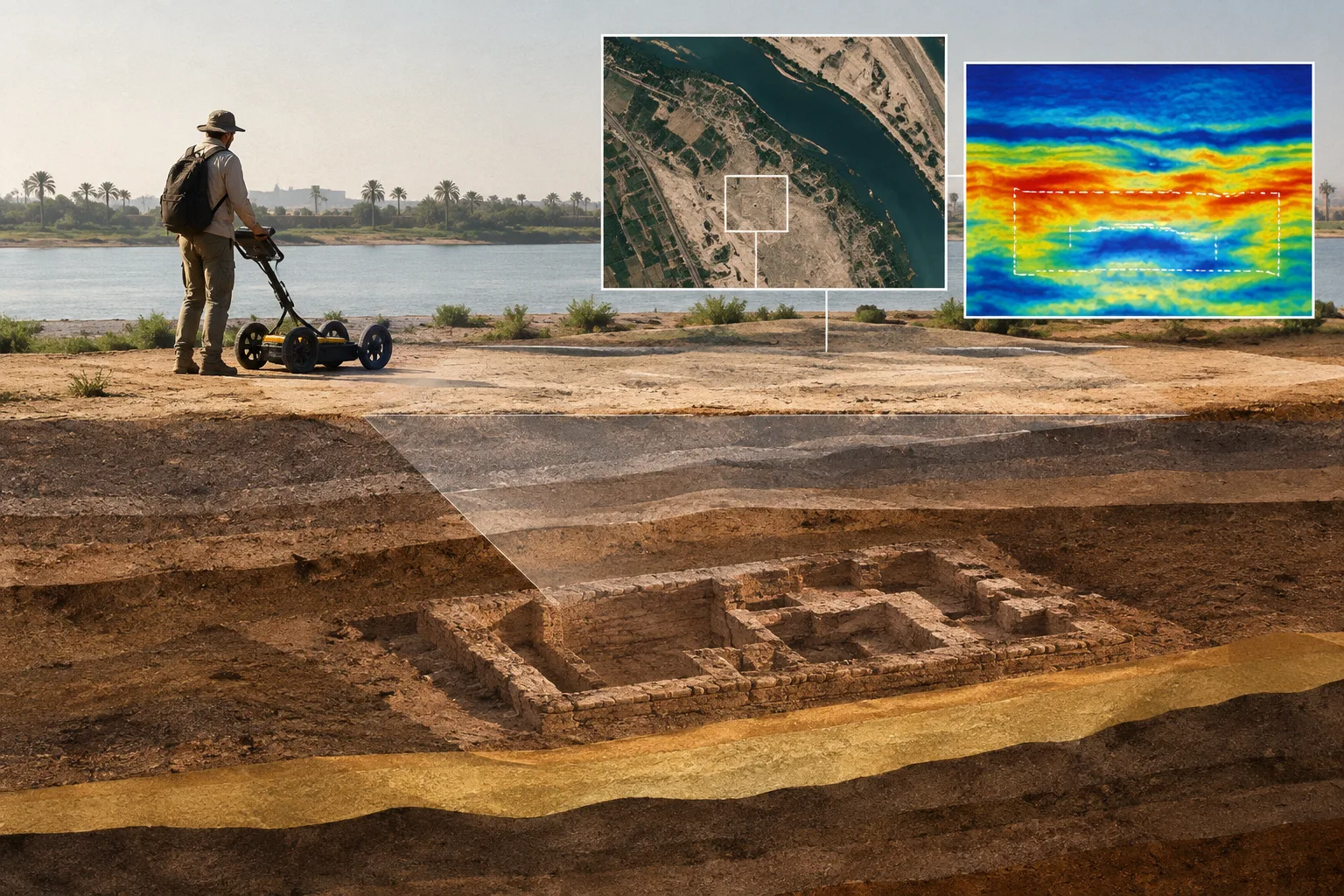
Satellite radar and ground surveys have revealed a buried mudbrick structure at the ancient Egyptian city of Buto, offering possible clues to how builders dealt with the Nile Delta’s soft, flood-prone ground.
The building lies about 3 to 6 metres beneath the surface and measures an estimated 25 by 20 metres. Researchers date it to Egypt’s 26th dynasty, in the seventh or sixth century BC. Its purpose is unknown, though the study’s authors suggest it may have been a tomb, shrine or priests’ residence.
The team used satellite radar to identify buried features, then electrical resistivity tomography — which measures how electrical currents pass through soil — to investigate underground layers. Excavations guided by the surveys uncovered objects associated with religious practices, including amulets and an altar.
The researchers also detected a layer of sand about 6 to 7 metres underground. They believe it may have been deliberately laid to create a level, stable foundation, but further investigation is needed to establish its purpose. Sand could have helped level the ground, strengthen the foundation or distribute the building’s weight, Egyptologist Hussein Bassir said.
The Nile Delta’s clay-rich soil expands when wet and contracts as it dries, which can put pressure on buildings. The findings may therefore offer evidence of how ancient builders adapted construction to local conditions, rather than proving exactly how the foundation was designed.
Buto was an important political and religious centre in northern Egypt, with origins dating to the fourth millennium BC. Much of the site remains unexplored, and layers of sediment and building debris — as well as groundwater — make conventional excavation difficult. The surveys also identified evidence of later settlements, believed to date to either the Ptolemaic or Roman period.
Archaeologists involved in the study say combining satellite imagery with ground-based surveys can help identify promising places to excavate without extensive digging. The researchers suspect another structure may lie beneath a thick layer of clay at Buto, and plan to investigate it.
Sign in to give this article a thumbs up or down.
From the discussion
Private test discussion. Comments are readers’ views and are not yet automatically fact-checked. Editing is available for 60 seconds after posting.
Sign in with a confirmed reader account and choose a username to read comments and participate.
Sorting applies to top-level comments; replies remain oldest first. New comments and likes can change the order. Refresh for the current ranking.
Loading comments…