Climate Analytics calls COP31 carbon capture proposal a ‘fantasy target’
Climate Analytics says a carbon capture proposal at the UN climate summit is unrealistic, citing the much larger estimated contribution of wind and solar to avoiding emissions.
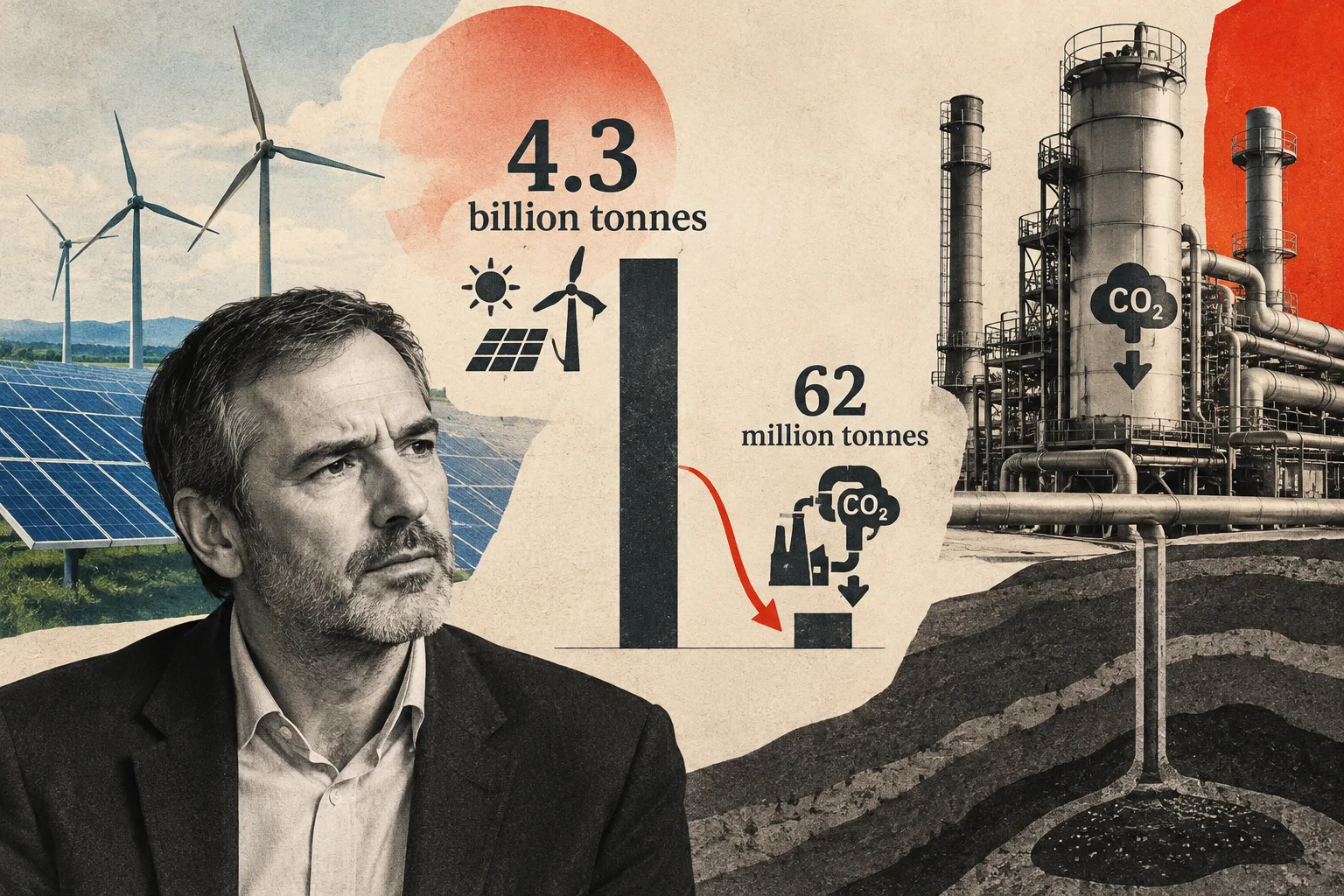
A COP31 draft outcome text published by The Guardian includes alternative proposals for carbon capture, use and storage. One calls for at least 500 million tonnes of CO₂ a year by 2035, reflecting current policies, while working towards 1.3 billion to 2.5 billion tonnes; another calls for working towards 2.5 billion tonnes.
Bill Hare, chief executive of Climate Analytics, criticised the 2.5 billion-tonne figure, saying: “There’s no place in the UN climate process for fantasy targets.” The institute says reaching that level would require roughly a 40-fold increase from current capacity.
In its analysis, the institute estimated that wind and solar avoided 4.3 billion tonnes of CO₂ emissions in 2025, while global carbon capture and storage capacity stood at 62 million tonnes a year.
The rounded figures give a ratio of about 69 to one, but they measure different things: an estimate of emissions avoided by renewable electricity and theoretical capture capacity, not the amount actually captured or permanently stored. The comparison assumes capture facilities operate at full capacity.
To estimate avoided emissions, the researchers assumed wind and solar electricity would otherwise have been generated by coal, oil and gas in their respective shares of global generation. They used Independently verifiedca1-clm.edcdn.com, without accounting for where wind and solar were deployed or each country’s electricity mix.
Climate Analytics policy analyst Olivia Waterton said carbon capture was a small player today and was likely to remain so. The draft text, meanwhile, recognises a role for carbon capture, use and storage, particularly in sectors where emissions are hard to reduce.
The Associated Press reported early on 21 November that talks would continue for an extra day, after activists and some countries criticised a draft for omitting any reference to fossil fuels.
Sign in to give this article a thumbs up or down.
From the discussion
Private test discussion. Comments are readers’ views and are not yet automatically fact-checked. Editing is available for 60 seconds after posting.
Sign in with a confirmed reader account and choose a username to read comments and participate.
Sorting applies to top-level comments; replies remain oldest first. New comments and likes can change the order. Refresh for the current ranking.
Loading comments…