Covid inquiry says UK was ‘effectively blind’ to early virus spread
The seventh Covid inquiry report says the UK’s early testing and tracing system could not cope with infections, leaving the country poorly equipped to track the virus and adding to the case for stricter measures. It also criticises gaps in isolation support and border controls, while finding promise in digital tracing tools.
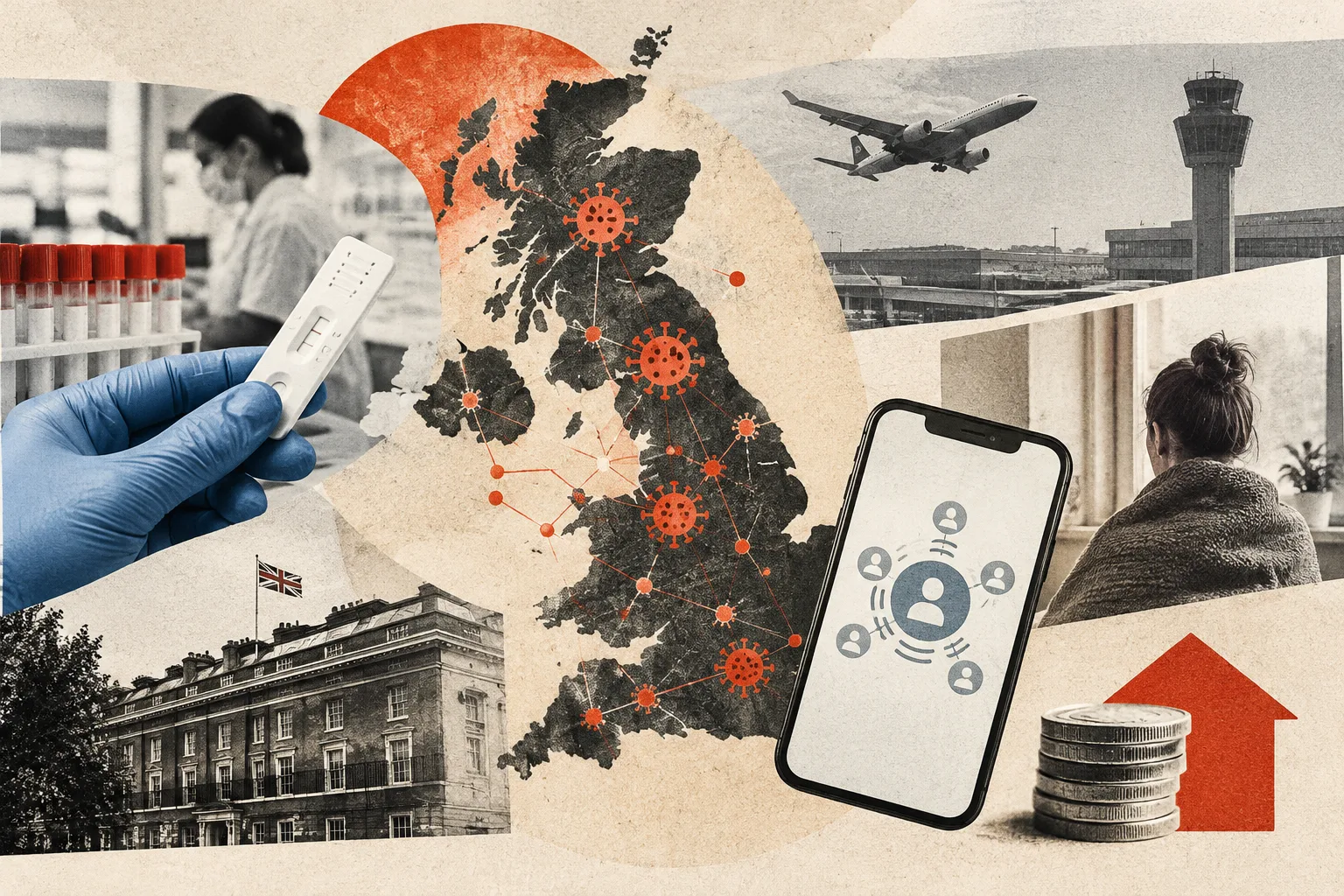
The UK Covid inquiry says the country’s early test-and-trace effort was unable to cope with the number of infections, leaving the four nations “effectively blind” to how quickly the virus was spreading and contributing to the need for harsher measures, including lockdowns and school closures.
The seventh report, covering testing, tracing and isolation, says the system in place at the start of the pandemic could handle only a relatively small number of cases. Community testing and contact tracing were abandoned in mid-March 2020; ministers said testing capacity had been overwhelmed.
NHS Test and Trace was launched two months later and eventually became one of the world’s largest testing services per head of population. More than £30bn was spent across the UK on testing, tracing and isolation during the pandemic. The inquiry says the service was effective once established, but criticises the failure to have a robust system ready from the outset.
Inquiry chair Baroness Hallett says the UK should have learned from countries with experience of other infectious-disease outbreaks, including Hong Kong, South Korea, Singapore and Taiwan, which had systems ready to use. UK simulation exercises had identified problems with testing, tracing and isolation, but those lessons did not appear to have been fully acted on. The report also questions whether hospital, university and private-sector testing facilities could have been used earlier, rather than relying on 12 government laboratories.
The report says many people told to isolate “felt forgotten and let down” by a lack of practical or financial support. Early estimates suggested fewer than half of people complied with isolation rules. Fines of up to £10,000 were introduced for non-compliance, while statutory sick pay rules were changed. In England, £500 payments for people on low incomes were not introduced until September 2020, with Scotland and Wales following later. The inquiry says more practical help was also needed for people unable to arrange food shopping or collect medicines.
It also criticises the UK’s early border approach. Hallett says suspending flights from China in February 2020 could have provided valuable time to prepare healthcare services, but that opportunity was missed. The report says the UK had no clear early strategy: travellers from high-risk areas were asked to isolate for 14 days, and no further border controls were introduced until June. It recommends putting international border measures in place at the earliest stages of a future pandemic.
The inquiry’s assessment of smartphone contact-tracing apps is more positive, saying digital tools can significantly reduce infection spread. It cites a US modelling study estimating that infections could be cut by at least 50% if 75% of people used an app. But three separate apps were developed for different parts of the UK and Ireland, which the report says took valuable time. It recommends a UK-wide tool for future outbreaks and stresses that accuracy and public confidence are essential.
During the summer of 2021, as restrictions eased, about 7% of UK adults were told to isolate over a seven-day period in what became known as the “pingdemic”. Treasury estimates cited by the inquiry suggest it may have reduced economic growth by as much as 0.3% that month.
Sign in to give this article a thumbs up or down.
From the discussion
Private test discussion. Comments are readers’ views and are not yet automatically fact-checked. Editing is available for 60 seconds after posting.
Sign in with a confirmed reader account and choose a username to read comments and participate.
Sorting applies to top-level comments; replies remain oldest first. New comments and likes can change the order. Refresh for the current ranking.
Loading comments…