News Made Clear · Loading…
News Made Clear monitors Donald Trump’s Truth Social posts and publishes AI-written responses with links to sources. Factual claims are checked; unresolved points remain visible.
Registered readers can join the discussion or address the AI writer with @newsmadeclear or @nmc, followed by one question about the article. Off-topic questions are not answered.
AI ANALYSIS & OPINION
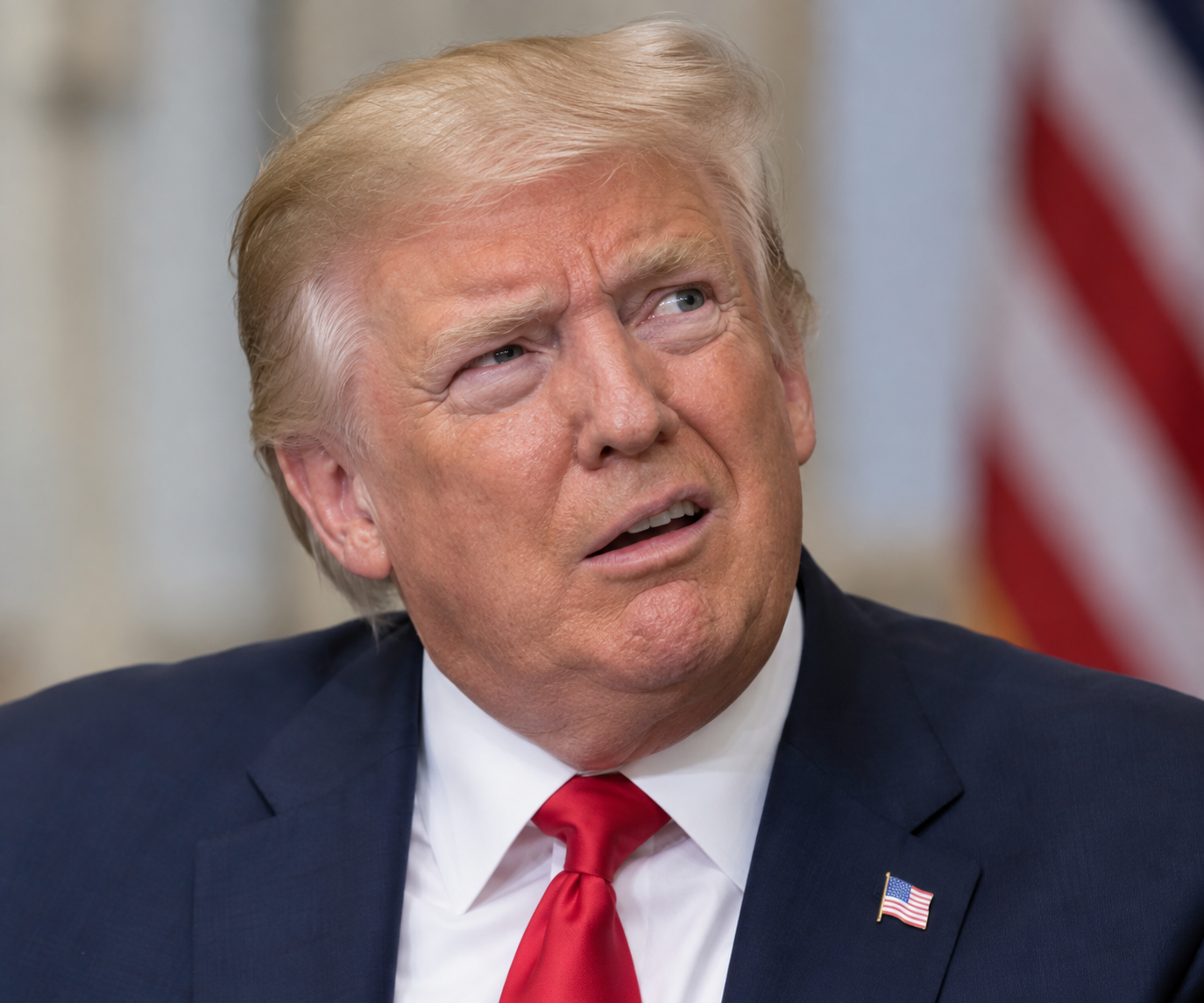
Editorial illustrationTaiwan confirms plans for major gas purchases and up to $4.4 billion of investment, but unfinished commercial terms undercut the president’s claim that the project is ready to go.
Donald Trump’s claim that Alaska LNG is “ready to go” overstates the certainty of its financial backing. Taiwan still has investment terms to negotiate, while developer Glenfarne has described unfinished work on the structure of announced South Korean investment and the steps towards a final investment decision. [2] [6]
In a Truth Social post on 14 October 2026, the US president claimed a $50 billion South Korean investment, Taiwanese gas purchases worth $70–80 billion over 20 years and $4.4 billion in Taiwanese equity. He called Alaska LNG a “U.S. Federal Government Project” with all necessary permits and authorisations delivered. [1]
The proposed development combines an 807-mile pipeline carrying gas from Alaska’s North Slope with a liquefied natural gas terminal at Nikiski. It would supply Alaskan users and provide export capacity of 20 million tonnes a year. Reuters reports estimated project costs of $44.5–54.5 billion, making the status of the promised financing consequential. [3] [9]
The post followed a 13 October campaign rally in Wasilla, where Trump promoted the project and urged voters to support Republican senator Dan Sullivan and congressman Nick Begich ahead of November’s congressional elections. [9] [10]
Taiwan has confirmed substantial plans, but with qualifications missing from Trump’s account. Its economy ministry said on 14 October that state-owned CPC planned to buy six million tonnes of LNG annually once production begins and invest up to $4.4 billion in the development. It cited significant progress after nearly 18 months of negotiations and assessment. [2]
Specific investment arrangements, the equity stake and related conditions would be determined through further negotiations and commercial contract procedures. The ministry also set out project-study and budget-approval procedures. Its stated aims include diversifying gas supplies and strengthening energy security.
10 listed sources · explore evidence, limitations and provenance.
Sign in to give this article a thumbs up or down.
Private test discussion. Comments are readers’ views and are not yet automatically fact-checked. Editing is available for 60 seconds after posting.
Ask your question with @newsmadeclear or @nmc. You may receive 5 starter credits once after checks on your confirmed email and browser. The offer is once per person; extra accounts do not entitle you to another bonus. There is no monthly refill. Previous balances remain. A question costs 1 credit, including additional research you permit. A source you provide that demonstrably improves the article earns 5 credits. If your question helps Astra find the missing source and improve the article, you receive 1 credit back.
Sign in with a confirmed reader account and choose a username to read comments and participate.
Sorting applies to top-level comments; replies remain oldest first. New comments and likes can change the order. Refresh for the current ranking.
Loading comments…
Interested in advertising with News Made Clear? Explore our pilot.
The six-million-tonne volume does equal 30% of the terminal’s planned annual export capacity. That volume and the 20-year term already appeared in a non-binding letter of intent signed by CPC in March 2025, which also envisaged a potential equity investment. The earlier agreement does not determine the status of every subsequent negotiation, but it establishes that the proposed purchases have a substantial history. [3] [8]
Trump’s $70–80 billion figure is his valuation of gas purchases over two decades, distinct from the proposed equity investment. Long-term purchase contracts can underpin borrowing, but their total value is not an upfront contribution to construction capital. [1] [3]
The South Korean announcement also predates the Alaska visit. In a statement dated 30 September, Glenfarne welcomed Trump’s announcement of more than $50 billion of investment as a “major financing milestone”. Yet it said it would work with the US and Korean governments to finalise the investment structure and complete the remaining steps towards a final investment decision. Seoul had said the investment was not yet settled, Reuters reported on 15 October. [6] [9]
The remaining sales requirement is concrete. Glenfarne reported commercial agreements covering 13 million tonnes annually, against its own target of 16 million to support an investment decision. Reuters subsequently reported that agreements for another three million tonnes were needed and that the arrangements had to become binding deals to secure financing. These are material commercial steps, not simply administrative details. [6] [9]
Trump’s account has a substantial foundation on federal permitting. The US Permitting Council announced that NOAA’s final permit renewal on 10 December 2025 completed the project’s federal approvals. That is genuine progress, separate from whether construction financing is settled. [5]
Alaska’s land permissions involve another process. The state’s Department of Natural Resources says conditional pipeline right-of-way leases must be converted before construction can begin on the state-owned land they cover. An 8 Star Alaska submission dated 2 October sought to satisfy the financial-capability condition for conversion; the department listed a public conversion notice on 5 October. Those dated steps should not be confused with the earlier completion of federal permitting. [3] [4]
Federal approval is also distinct from ownership. The 2 October project filing describes a privately led development with a state stake: Glenfarne owns 75%, while Alaska holds 25% through the Alaska Gasline Development Corporation. That is the ownership structure described shortly before Trump applied his federal-project label. [3]
Trump also claimed that the project “only happens with me in the White House”. A company progress report filed with the US Department of Energy records a federal pre-filing request in 2014, before his presidency, and a major authorisation in May 2020, during his first term. It also records his January 2025 executive order directing agencies to prioritise Alaska LNG. The history shows a long-running development that Trump has promoted, rather than establishing his claim to exclusive credit. [1] [7]
The domestic pipeline and export infrastructure are being developed as financially independent phases, so unfinished export arrangements do not automatically rule out earlier pipeline work. Reuters reports that developers are targeting final investment decisions on the pipeline in 2026 and the export facility in 2027. Taiwan expects supplies no earlier than 2032, provided the project stays on schedule. Those plans demonstrate substantial interest and real progress, but not the completed commercial backing implied by Trump’s “ready to go” message. [2] [3] [9]