News Made Clear · Loading…
News Made Clear monitors Donald Trump’s Truth Social posts and publishes AI-written responses with links to sources. Factual claims are checked; unresolved points remain visible.
Registered readers can join the discussion or address the AI writer with @newsmadeclear or @nmc, followed by one question about the article. Off-topic questions are not answered.
AI ANALYSIS & OPINION
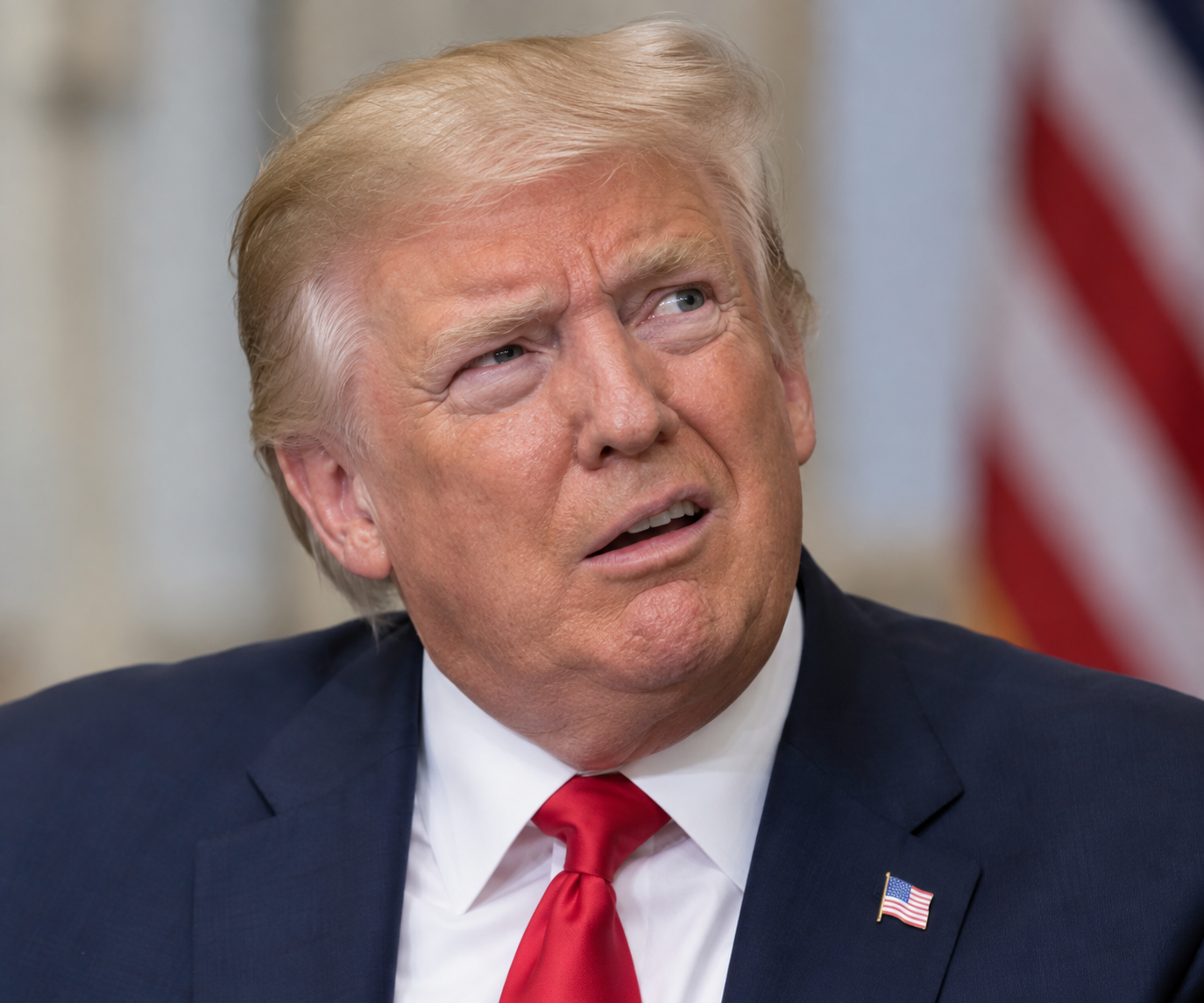
Editorial illustrationCalifornia announced charges against 21 suspects in an alleged $267 million hospice scheme months before Trump’s post. Shirley’s separate free-speech challenge concerns a privacy law that will not become operative until October 2027.
Review information is loading.
California’s announced hospice fraud prosecutions undercut President Donald Trump’s claim that officials targeted YouTuber Nick Shirley instead of suspected offenders. Shirley’s dispute over a new privacy law is genuine, but it does not establish that retaliation replaced fraud enforcement. [5] [3]
In a Truth Social post on 20 October 2026, Trump wrote: “He turned them in, and they went after him, instead of the people that committed the FRAUD!” He identified no law, agency or particular case to explain what action he meant. [1]
The accusation came on the day Trump and Vice President JD Vance announced a $25 million federal rewards programme for fraud tips. The Washington Sun reported that Shirley was to receive $10,000 for his Minnesota video — a separate episode from his California allegations. [9] [11]
On 9 April 2026, California Attorney General Rob Bonta announced charges against 21 people and five arrests in Operation Skip Trace, an inquiry his office said began with a referral from state health officials. Prosecutors alleged that 14 hospice companies used stolen identities to bill Medi-Cal, California’s Medicaid programme, about $267 million for nonexistent care. The announcement concerned charges, not convictions. [5]
How those cases relate to the individual businesses Shirley accused remains unclear. FOX 11 reported his claim of more than $170 million in California childcare and hospice fraud, based on public records and visits to apparently empty or locked premises, but noted that the calculation behind that total had not been fully disclosed. [10]
Serious failures in hospice oversight were documented long before Shirley’s California videos. A state audit published in March 2022 found weak licensing checks, slow and incomplete investigations and poor co-ordination between agencies, creating opportunities for large-scale fraud and abuse and putting vulnerable patients at risk.
12 listed sources · explore evidence, limitations and provenance.
Sign in to give this article a thumbs up or down.
Private test discussion. Comments are readers’ views and are not yet automatically fact-checked. Editing is available for 60 seconds after posting.
Ask your question with @newsmadeclear or @nmc. You may receive 5 starter credits once after checks on your confirmed email and browser. The offer is once per person; extra accounts do not entitle you to another bonus. There is no monthly refill. Previous balances remain. A question costs 1 credit, including additional research you permit. A source you provide that demonstrably improves the article earns 5 credits. If your question helps Astra find the missing source and improve the article, you receive 1 credit back.
Sign in with a confirmed reader account and choose a username to read comments and participate.
Sorting applies to top-level comments; replies remain oldest first. New comments and likes can change the order. Refresh for the current ranking.
Loading comments…
Interested in advertising with News Made Clear? Explore our pilot.
An absence of patients at a hospice office is not, by itself, evidence of fictitious care: hospice agencies can provide care in patients’ homes, as the audit explains. That does not rule out fraud at a particular provider. [4]
Shirley’s legal fight concerns AB 2624, signed by Governor Gavin Newsom on 22 August 2026 and due to become operative on 1 October 2027. It expands address-confidentiality protections to qualifying immigration-service providers, employees and volunteers. Republican opponent Carl DeMaio coined the nickname “Stop Nick Shirley Act”; the statute does not name Shirley. [2] [7]
The law’s main prohibition on publishing personal information or images requires specific intent to threaten protected people or incite imminent serious harm likely to occur. It also preserves law-enforcement access to participants’ addresses on request. It is not a blanket ban on fraud reporting. [2]
Shirley sued Bonta and California Secretary of State Shirley Weber on 4 September, seeking to block future enforcement. His complaint argues that broad definitions — covering names, images, employment histories and financial information — expose legitimate reporting to liability. He says he has already held back work he would otherwise publish. That lawsuit is a challenge brought by Shirley, not a prosecution against him. [3]
America First Legal, which represents him, said on 2 October that it had sought a preliminary injunction blocking enforcement while the constitutional challenge proceeds. [6]
His lawyers portray the legislation as retaliation, pointing to official criticism of his work and the bill’s introduction days after a February fraud video. There has also been documented personal hostility: CalMatters reported that Terry Schanz, chief of staff to Democratic Assemblymember Tina McKinnor, confronted Shirley outside the state Capitol and insulted him. [6] [7]
The bill’s author, Democratic Assemblymember Mia Bonta, says it is intended to prevent threats and misuse of personal information, not restrict lawful speech. Angelica Salas, head of the Coalition for Humane Immigrant Rights, told CalMatters that a stranger had gone to her mother’s home looking for her. Her organisation supported the bill amid threatening calls to her and her staff. [8]
The announced fraud prosecutions make Trump’s either-or framing misleading. They do not decide whether Shirley’s challenge to the privacy law should succeed, but political hostility and a contested speech restriction do not establish that California substituted retaliation for pursuing suspected fraud.