News Made Clear · Loading…
Category
Regions
Continents
Democrats face a defining fight over the party’s future
Loading statistics…
Democrats may gain ground in the midterms, but divisions over healthcare, Israel and the party’s political direction leave unresolved what a victory would mean for its future.
Review information is loading.
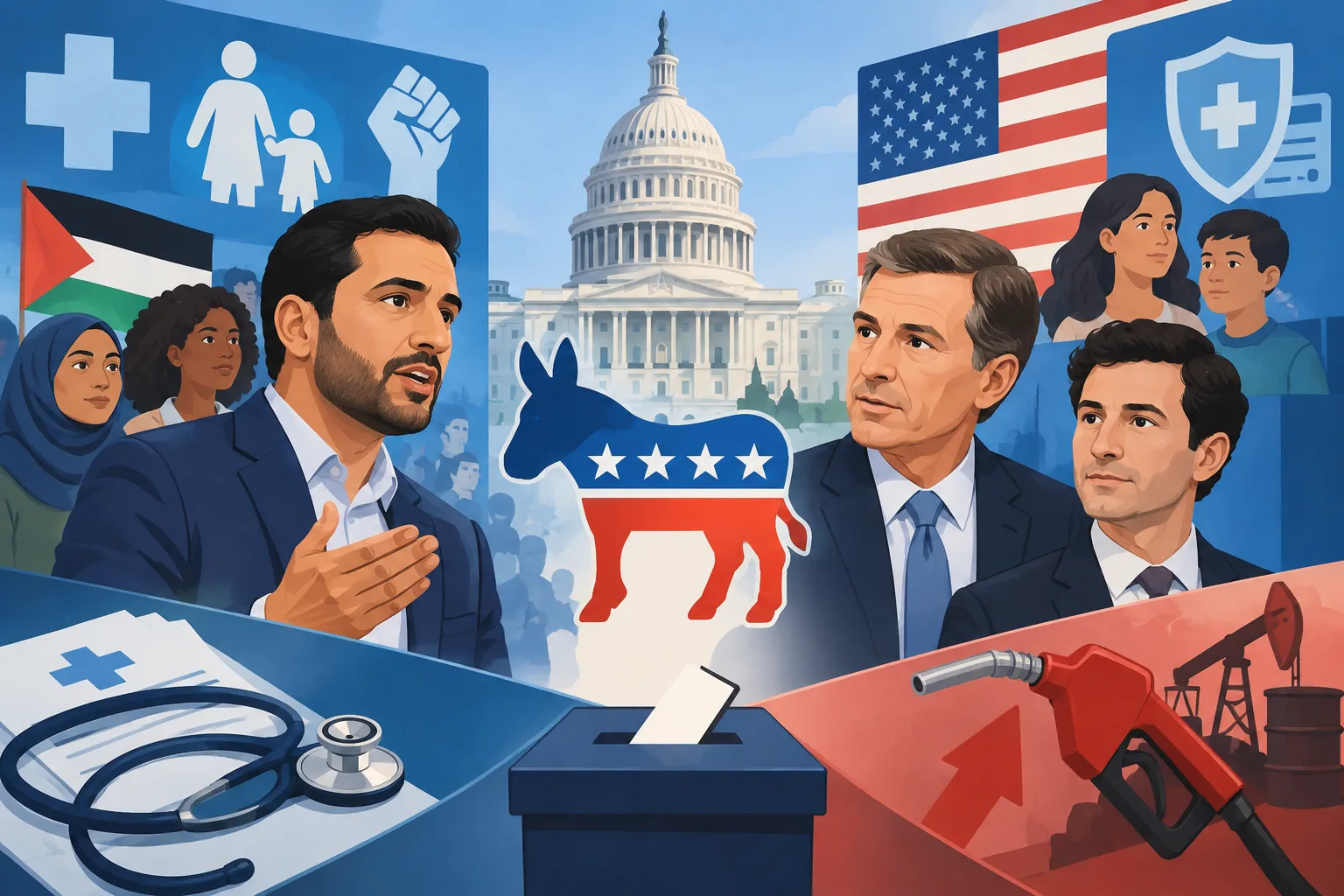
Democrats are heading into the US midterm elections with a chance to win control of Congress, but the party is struggling to define what it stands for beyond opposition to President Donald Trump. A contest between its centrist and progressive wings could shape its direction well beyond election day.
The party faces favourable conditions: Trump’s approval rating is low, the war with Iran and rising petrol prices are unpopular, and the governing party has lost House seats in 18 of the past 20 midterms. Yet Democrats remain unpopular too, leaving Republicans room to defy the usual pattern.
The internal argument is about policy as well as electoral strategy. Progressives want a sharper break with the party establishment, including universal healthcare and childcare and a tougher stance on Israel. More centrist Democrats argue that sweeping proposals could alienate voters who prefer incremental change or want to retain private health insurance.
The divide was visible in Michigan, where progressive candidate Abdul El-Sayed won his primary despite opposition from party leaders. His supporters see the result as evidence that an outspoken progressive can mobilise voters in a competitive state. Centrists point instead to candidates such as Roy Cooper in North Carolina and Jon Ossoff in Georgia as examples of a broader electoral appeal.
The Gaza war has become another fault line. Some Arab-American voters who backed Trump in 2024 over the Biden administration’s policy towards Israel say they are now reconsidering, encouraged by El-Sayed’s criticism of Israel. At the same time, Jewish Democrats who identify as Zionists say they fear being pushed out of the party coalition.
Healthcare offers a further test. Polling cited by the BBC suggests most Democrats favour a universal system, while most Republicans oppose it. Party moderates say voters may support universal coverage while also wanting to keep existing insurance, and argue that lowering costs is a more immediate focus.
A Democratic victory would not settle which faction has the stronger claim to lead. Analysts interviewed by the BBC expect competing groups to claim credit after the vote, with the argument likely to feed into the contest for the party’s 2028 presidential nomination.
How do we know?
1 listed sources · explore evidence, limitations and provenance.
Sign in to give this article a thumbs up or down.
About this discussion and AI questions
Private test discussion. Comments are readers’ views and are not yet automatically fact-checked. Editing is available for 60 seconds after posting.
Sign in with a confirmed reader account and choose a username to read comments and participate.
Sorting applies to top-level comments; replies remain oldest first. New comments and likes can change the order. Refresh for the current ranking.
Loading comments…