News Made Clear · Loading…
Category
Regions
Continents
ECB warns nature loss poses growing risks to the economy and banks
Loading statistics…
The ECB’s Frank Elderson says nature loss is an economic and financial risk, and calls for substantially more investment in protecting and restoring ecosystems.
Review information is loading.
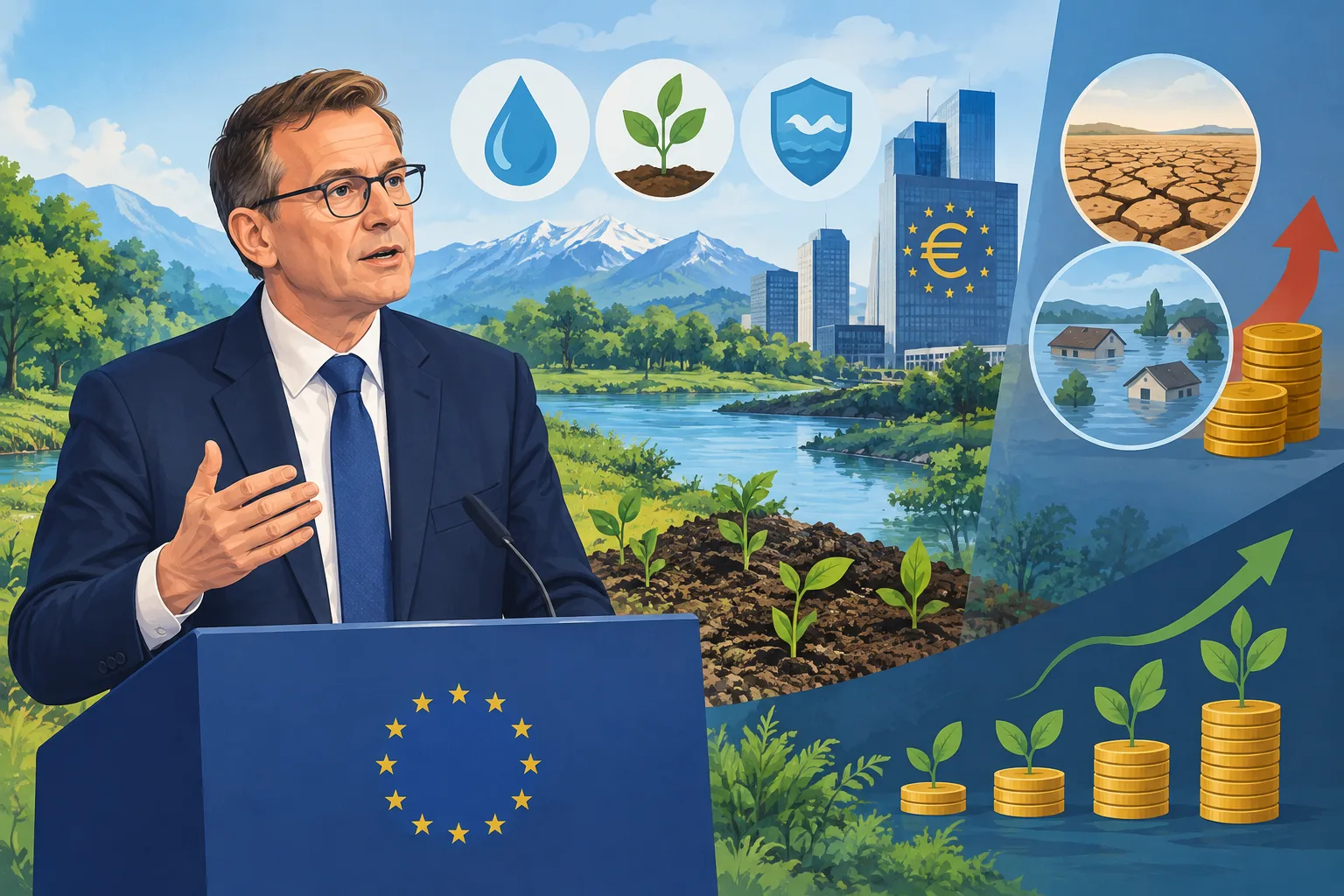
The European Central Bank says damage to nature is already exposing businesses and financial institutions to economic risks, and is urging governments and investors to direct more money towards protecting and restoring ecosystems.
In a speech at COP17 Finance and Biodiversity Day in Yerevan on 26 October, ECB Executive Board member Frank Elderson argued that healthy ecosystems underpin economic activity through services such as clean water, fertile soil and protection from floods and droughts. He said nature should be treated as economic infrastructure, not as a competing claim on prosperity.
The ECB estimates that 72% of euro-area companies depend on at least one ecosystem service, and that 75% of corporate lending goes to companies with high dependence on at least one. Elderson said damage to natural systems can raise costs, weaken productivity and disrupt supply chains, with consequences that may spread from businesses to financial institutions.
Water shortages and flooding illustrate the potential exposure, according to the speech. ECB research cited by Elderson estimates that a once-in-a-century drought could put up to 24% of euro-area economic output at risk; nearly 12% faces risks from insufficient flood protection. These are estimates of potential exposure, not forecasts of losses from a specific event.
Elderson also linked nature risks to the ECB’s responsibilities. He said the bank expects supervised banks to identify and manage material nature-related risks as part of ensuring they remain safe and sound. More than 90% of banks supervised by the ECB consider themselves materially exposed to climate and nature risks, he said, but nature-related risk management remains less developed than climate risk management. Two-thirds do not systematically connect their assessments of nature-related risks to a management response.
The speech called for greater public and private investment in nature-positive projects. Citing the UN Environment Programme, Elderson said annual investment in nature-based solutions would need to reach $571 billion by 2030, up from about $220 billion in 2023.
How do we know?
1 listed sources · explore evidence, limitations and provenance.
Sign in to give this article a thumbs up or down.
About this discussion and AI questions
Private test discussion. Comments are readers’ views and are not yet automatically fact-checked. Editing is available for 60 seconds after posting.
Sign in with a confirmed reader account and choose a username to read comments and participate.
Sorting applies to top-level comments; replies remain oldest first. New comments and likes can change the order. Refresh for the current ranking.
Loading comments…