Democrats back wider Medicare access, but costs and divisions threaten expansion
Democratic leaders are backing wider access to Medicare, but the party has no agreed plan. The price, competing approaches and Donald Trump’s opposition make legislation in the next two years unlikely.
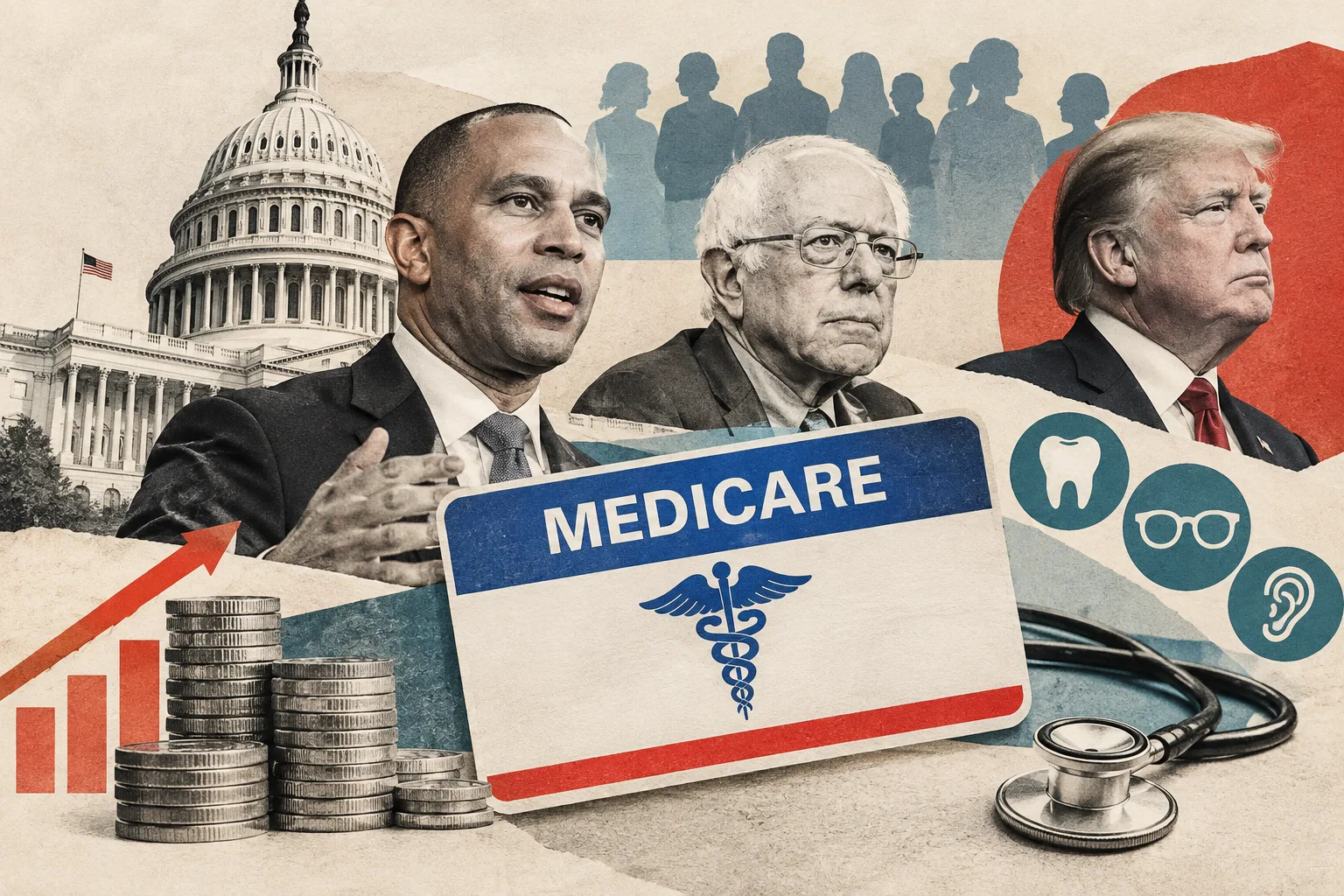
Democratic leaders are backing proposals to widen access to Medicare, but high costs, divisions within the party and the prospect of a veto by President Donald Trump make rapid action unlikely. The debate is also unresolved: Democrats have yet to agree on a single plan, ranging from letting people enrol from age 50 to opening the programme to anyone who wants it.
Expected House Speaker Hakeem Jeffries has called for lowering Medicare’s eligibility age, expanding dental, vision and hearing benefits, and covering all children. But he has not committed to a specific proposal. In November, he described those steps as part of a “march toward universal health coverage”.
The ideas fall short of the “Medicare for All” plan long advocated by Vermont senator Bernie Sanders, which would replace private insurance with government coverage for everyone. Sanders has welcomed Jeffries’ support for broader Medicare access and benefits, but Democrats have not settled on how far an expansion should go.
Cost and competing proposals
Wisconsin senator Tammy Baldwin introduced the Medicare at 50 Act in November, which would let Americans aged 50 to 64 buy into Medicare. Washington representative Pramila Jayapal has proposed allowing enrolment from age 50, while a bill from Connecticut representative Rosa DeLauro would open Medicare to anyone and add benefits including long-term care.
The price depends on the design. Doug Holtz-Eakin, president of the American Action Forum, estimated that lowering the eligibility age to 62 would cost between $388 billion and $1.8 trillion over a decade, depending in part on whether employers continued to provide health insurance to newly eligible workers. Buying into Medicare could cost participants more but reduce the burden on taxpayers; lowering the eligibility age would leave the federal government paying a larger share.
KFF executive vice-president Larry Levitt said a central challenge was working out “how do you get from here to there”. Medicare’s hospital trust fund is projected to face insolvency in 2033, and Levitt said it was not designed to cover a broader population.
Democrats are also divided between lawmakers seeking more limited changes and progressives calling for a wider overhaul. Debbie Curtis, a strategy adviser who helped develop the Affordable Care Act as a congressional staffer, said proposals often began as slogans but required difficult choices when turned into legislation.
The party’s incoming leaders have put reversing Republican Medicaid cuts and restoring enhanced Affordable Care Act subsidies higher on their priority list. The healthcare industry and employers could also resist parts of an expansion, though each might benefit in some ways: insurers could gain Medicare Advantage customers, providers could see fewer uninsured patients, and employers could shed some healthcare costs for older workers.
CNN reported that broadening Medicare access is unlikely in the next two years. The debate may instead help Democrats shape a proposal for the 2028 presidential campaign, as they weigh the cost, the scope of coverage and a path through Congress.
Sign in to give this article a thumbs up or down.
From the discussion
Private test discussion. Comments are readers’ views and are not yet automatically fact-checked. Editing is available for 60 seconds after posting.
Sign in with a confirmed reader account and choose a username to read comments and participate.
Sorting applies to top-level comments; replies remain oldest first. New comments and likes can change the order. Refresh for the current ranking.
Loading comments…