News Made Clear · Loading…
Category
Regions
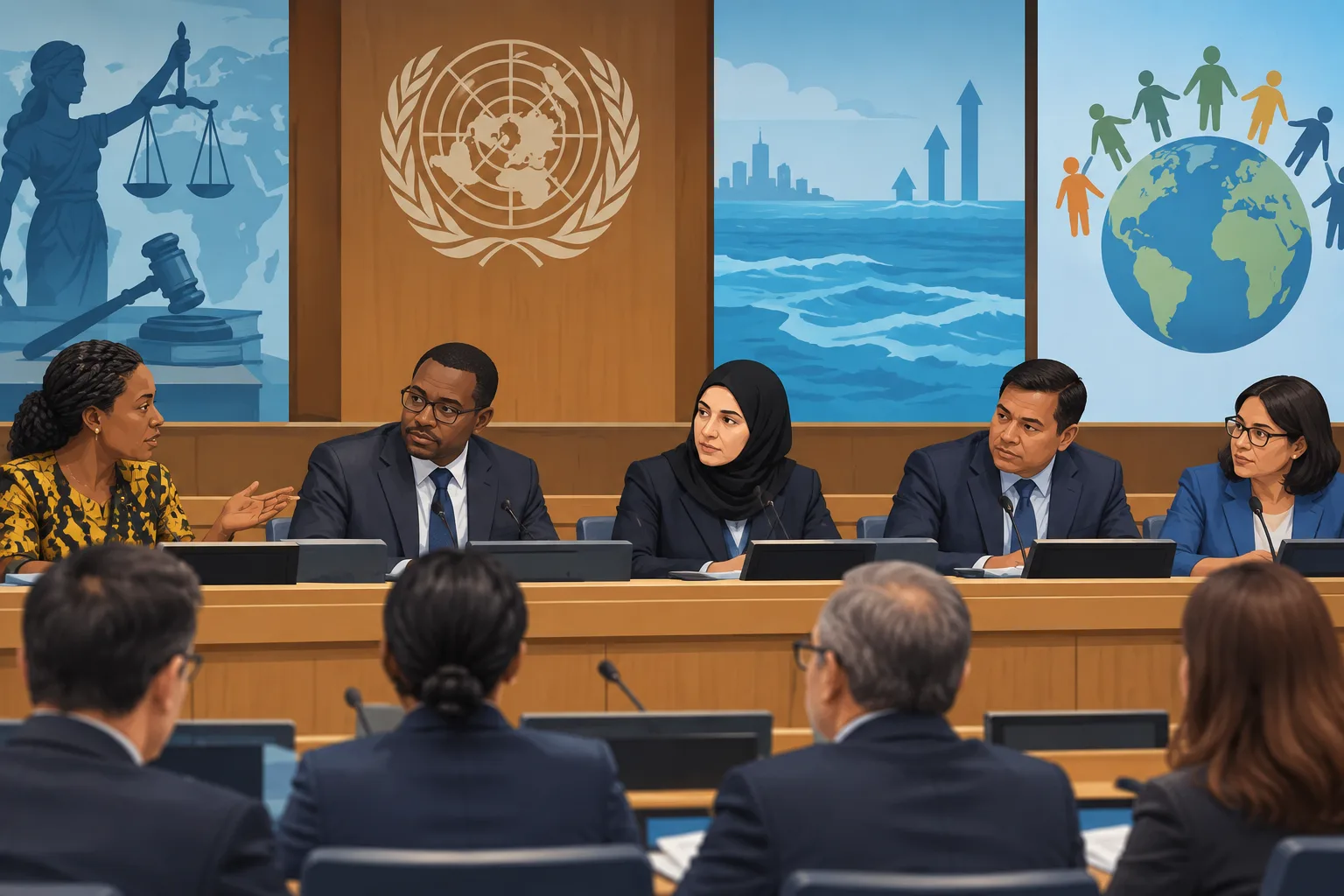
UN delegates urge clearer rules on immunity and rising seas
Loading statistics…
Delegates at the UN’s Sixth Committee urged greater legal clarity on state officials’ immunity, rising sea levels and the recognition of general principles of law during a continuing review of the International Law Commission’s work.
Review information is loading.
Delegates at the UN General Assembly’s Sixth Committee have called for clearer rules on state officials’ immunity and international law’s response to rising sea levels, as they continued examining the International Law Commission’s work on 29 October.
The debate covered three subjects: immunity from foreign criminal jurisdiction, general principles of law and sea-level rise. The committee is conducting a two-week review of the Commission’s annual report, following earlier discussions on the same topics. Read our report on the opening of the review.
On immunity, Uganda said the rules should draw on the world’s main legal systems, including African customary law, and protect officials from politically motivated prosecutions while allowing accountability where international law recognises exceptions.
Zimbabwe cautioned that support for accountability did not mean every proposed exception was already part of customary international law. It urged the Commission to distinguish clearly between rules it was codifying and proposals for the progressive development of law.
The United Arab Emirates said states remained divided over exceptions to immunity for official acts, known as *ratione materiae*, and argued that state practice did not establish them as customary international law. It also objected to limiting personal immunity, or *ratione personae*, to heads of state and government and foreign ministers.
On rising seas, Peru said the issue reached beyond environmental concerns and required sustained international cooperation. Papua New Guinea described it as a human-rights issue, pointing to possible gaps in regional protections. Belize said existing sources affirmed a duty to cooperate but did not specify how that duty should work in this context, and called for the issue to receive further attention from the Commission.
Delegates also debated how general principles of law are recognised. Micronesia supported the phrase “community of nations” and urged that references to legal systems and regions should not imply a hierarchy or be confined to the UN’s five commonly recognised regional groups. Argentina welcomed wording that all nations participate equally in forming such principles, while advising caution about principles said to arise within the international legal system.
The meeting coverage is published by the UN for information purposes and is not an official record.
How do we know?
1 listed sources · explore evidence, limitations and provenance.
Sign in to give this article a thumbs up or down.
About this discussion and AI questions
Private test discussion. Comments are readers’ views and are not yet automatically fact-checked. Editing is available for 60 seconds after posting.
Sign in with a confirmed reader account and choose a username to read comments and participate.
Sorting applies to top-level comments; replies remain oldest first. New comments and likes can change the order. Refresh for the current ranking.
Loading comments…