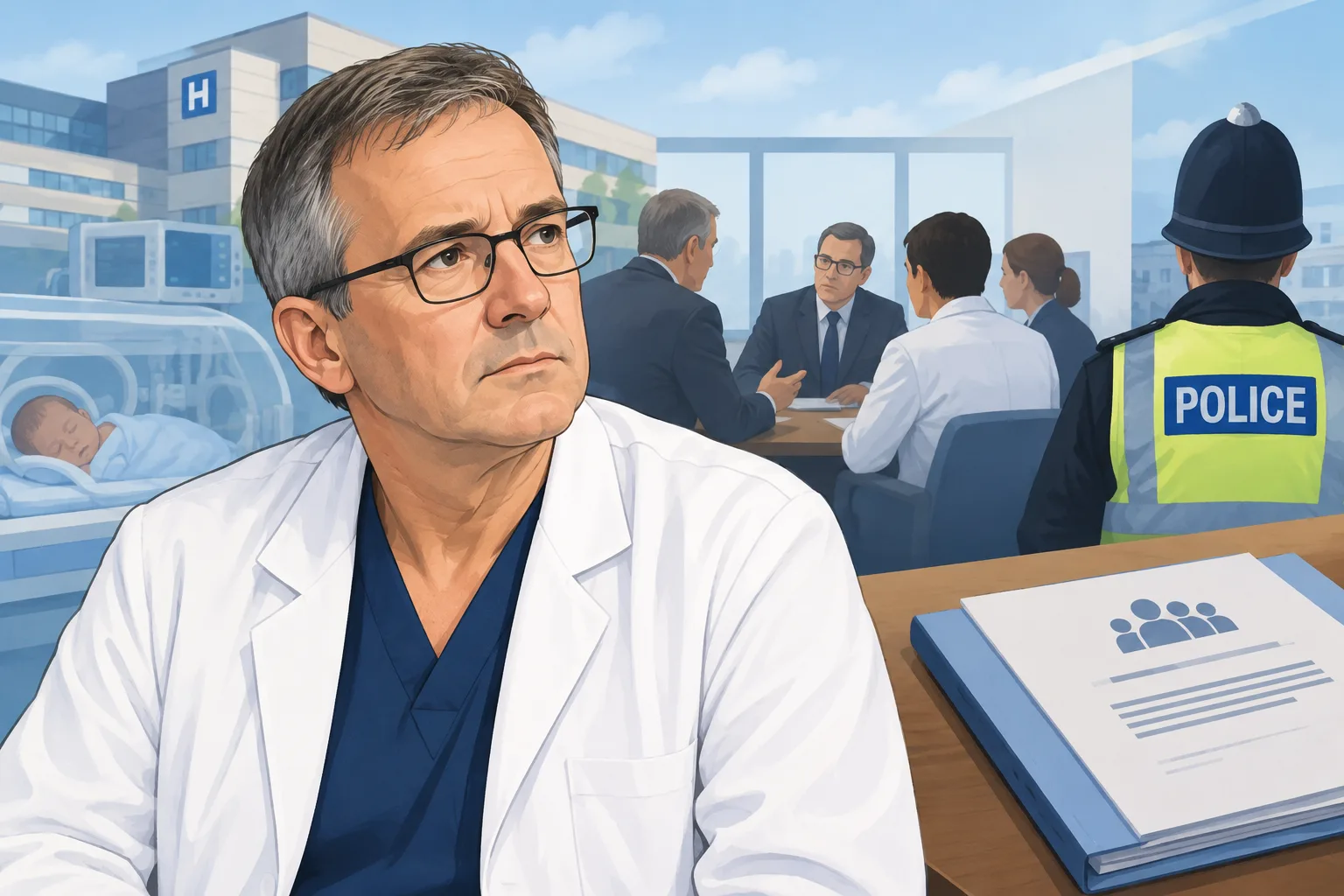
Doctor who raised concerns about Lucy Letby regrets not going to police sooner
Stephen Brearey says he relied too long on hospital managers to act. The Thirlwall Inquiry found executives delayed a police investigation, while his regret raises a separate question about what the doctors could have done sooner.
Review information is loading.
Dr Stephen Brearey, the consultant who raised concerns about Lucy Letby at the Countess of Chester Hospital, says he wishes he and his colleagues had gone to the police sooner. His regret comes a month after a public inquiry concluded that hospital executives’ failure to act on the doctors’ concerns delayed a police investigation by almost a year. [1] [3]
Brearey, who led the hospital’s neonatal consultants, told BBC News he had assumed senior managers would respond to their suspicions. “I was naively thinking” they would see the concerns as he did, he said. Looking back, “we would have gone to the police earlier”. [1]
Letby, a former neonatal nurse, was convicted of murdering seven babies and attempting to murder seven others. The Thirlwall Inquiry examined how concerns about her were handled, including whether the police should have been informed sooner. [1] [6]
Its report charts several missed opportunities. One consultant said on 29 June 2016 that the police needed to be involved, and senior hospital staff discussed a referral. But the plan adopted the next day did not include contacting them. At a meeting in March 2017, Brearey said, he and a colleague asked chief executive Tony Chambers to call the police. Chambers told the doctors they could do so themselves, a response the inquiry called misguided. The meeting ended with an agreement that the police would be contacted. [2] [3]
A police officer attended a meeting about the deaths in late April, and Chambers wrote formally to Cheshire Police on 2 May. It was after Brearey and two colleagues met officers on 15 May that police decided to open an investigation. The inquiry found that executives had failed to act on concerns raised in good faith and were principally responsible for the delay. Chambers denied seeking to stall or obstruct an investigation; the inquiry rejected his denial. [3]
The inquiry made 17 recommendations, including a protocol requiring managers to act promptly on good-faith suspicions of deliberate harm and to follow safeguarding procedures that would involve the police. Brearey told the BBC he believes the proposals, if enacted, would go a long way towards preventing further incidents. What an earlier approach to police by the consultants themselves would have changed remains uncertain. [1] [5]
Sign in to give this article a thumbs up or down.
About this discussion and AI questions
Private test discussion. Comments are readers’ views and are not yet automatically fact-checked. Editing is available for 60 seconds after posting.
Sign in with a confirmed reader account and choose a username to read comments and participate.
Sorting applies to top-level comments; replies remain oldest first. New comments and likes can change the order. Refresh for the current ranking.
Loading comments…