Dutch privacy watchdog advises against buying AI camera glasses
The Netherlands’ data protection authority has advised consumers against buying AI camera glasses for general use, citing safety, security and privacy risks.
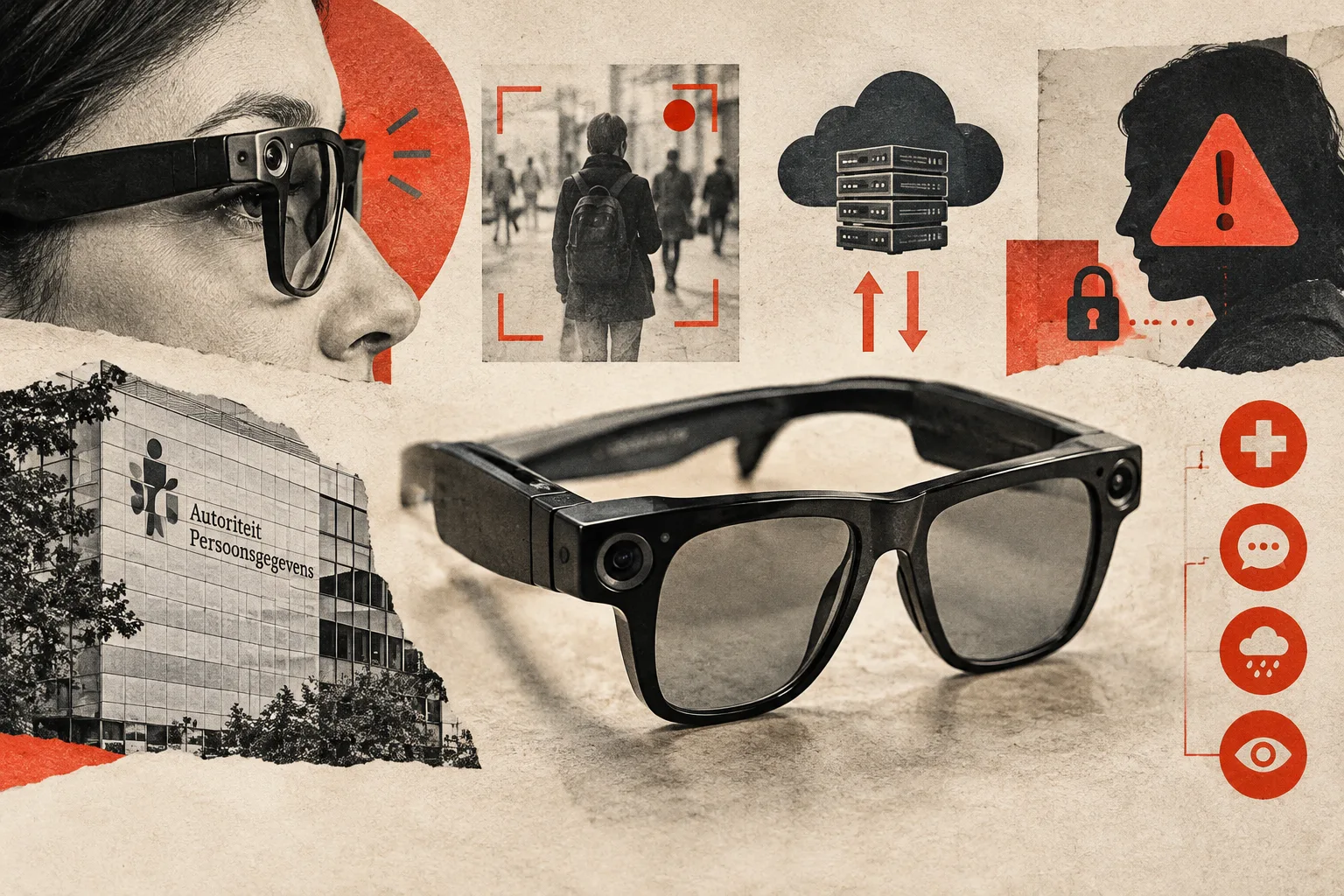
The advice is not a sales ban. On 19 November, the Autoriteit Persoonsgegevens (AP) said it had examined six pairs sold in the Netherlands. Two underwent extensive tests in simulated situations involving people’s safety.
The products ranged in price from under €100 to over €500. The AP did not identify the brands or AI models, and it is not known whether Meta glasses were among them.
When asked for CPR advice in a simulated emergency, one pair repeatedly said an ambulance was on its way even though no emergency services had been contacted. The AP warned that such an error could delay help in a real emergency.
One pair also gave dating advice to an adult who expressed interest in a minor. Talaya, which reported on the AP’s study, said the other pair tested in that scenario refused. The AP also reported errors involving medicine instructions and severe weather warnings.
The watchdog raised concerns about the privacy of people around the wearers. Nearly all had recording lights that were difficult to see and easy to cover, the AP said. Security.nl reported that all but one of the six continued to film with their light covered.
Several pairs also had security flaws that could allow someone nearby to connect without permission, view recordings or operate the camera, the AP said. The authority said the AI functions it examined processed data on external servers, often outside the EU, and that users were not adequately told which AI models or companies handled it.
The warning follows debate in the Netherlands about camera glasses and privacy. In October, Dutch optician Hans Anders suspended sales of Meta’s AI and camera glasses, citing public and political discussion about their use.
The AP has not ruled out a ban, but says any such measure would have to be legally sound, workable and proportionate, Dutch news agency ANP reported. It also acknowledged that the glasses could help people with visual impairments or low literacy, making reliable operation especially important for those users.
Sign in to give this article a thumbs up or down.
From the discussion
Private test discussion. Comments are readers’ views and are not yet automatically fact-checked. Editing is available for 60 seconds after posting.
Sign in with a confirmed reader account and choose a username to read comments and participate.
Sorting applies to top-level comments; replies remain oldest first. New comments and likes can change the order. Refresh for the current ranking.
Loading comments…