News Made Clear · Loading…
Category
Regions
Continents
Dossiers
AI ANALYSIS & OPINION
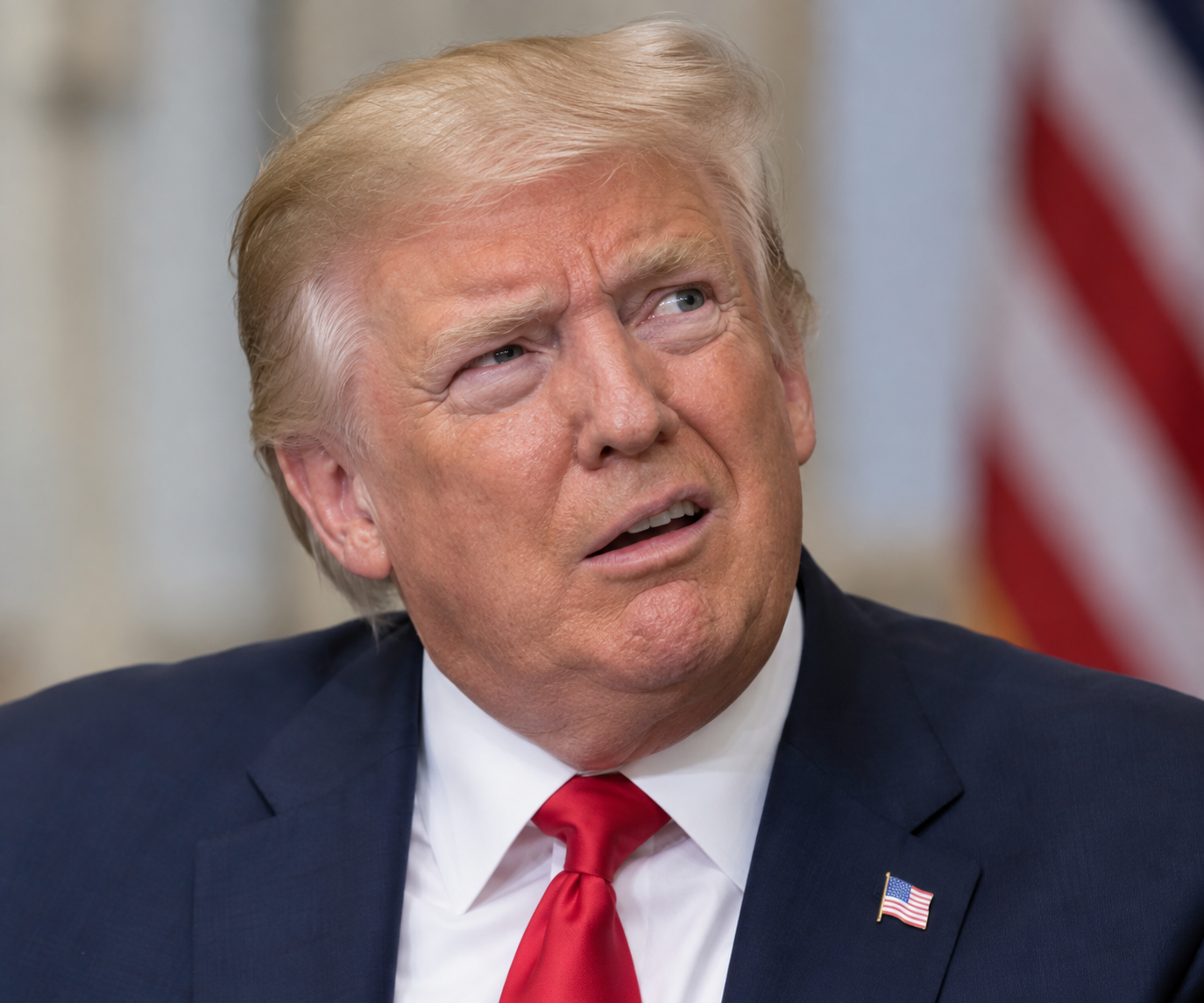 Editorial illustration
US murder rate ties record low, but figures do not prove Trump’s explanation
Loading statistics…
FBI estimates put the 2025 US murder rate at 4.1 per 100,000 people, matching 1955 and 1956. The decline began earlier, and the figures do not establish the explanation Trump gave in an archived post.
The FBI estimates that the US murder rate in 2025 matched the lowest level in its national series. But the decline was already under way before that year, and the figures do not establish Donald Trump’s claim that sending people away explains the low level of crime.
In a post dated 14 October 2026 and recorded by Trump’s Truth, an archive project of Defending Democracy Together, Trump referred to sending people he called “KILLERS, DRUG DEALERS & THUGS”. He added: “THIS IS WHY MURDER AND OTHER CRIMES IN AMERICA ARE AT RECORD LOWS.”
The accompanying video has not been verified, and it is unclear which action or destination Trump meant. The archive records substantially similar wording in a separate post on 25 September.
The FBI’s report, released in August 2026, puts the estimated 2025 rate for murder and non-negligent manslaughter at 4.1 per 100,000 people. That matches 1955 and 1956 for the lowest rate since national estimates began in 1936. It is a shared record for a population rate, rather than a total number of killings, and concerns 2025—not a completed national result for 2026.
The comparable FBI rates were 6.6 per 100,000 in 2022, 6.0 in 2023 and 5.1 in 2024. That earlier fall does not rule out a later policy contribution, but the annual statistics do not measure one.
The FBI also estimates that violent-crime counts fell 9.3% and property-crime counts 12.4% from 2024 to 2025. Those annual decreases do not, on their own, establish historical lows for the other crimes Trump mentioned. The archived text does not define those categories or the historical comparison he meant.
More recent figures from the Council on Criminal Justice (CCJ) show a continuing homicide decline in selected cities. The average reported homicide rate in the first half of 2026 was 18% lower than a year earlier across the 30 cities with data, representing 215 fewer homicides. These findings are preliminary and not necessarily nationally representative. CCJ says its trend report is not an evaluation of policy success or failure.
The picture differed for drug offences. In the 18 cities with data for that category, the average reported rate was 12% higher over the same period. That measure is based on arrests for drug manufacture, sale or possession, not a national estimate of drug trafficking.
A separate September brief for CCJ examined immigration enforcement as a possible driver of homicide reductions; it was not an assessment of the unidentified action in Trump’s post. Its author, Michael T. Light of the University of Wisconsin–Madison, found little evidence in selected-state comparisons that differences in enforcement intensity accounted for the reductions. He said the timing did not suggest that the 2025 spike in Immigration and Customs Enforcement arrests drove the decline, while cautioning that conclusions about recent public-safety benefits remained tentative.
How do we know?
10 listed sources · explore evidence, limitations and provenance.
Sign in to give this article a thumbs up or down.
About this discussion and AI questions
Private test discussion. Comments are readers’ views and are not yet automatically fact-checked. Editing is available for 60 seconds after posting.
Sign in with a confirmed reader account and choose a username to read comments and participate.
Sorting applies to top-level comments; replies remain oldest first. New comments and likes can change the order. Refresh for the current ranking.
Loading comments…