EPA reports no lead in 38 water samples after Iowa Army blast
The US agency says it found no lead in the public-supply samples after the controlled detonation, but results from other tests are still pending.
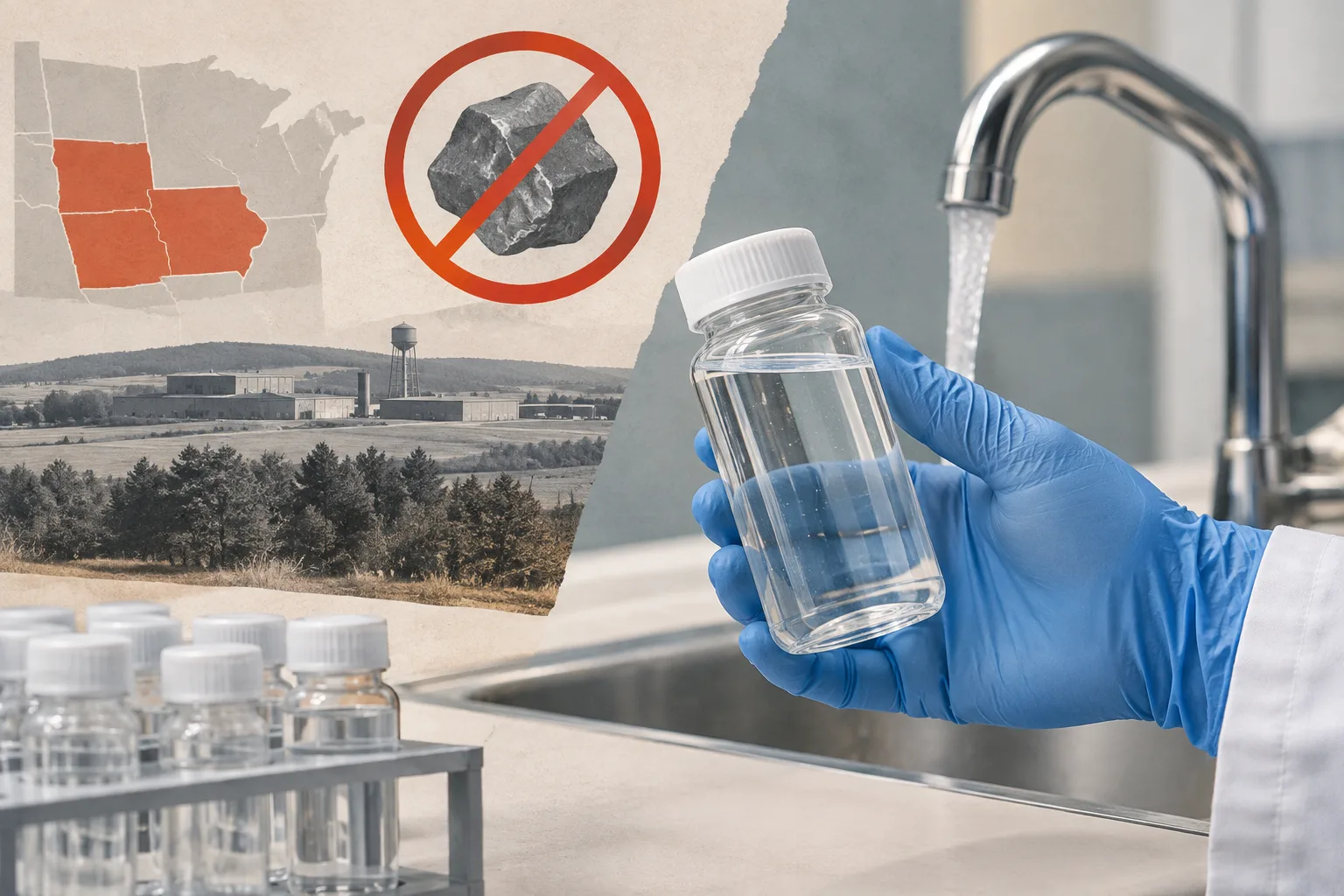
The US Environmental Protection Agency (EPA) said on 28 November that it found no lead in 38 samples taken at public water supplies after the blast. The samples included treated drinking water and untreated water at intake points.
The agency concluded that the detonation had not raised lead levels in bodies of water used for drinking supplies. Its summary did not give the locations, collection times or detection limits for the 38 samples, or explain whether individual before-and-after samples were paired.
The Army detonated degraded lead azide, a chemical used in explosives, at the Iowa Army Ammunition Plant in Middletown on 25 November. It said the material risked a spontaneous explosion. Environmental groups had sued to stop the blast, warning about possible exposure to lead dust. MS NOW reported that officials evacuated some residents within five miles of the plant and ordered those within 20 miles to stay indoors with their windows closed.
Before the blast, the EPA sampled untreated water from 35 drinking-water sources in Iowa, Illinois and Missouri to establish a baseline. The agency said none of those locations was in the area where the plume actually travelled.
Four of the 35 locations had lead, at concentrations ranging from 1.13 to 2.12 parts per billion. The EPA said it could not determine the original source of that lead.
The agency compared those readings with its lead action level of 15 parts per billion for drinking water. That level applies to tap samples: water systems must take additional action if more than 10% of their samples exceed it. The EPA’s health goal for lead in drinking water is zero.
The EPA also said its air monitors detected no airborne lead for 30 consecutive hours after the blast. It switched the Xact monitors off at 3pm local time on 26 November after consistent zero readings. A non-detection does not establish that no lead was released.
The EPA said it was still preparing to receive, validate and release results from tap water, soil, indoor and outdoor dust, and further air samples.
Sign in to give this article a thumbs up or down.
From the discussion
Private test discussion. Comments are readers’ views and are not yet automatically fact-checked. Editing is available for 60 seconds after posting.
Sign in with a confirmed reader account and choose a username to read comments and participate.
Sorting applies to top-level comments; replies remain oldest first. New comments and likes can change the order. Refresh for the current ranking.
Loading comments…