News Made Clear · Loading…
Category
Regions
Continents
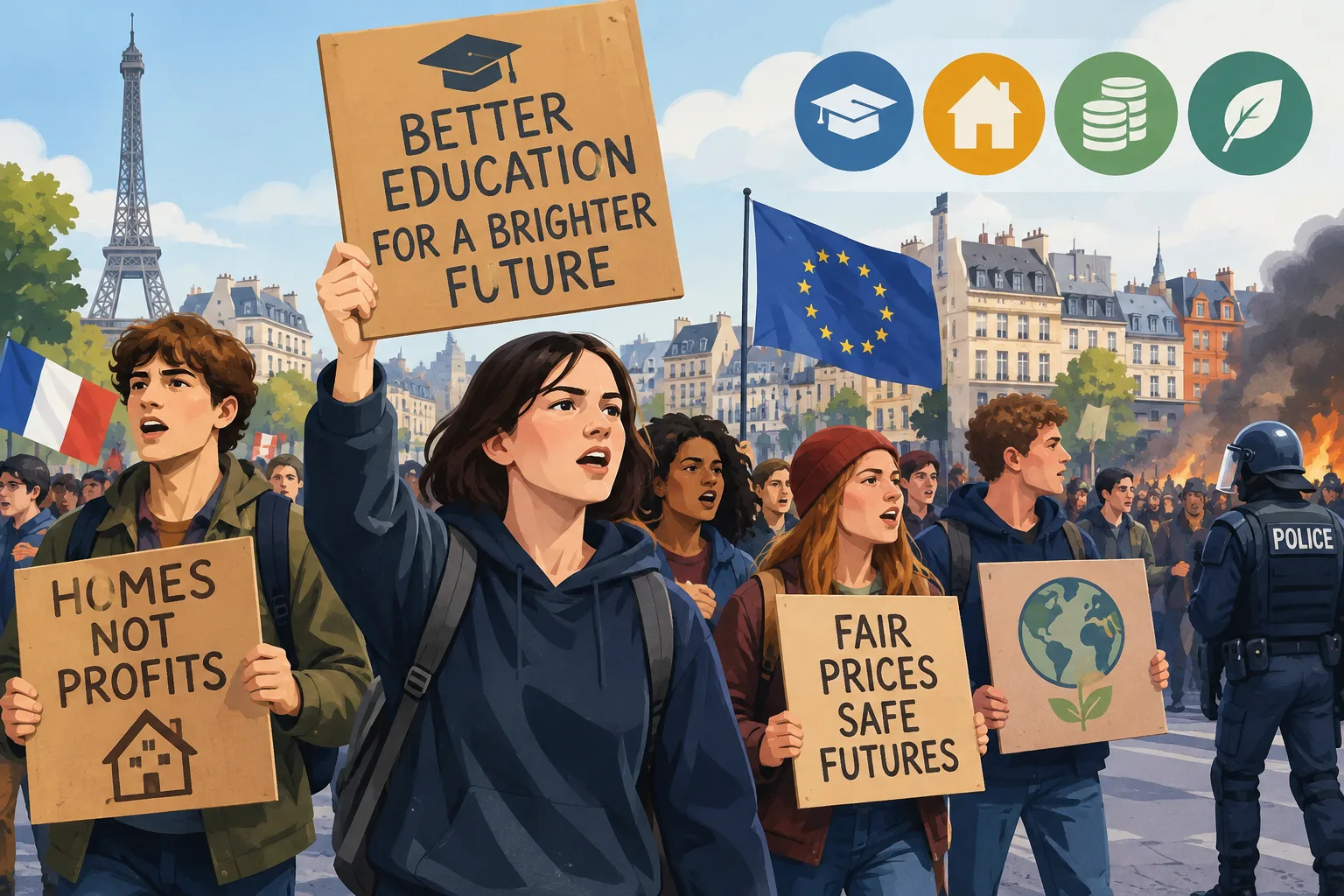
Young people protest across Europe over education, housing and cost of living
Loading statistics…
Protests led by young people have spread across Europe, with concerns ranging from education and housing to the cost of living. Some demonstrations have turned violent, while governments face pressure to respond amid a run of elections.
Review information is loading.
Young people have joined protests across Europe in recent weeks over education, housing costs and fears about their economic future, with some demonstrations turning violent. The breadth of the unrest has raised questions about whether separate national disputes are feeding a wider sense of discontent — and how governments will respond as elections approach.
Marches and rallies have taken place in France, Belgium, Ireland, Spain, Portugal, Italy, Greece, Serbia and Albania. The protests have varied in size and focus: students in France have complained about staff shortages and deteriorating school buildings, while housing costs have been a prominent concern in Madrid and Lisbon. In Albania, demonstrators have called for Prime Minister Edi Rama to resign, alleging government corruption.
Many actions have been organised informally through social media, sometimes drawing on slogans or protests elsewhere. In Barcelona, students used the hashtag #InstitutsIndignats, echoing a French student slogan. Belgian Interior Minister Bernard Quentin has criticised what he calls the “TikTokisation” of protests.
The grievances extend beyond education. Young people have raised concerns about the cost of living, access to housing, the environment and the prospect that artificial intelligence could reduce job opportunities. In Lisbon, 26-year-old doctoral student Carolina Cruz told Reuters that she feared losing her home when her rental contract ends. “I’m the first person in my family to enter a doctoral programme and even with all the studying I’ve done, I still can’t make it,” she said.
The protests also bring together people with different political concerns. At a campaign event for French nationalist Marine Le Pen, young supporters told BBC Europe editor Katya Adler they were worried about immigration, street safety and living costs. The wider wave has also drawn in trade unions and other groups, making it difficult to treat the demonstrations as a single movement.
Violence and competing explanations
Most protests began peacefully, but some have been followed by looting and clashes. French and Belgian intelligence services have described looting around authorised demonstrations as mainly opportunistic, while authorities have also pointed to violence by radical groups. Belgian officials have blamed ultra-left groups; the nationalist party Vlaams Belang has instead described unrest in Brussels and Liège as “imported” and linked it to immigration and integration. These are competing political accounts, not a settled explanation for the violence.
The unrest has also revived debate about policing and the treatment of young people in disadvantaged neighbourhoods. Some French media have questioned whether radical activists and young people from the banlieues have come together in the disorder, while residents of those areas have long complained of discrimination and heavy-handed policing. The BBC report notes allegations of police excesses alongside accusations of deliberately organised rioting.
How do we know?
1 listed sources · explore evidence, limitations and provenance.
Sign in to give this article a thumbs up or down.
About this discussion and AI questions
Private test discussion. Comments are readers’ views and are not yet automatically fact-checked. Editing is available for 60 seconds after posting.
Sign in with a confirmed reader account and choose a username to read comments and participate.
Sorting applies to top-level comments; replies remain oldest first. New comments and likes can change the order. Refresh for the current ranking.
Loading comments…