Gabon sanctuary seeks a companion for isolated gorilla Jojo
Jojo was taken from the wild as an infant and has lived without another gorilla for most of his life. His carers in Gabon are seeking a companion, though experts warn that a match and safe introduction would be challenging.
Review information is loading.
Jojo, a gorilla taken from the wild as an infant and kept alone for years, is now living at a sanctuary in Gabon. His carers hope to find him a companion, but experts say any introduction would be difficult and could cause further stress.
Jojo was captured before his first birthday, after poachers killed his family, and sold to a private zoo. In 2015, aged 11, he took his first steps on grass. He is now thought to be in his twenties and has never lived with another gorilla.
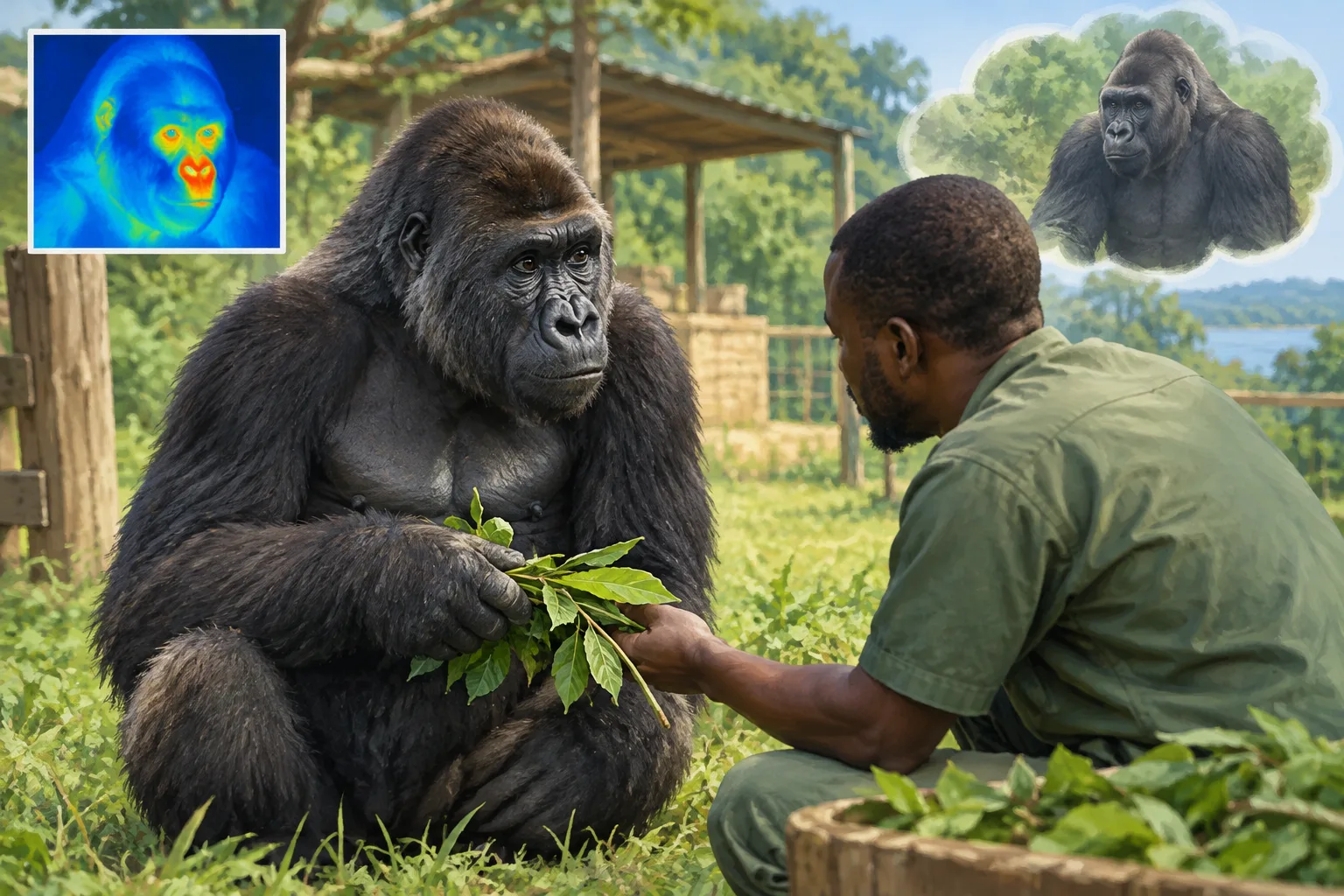
At the Lekedi Foundation sanctuary, head keeper Maxe Anaclet Makaba says Jojo seeks out contact with familiar people, including by gathering leaves for them to exchange for treats. Sanctuary director Éric Willaume says Jojo calls after women he knows when they leave. Both say they believe he is lonely.
Prof Gillian Forrester, a University of Sussex researcher studying Jojo, describes him as an extreme case of isolation among great apes. Thermal images of his face show a persistently cold nose, which Forrester says may indicate a disrupted stress response. She believes a relationship with another gorilla could help him.
Most young gorillas grow up in family groups, and experts say social bonds are central to their lives. But adult male gorillas can also live alone: University of Zurich researcher Robin Morrison says about a third are solitary. She believes Jojo may be traumatised and lonely, while noting that solitude can also be part of a male gorilla’s natural life.
The circumstances of Jojo’s isolation were unusual: he was separated from his family as an infant, rather than dispersing as an adolescent. His carers are considering a rescued or zoo-bred gorilla as a possible companion, but no match has been found.
Moving a gorilla from an accredited zoo would require an international committee to consider factors including genetics, health and compatibility. Forrester has approached several zoos, but those discussions have not led to progress. She says existing international transfer arrangements are designed mainly for breeding programmes, not finding companions or preparing animals for release.
Any introduction would need to proceed cautiously, potentially starting with an object carrying the other gorilla’s scent. Experts say no one can be sure how Jojo would respond. Tony King, a conservationist with the Aspinall Foundation, cautions that a new animal could add to his stress and says Jojo may be best where he is.
For Jojo’s keepers, the potential benefit is clear. They hope he might one day share space and form a bond with another gorilla, but whether that can happen safely remains uncertain.
Sign in to give this article a thumbs up or down.
About this discussion and AI questions
Private test discussion. Comments are readers’ views and are not yet automatically fact-checked. Editing is available for 60 seconds after posting.
Sign in with a confirmed reader account and choose a username to read comments and participate.
Sorting applies to top-level comments; replies remain oldest first. New comments and likes can change the order. Refresh for the current ranking.
Loading comments…