Russia urges UN to withdraw Libya ICC referral as first trial approaches
The court’s first Libya trial is due in May 2027, but Security Council members remain divided over its authority, US sanctions and cooperation with Libyan authorities.
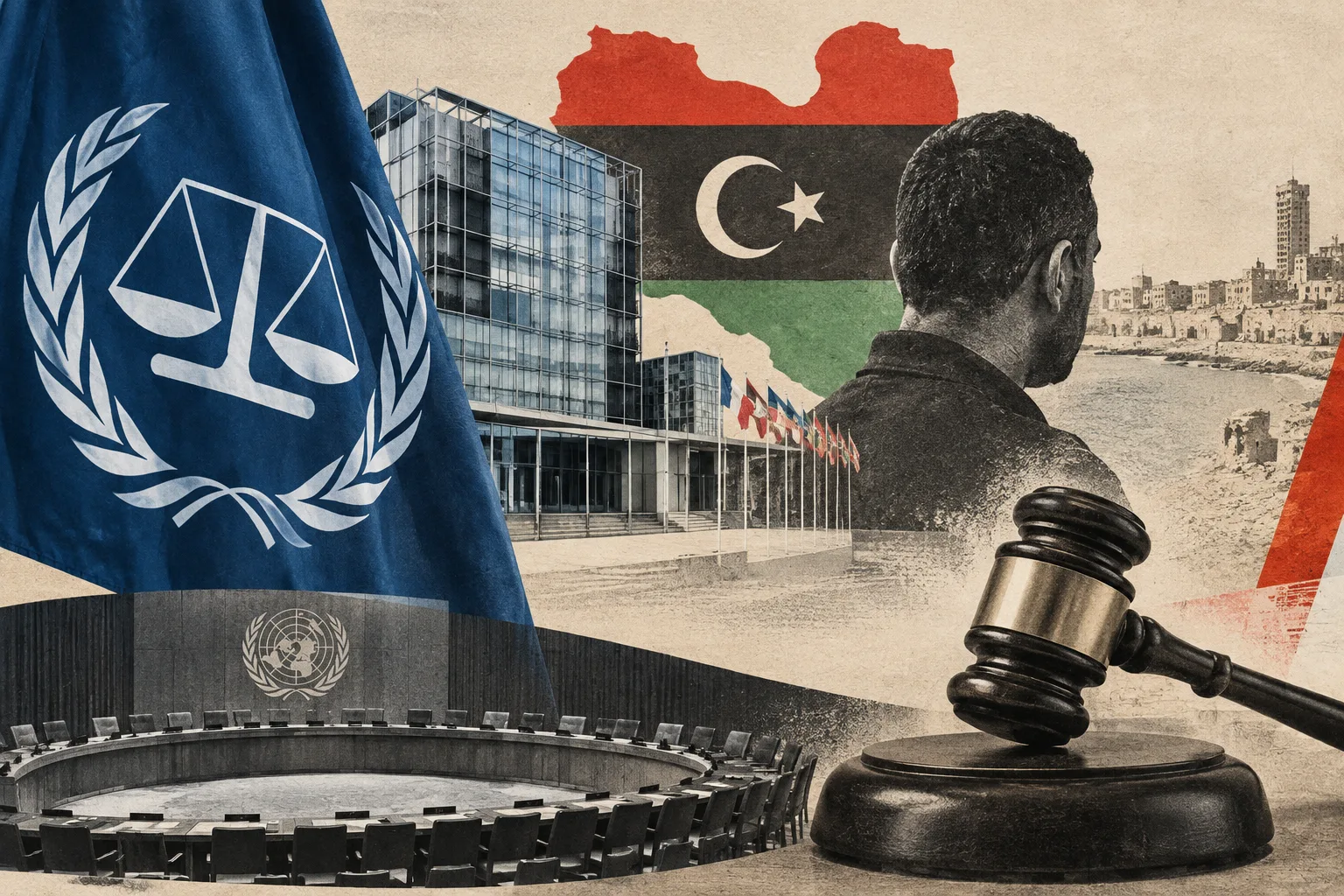
Russia urged the UN Security Council on 18 November to withdraw its referral of Libya to the International Criminal Court, as members disputed the court’s role ahead of its first trial arising from the country’s situation.
The trial is scheduled to begin on 4 May 2027, almost 16 years after the council referred Libya to the court. Russia’s appeal is not a decision to end the proceedings, and the legal consequences of a hypothetical withdrawal are uncertain.
Khaled Mohamed Ali El Hishri, a former Libyan prison official, faces 17 counts of war crimes and crimes against humanity over alleged abuses at Mitiga prison in Tripoli. Judges confirmed the charges on 16 July 2026; confirmation is not a conviction. He was arrested in Germany and surrendered to the court on 1 December 2025.
His defence challenged the court’s jurisdiction, and the ICC’s activity report said the appeal was pending during its reporting period.
Acting ICC prosecutor Mame Mandiaye Niang told the council that cooperation with Libyan authorities, civil society and international investigators was helping cases advance. He addressed the meeting remotely, saying he was doing so because of US sanctions. Niang is on the US sanctions list.
Denmark, France and the United Kingdom expressed support for the court, while the US representative reiterated Washington’s opposition to the ICC asserting jurisdiction over countries without their consent. He also called for accountability for serious abuses in Libyan detention centres.
The US has also sanctioned the court itself, although an authorisation permits certain transactions, including salaries and payments from states parties, until 7 April 2027. It does not generally lift separate restrictions on other sanctioned individuals. Earlier this month, the UN General Assembly condemned threats to the court, with the US among the countries voting against the resolution.
Dispute over NATO and European conduct
Russia’s representative, Maria Zabolotskaya, accused the court of overlooking NATO’s 2011 intervention in Libya and alleged abuses by European authorities while selectively pursuing others.
The ICC prosecutor’s office did assess allegations concerning NATO air strikes. In a 2012 report to the council, it said it had found no information to conclude that strikes causing civilian casualties or damage to civilian property were intentional attacks on civilians or civilian objects. That assessment did not establish that every strike was lawful.
Human Rights Watch documented at least 72 civilian deaths in NATO strikes and questioned whether several sites it examined were legitimate military targets. NATO maintained that all its targets were military objectives.
In 2025, lawyers asked the ICC to investigate 122 European officials over alleged crimes against migrants, according to the Associated Press. AP reported that an earlier request, which named no individual suspects, had been admitted as part of the Libya investigation in 2020. The later request was not itself a charge or a finding of guilt.
Libyan jurisdiction and an outstanding warrant
The 2011 Security Council resolution requires Libyan authorities to cooperate with the court. Separately, in 2025, Libya accepted ICC jurisdiction over alleged crimes on its territory from 2011 to the end of 2027. A separate provision of the court’s founding statute allows the council to request a renewable 12-month deferral of an investigation or prosecution by resolution.
Niang also raised concern that another ICC suspect, Osama Elmasry Njeem, reportedly remained free to meet officials despite information that he was detained in Libya. The court issued a warrant for Njeem in January 2025.
On 2 November, ICC judges rejected Njeem’s challenge to the court’s jurisdiction but deferred a decision on whether the case was admissible. His defence submitted documents saying a Libyan criminal case had begun. The judges said the information was not specific enough to establish whether the national proceedings covered the same conduct as the ICC warrant. They invited further information from the defence and Libya by 29 January 2027.
Sign in to give this article a thumbs up or down.
From the discussion
Private test discussion. Comments are readers’ views and are not yet automatically fact-checked. Editing is available for 60 seconds after posting.
Sign in with a confirmed reader account and choose a username to read comments and participate.
Sorting applies to top-level comments; replies remain oldest first. New comments and likes can change the order. Refresh for the current ranking.
Loading comments…