Three English housing schemes promised 7,400 homes. Only 326 have been built
Three major housing schemes in Middlesbrough, York and Kent promised 7,400 homes but have delivered only 326, highlighting how stalled funding, infrastructure and planning can frustrate development.
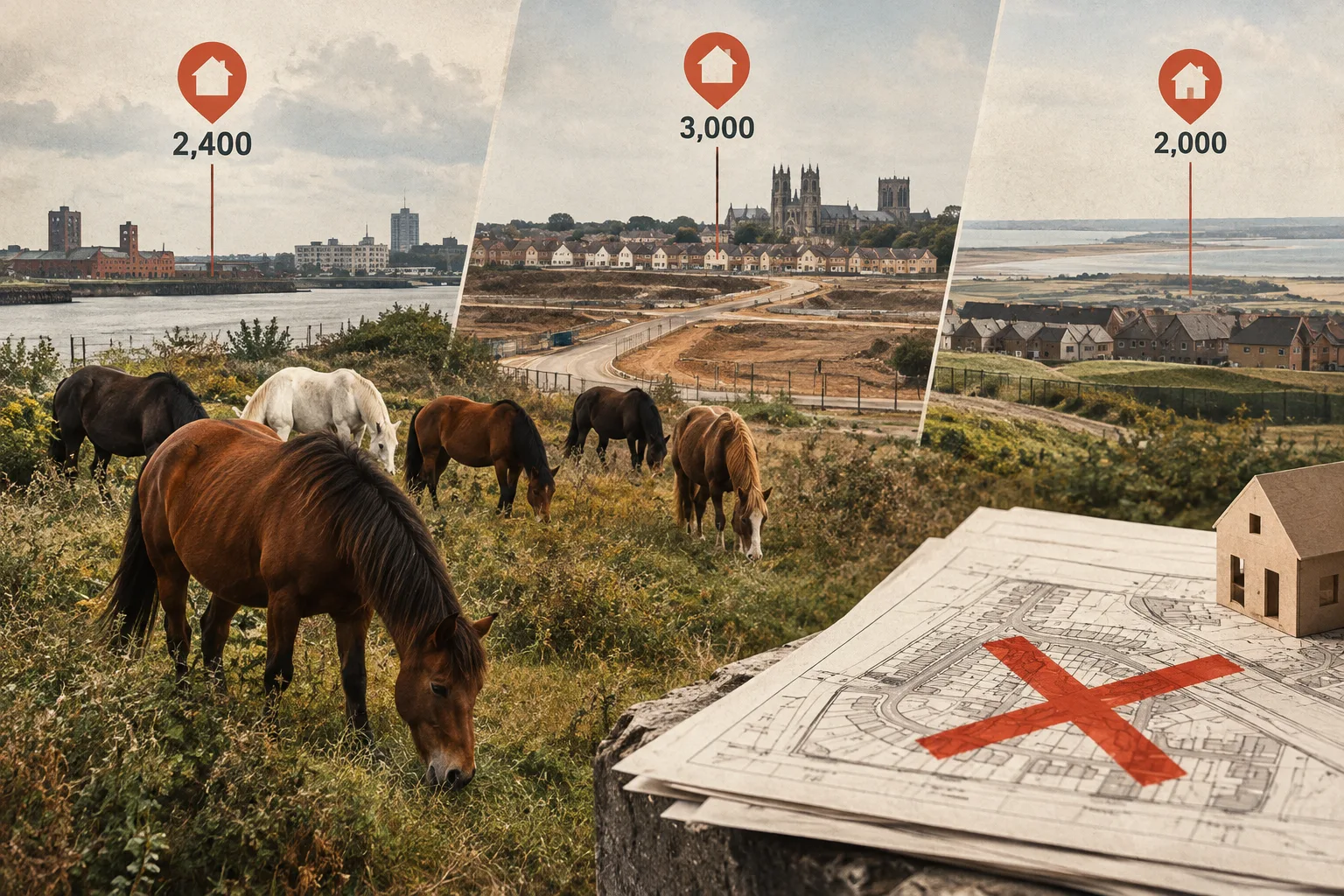
Three housing schemes in England that were meant to deliver 7,400 homes have produced just 326 so far, a shortfall that illustrates how delays, funding gaps and infrastructure problems can hold back large developments.
In Middlesbrough, six horses graze on a derelict riverside site where a 2004 plan promised 2,400 homes. Only 216 have been built — and 185 existing homes were demolished to make way for development, leaving a net increase of 31. The £500m figure attached to the original scheme was an estimate of its cost, Middlesbrough Council told the BBC; the money was never secured.
The project was curtailed after the 2008 financial crash, the council said. It now hopes to begin a new phase of 462 homes, as part of a wider plan for 3,400, while acknowledging that funding may limit what can be delivered.
The same pattern is visible elsewhere. In York, a 2001 proposal for 3,000 homes has yet to produce a house. The first phase, including about 2,500 homes planned by 2040, received approval in September. York council leader Claire Douglas said an access road needed to bring construction materials to the site was nearing completion and the first homes should be built within two years.
On the Isle of Sheppey in Kent, only 110 homes have been built against an original plan for 2,000. The scheme was later reduced to 1,180 homes and is back at the planning stage. Swale Borough Council said the widely publicised £400m regeneration figure was an estimate of likely investment, not funding secured for the project. The council is working with Homes England to agree a new timescale.
The delays matter as the Labour government pursues a target of 1.5 million homes in England by the next election, which the BBC says is likely to be missed. Anthony Breach, director of policy and research at the Centre for Cities, said the UK’s reliance on large, complex developments means stalled schemes can have a disproportionate effect on housebuilding.
Breach also pointed to a planning system in which local politicians can refuse permission even when a developer follows the rules. England’s regional mayors are establishing mayoral development corporations, which can take planning duties from local authorities and make compulsory land purchases. Breach described them as a way to speed up development.
There are signs that obstacles can be overcome: at Barking Riverside in east London, a new rail line helped unlock construction after years of delay, and 3,000 homes have been built. A housing ministry spokesperson told the BBC that housing starts were up 20% on the same time the previous year, and said the government had unblocked or accelerated more than 130,000 homes.
But across the three schemes examined, decades-old promises still far outnumber completed homes.
Sign in to give this article a thumbs up or down.
From the discussion
Private test discussion. Comments are readers’ views and are not yet automatically fact-checked. Editing is available for 60 seconds after posting.
Sign in with a confirmed reader account and choose a username to read comments and participate.
Sorting applies to top-level comments; replies remain oldest first. New comments and likes can change the order. Refresh for the current ranking.
Loading comments…